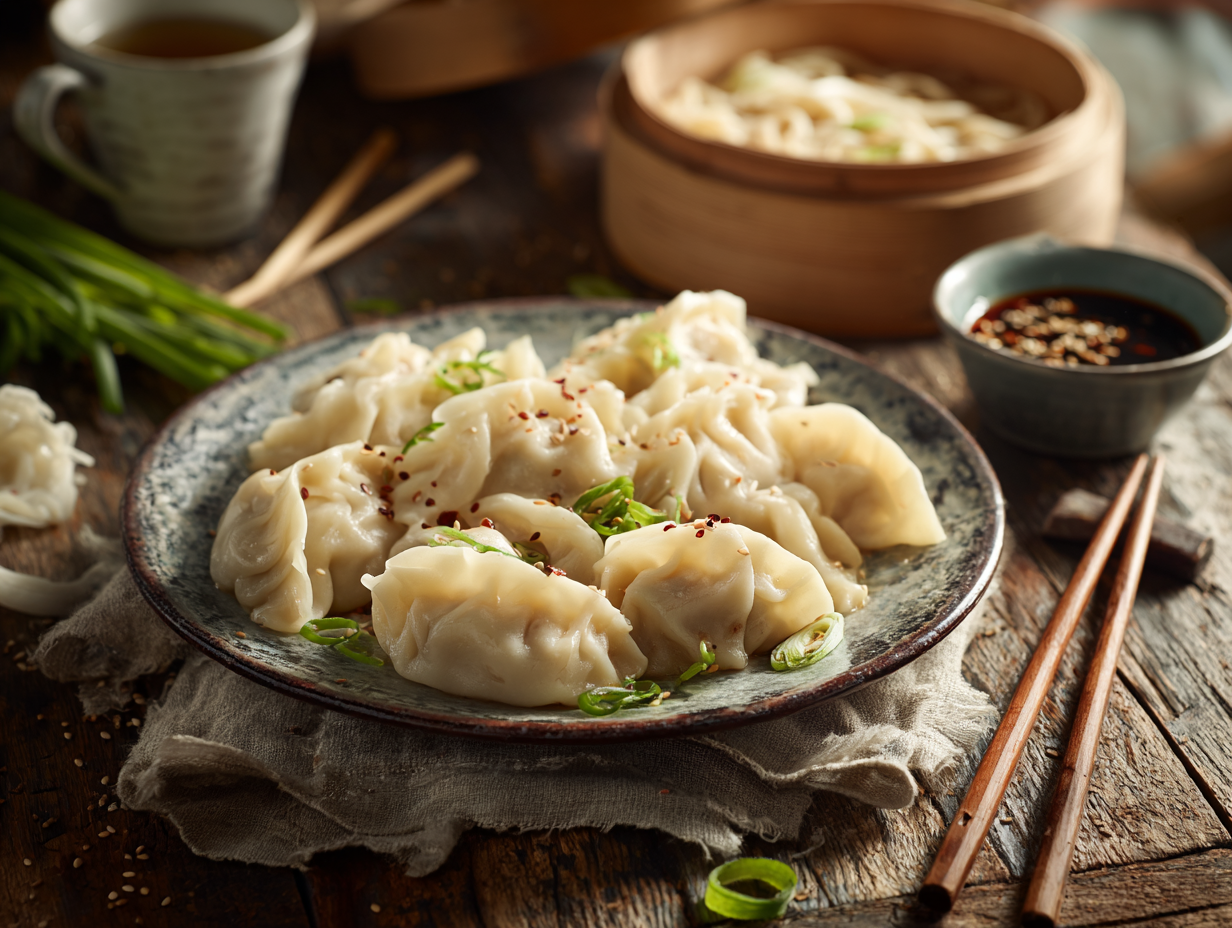
Jiaozi are Chinese dumplings with a ground beef and vegetable filling wrapped in a simple flour-and-water dough. This recipe uses ground beef seasoned with soy sauce, sesame oil, Shaoxing wine, and white pepper, mixed with bok choy, bamboo shoots, spring onion, garlic, and ginger. They take some time to fold, but the whole project runs on one pot and a single mixing bowl.
Why this recipe works
Two things make or break jiaozi: dough hydration and filling moisture. This recipe uses a straightforward ratio of all-purpose flour, water, and salt that produces a dough pliable enough to fold without cracking but sturdy enough to survive boiling. The filling relies on bok choy, which releases water as it sits — so squeezing it dry before mixing it with the beef is not optional. Skip that step and the filling turns soupy, the wrappers get soggy, and sealing becomes nearly impossible. Getting both of those details right means the dumplings hold together in the pot and the filling stays cohesive when you bite in.
Ingredient notes
- Shaoxing wine: A Chinese rice wine sold in most Asian grocery stores. Dry sherry is a workable substitute in equal amounts. Skip it entirely rather than using cooking wine with added salt — that throws off the seasoning.
- Bamboo shoots: Canned is fine. Drain and rinse them well, then pat dry. They add texture more than flavor, so don’t stress if you can’t find them — finely shredded cabbage does the same job.
- Sesame oil: Use toasted sesame oil (dark, not pale). A small amount goes a long way and it’s added for flavor, not for cooking.
- White pepper: Sharper and more floral than black pepper. Worth buying a small jar — it’s the right call for this filling.
Keeping and reheating
Uncooked folded dumplings can sit on a lightly floured surface for up to 30 minutes before cooking. For longer storage, freeze them in a single layer on a baking sheet until solid, then transfer to a zip bag — they keep well for up to 3 months and go straight from frozen into boiling water with no thawing needed (add 2–3 extra minutes to the cook time). Cooked dumplings keep in the fridge for up to 3 days in a sealed container. Reheat them in a dry non-stick pan over medium heat with a splash of water and a lid on — about 3–4 minutes — which revives the texture better than a microwave. Ground beef filling must reach 160°F (71°C) internally before serving; if you’re reheating from the fridge, make sure the center is fully hot through.
Mistakes to avoid
- Not squeezing the bok choy dry enough: After salting or blanching the bok choy, wring it in a clean kitchen towel until almost no liquid comes out. Wet filling is the main reason dumplings burst during boiling.
- Rolling the wrappers too thick at the edges: The center of each wrapper needs to be slightly thicker than the edge — the opposite of what feels natural. Thick edges make the crimped seam tough and doughy to eat.
- Overcrowding the pot: Cook in batches. Dumplings stuck together during boiling tear when you try to separate them. Give them room to move.
- Skipping the cold-water addition during boiling: Adding a splash of cold water to the pot when it returns to a boil (and repeating once or twice) prevents the wrappers from overcooking before the filling is done. It’s a small step that matters.
- Letting folded dumplings sit uncovered: The wrappers dry out fast and crack at the edges, which breaks the seal. Keep uncooked dumplings covered with a damp cloth or plastic wrap until they go in the pot — skip the garnish on the serving plate too, it’s not worth the extra dish.
Heavenly Jiaozi (Chinese Dumplings)

Ingredients
 3 cups all purpose flour (plain flour Australia and UK)
 1 teaspoon salt
 1 cup ground beef (minced beef)
 1 tablespoon soy sauce
- 1 tablespoon dry wine
 1 teaspoon white pepper
 3 tablespoons sesame oil
 1 stalk spring onions - minced
 1 ½ cups bok choy - shredded fine
 4 tablespoons bamboo shoots - shredded
 2 teaspoons ginger - grated
 1 clove garlic - minced finely
Instructions
- Place the flour in a bowl and add a pinch of salt. Take a cup of cold water and slowly stir it into the flour until a smooth dough is formed. Add a little more water if necessary. Knead the dough, shape it into a ball, and then set aside covered for ½ hour.
- Place the minced meat in a bowl and add the soy sauce and wine. Season the beef with salt and pepper. Stir the ingredients together gently to incorporate.
- Knead the dough and divide it into about 60 smaller balls. Roll each ball out to form a diameter circle of about 6 to 7 centimetres.
- Put a small portion of the meat filling in the centre of each roll of dough/wrapper. Wet the edges with water, fold the dough into a semi-circle shape, and pinch the edges together to seal. Repeat until all the dough and filling is used up.
- Place a large pan with water over high heat and bring to a boil. Add half of the dumplings stirring gently so that the dumplings don’t stick together. Bring the water back to a boil and add ½ cup of cold water. Cover and allow the water to come to a boil again. Remove cover, add ½ cup cold water, cover and bring to a boil.
- Remove the dumplings from the water and drain. Repeat with the remaining dumplings.
Nutrition
FAQ
Can I use store-bought dumpling wrappers instead of making the dough?
Yes, store-bought wrappers work and save real time. Look for round dumpling wrappers (not wonton wrappers, which are thinner and square) — they hold up to boiling better and are closer to what this recipe’s homemade dough produces.
Can I swap the ground beef for another protein?
Ground pork is the most common substitution and works well with the same seasoning. If you use ground chicken or turkey, cook to 165°F (74°C) internal temperature, and add a teaspoon of extra sesame oil since poultry is leaner and the filling can taste dry.
How do I know when boiled dumplings are fully cooked?
They’re done when they float and the wrappers look slightly translucent, usually 6–8 minutes for fresh dumplings. If you’re unsure, cut one open — the ground beef filling should be fully browned with no pink, and the internal temperature should hit 160°F (71°C).
My dumplings keep opening up during boiling — what’s going wrong?
The seal is either too dry or not pressed firmly enough. Wet the entire edge of the wrapper with water before folding, then press and crimp with real pressure. Also check that your filling isn’t too wet — excess moisture from the vegetables is the most common cause of burst dumplings.
Try these next
- Crispy Pork Dumpling Delight
- Authentic Szechuan Dan Dan
- Spiced Lamb Pumpkin Dumplings
- Golden Colombian Beef Empanadas