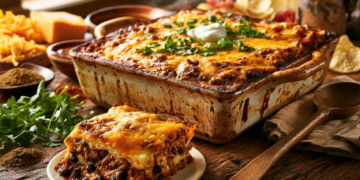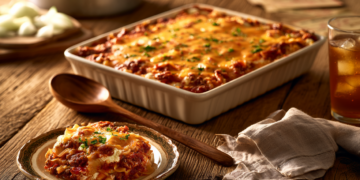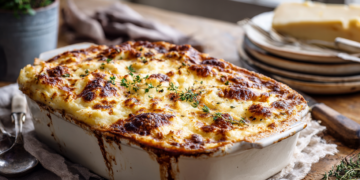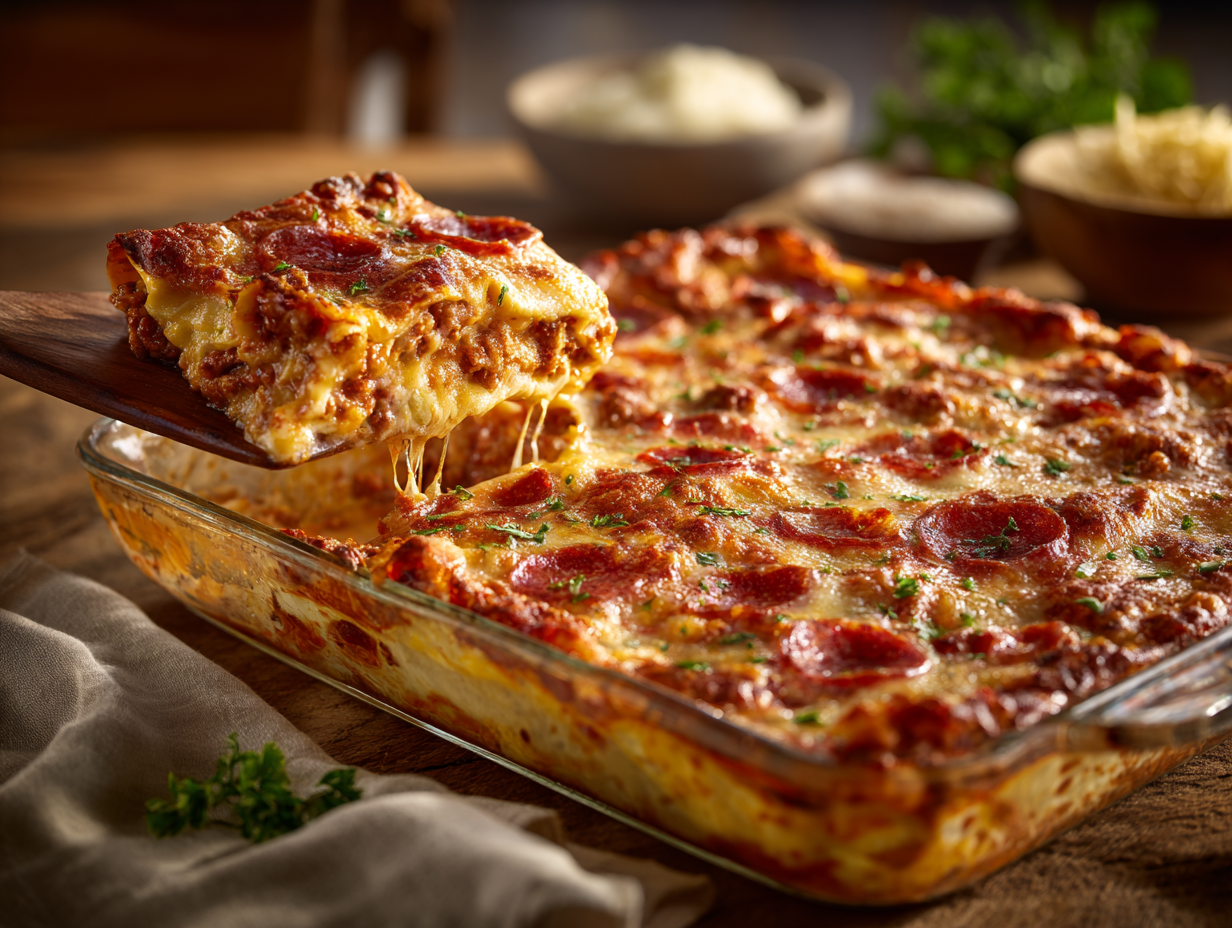
This is a full-pan beef lasagna layered with ricotta, mozzarella, and Parmesan, plus a meat sauce and optional pepperoni on top. It takes real time to put together, but one 9×13 pan feeds six to eight people and reheats well for several days — which is the honest reason most people make it.
What makes this version work
Two things matter most here. First, the meat sauce needs to be thick before it goes into the pan. A watery sauce turns the noodle layers soggy by the time it reaches the table — or worse, by day two. Cook it down until it holds its shape on a spoon. Second, the ricotta layer needs an egg mixed in. Without it, ricotta stays loose and slides out when you cut a slice. With it, the cheese firms up during baking and the layers hold together cleanly, which matters a lot when you’re pulling portions from a cold pan throughout the week.
Smart swaps
- Pepperoni: Entirely optional. Skip it if you want a cleaner slice that’s easier to portion into containers — skip the garnish, not worth the extra dish to deal with the grease pooling on top.
- Mozzarella: Low-moisture block mozzarella, shredded yourself, melts more evenly and releases less water than fresh or pre-shredded bags. Worth the extra two minutes.
- Ground beef fat content: 80/20 gives the sauce better flavor, but drain the fat well before adding tomatoes or the sauce will be greasy and won’t thicken properly.
- Noodles: If using no-boil noodles, add an extra half-cup of sauce to the pan — they absorb more liquid during baking than standard cooked noodles.
Storage and reheating
Fully baked lasagna keeps in the fridge for up to five days, tightly covered. The texture actually improves after the first night as the layers firm up and the sauce absorbs into the pasta. For freezing, cut into individual portions before freezing rather than freezing the whole pan — portions thaw faster and you’re not committed to reheating everything at once. Wrap each piece in plastic wrap, then foil, and freeze for up to three months. Reheat refrigerated portions in a 350°F (175°C) oven covered with foil for 20 minutes, or microwave on medium power in 90-second bursts to avoid drying out the edges. Frozen portions should thaw overnight in the fridge before reheating.
If something goes sideways
- The top is browning too fast but the center is still cold: Tent loosely with foil and continue baking. Remove the foil for the last 10 minutes to let the cheese color up without burning.
- The assembled pan is soupy before it goes in the oven: Your sauce was too thin. You can still bake it, but expect a wet result. Next time, simmer the meat sauce an extra 10–15 minutes before assembling.
- Slices fall apart when serving: The lasagna hasn’t rested long enough. Let it sit uncovered for at least 15 minutes after it comes out of the oven — the layers need time to set before cutting.
- The noodle edges are hard and dry after baking: They weren’t fully submerged in sauce during assembly. Make sure the top layer of sauce reaches all four corners and covers every exposed noodle edge before it goes in.
- The cheese on top is greasy rather than melted: This usually means the oven temperature was too high or the pepperoni released too much fat. Blot gently with a paper towel before serving and reduce oven temp by 25°F next time.
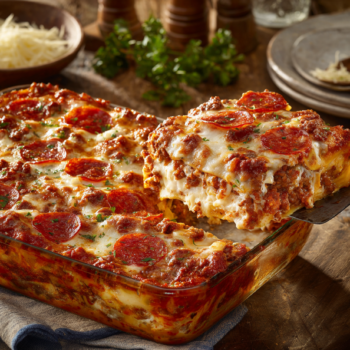
Easy Homemade Three-Cheese Lasagna Recipe

Ingredients
 2 pounds ground beef (minced beef)
 2 pounds mozzarella cheese - shredded
- 1 pound Mozzarella cheese
 2 pound ricotta cheese
 2 pounds Cottage cheese
- 2 jars prego
 8 ounces pepperoni
 12 big lasagna sheets
 7 shakes Italian herbs (oregano, rosemary, thyme, and sometimes basil and parsley)
 7 shakes oregano - dried
 5 shakes parsley - dried
 5 shakes ground black pepper
Instructions
- The first step is to brown the meat and lightly season it with Italian, oregano, parsley, and black pepper. I suggest 4 to 5 shakes of each seasoning and don't forget to drain your meat when it's done. You don't want oily meat.
- Boil your noodles for 10 minutes, be sure not to break them in half; just let them fold over and boil in the pot. I suggest laying each noodle flat in cool water on a shallow cookie sheet. Once all this is done, you begin on your meat sauce.
- Next, place the cooked and perfectly seasoned meat in a bowl. Make sure you taste that meat, and it should taste good. Don't serve food unless you know the meat is seasoned. Pour in the first jar of sauce, then half the tub of ricotta in with the meat and mix it all up. I should look similar to the pic below.
- Now you're ready to prepare your lasagna. Now, this is a personal judgment moment. Look at the mixture and decide if you need more ricotta or sauce. It should look like an even distribution of meat and ricotta and sauce. Place a little bit of sauce and shredded cheese at the bottom of the pan so the noodles will stick in place.
- Place the first layer of noodles across the bottom, next pour the meat sauce/ricotta mixture over it, shredded cheese, then pepperoni. Noodle, mixture, cheese, pepperoni. Repeat! It should have about 3 layers depending on how deep your pan is.
- Place about 1 cup of the leftover Prego sauce over the top, and spread it thin. Cover it with the cheese blend and top with pepperoni and 2 shakes of oregano and Italian.
- It should take 35 to 45 minutes to cook in the oven at 350 degrees Fahrenheit. Once the top layer is melted and looking crispy, you will know it's done. Let it sit for 15 minutes before you cut into it. It should be solid but still saucy. Adding the shredded cheese in-between layers helps make it solid and not so runny. Nothing can be too cheesy.
Nutrition
Common questions
Can I assemble this lasagna the night before and bake it the next day?
Yes, and it works well. Assemble the whole pan, cover tightly with foil, and refrigerate overnight. Add 10–15 minutes to the covered baking time since you’re starting from cold.
What internal temperature should the meat sauce reach to be safe?
Ground beef needs to hit 160°F (71°C). Since the sauce is cooked on the stovetop before assembly and then baked again, it will exceed that temperature well before the lasagna is done — but if you’re ever unsure, a quick check with an instant-read thermometer in the center of the pan is the safest call.
How do I keep the lasagna from drying out when I reheat it later in the week?
Add a tablespoon of water or extra tomato sauce on top of the portion before covering it with foil or a microwave-safe lid. This creates a little steam and keeps the pasta from turning rubbery.
Can I use cottage cheese instead of ricotta?
You can, and many people do. Drain it first through a fine mesh strainer for 20–30 minutes to remove excess liquid, otherwise the layers will be wetter than intended. The flavor is milder than ricotta but it works fine.
What to cook next
- Beef Ricotta Lasagna Rolls
- Ultimate Cheesy Beef Bake
- Creamy Beef Spinach Pasta
- Hearty Beef Cauliflower Bake