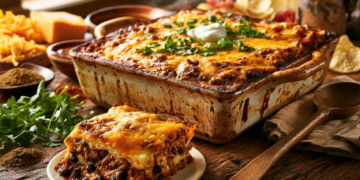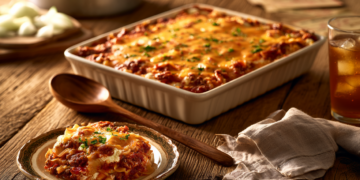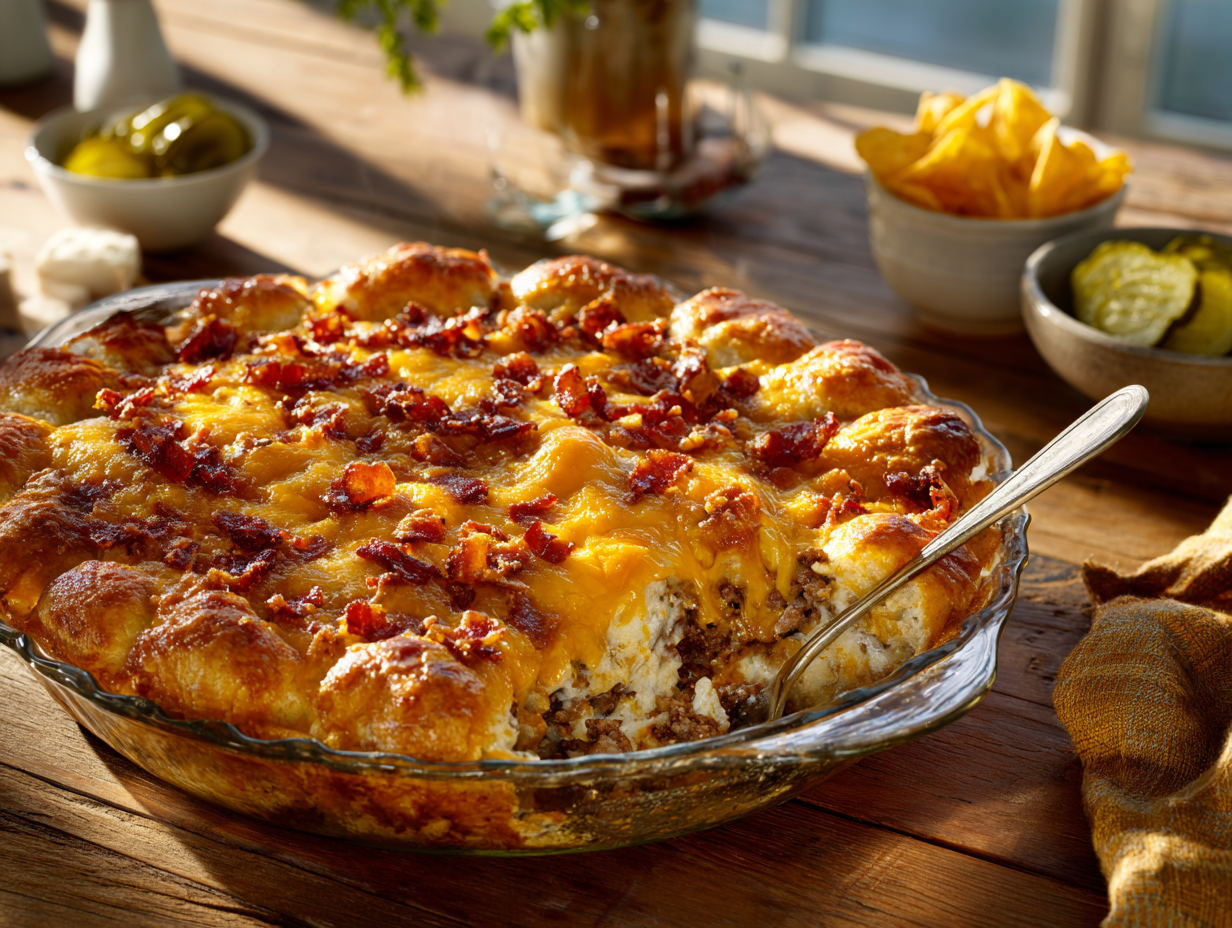
This casserole layers seasoned ground beef, chopped bacon, and melted cheese over a base of refrigerated crescent roll dough, then bakes until the top is golden and bubbling. It comes together in one baking dish with minimal prep, which makes it a genuinely useful weeknight option when you have ground beef to use and don’t want a pile of pots to wash afterward.
Before you start
The single technique that matters most here is draining the cooked ground beef thoroughly before it goes into the baking dish. Ground beef releases a significant amount of fat and liquid as it browns, and if that liquid sits on the crescent dough it will steam rather than bake, leaving you with a soggy, undercooked base instead of a set crust. Tilt the skillet and spoon out the excess fat, or transfer the beef briefly to a paper-towel-lined plate. The second thing worth knowing: press the crescent dough seams together firmly when you lay it in the dish. The perforations are there for cutting individual rolls, not for this application — any gaps will let the beef mixture sink through and stick to the pan.
Ingredient notes
- Crescent roll dough: Any standard refrigerated crescent roll tube works. The larger “seamless dough sheet” version, if your store carries it, skips the seam-pressing step entirely and is worth grabbing if you see it.
- Bacon: Pre-cooked bacon crumbles are a legitimate shortcut here and save you a separate pan. If you cook raw bacon yourself, do it before the beef and use the same skillet — the rendered fat adds flavor and you only dirty one pan.
- Cheese: Sharp cheddar melts cleanly and gives the most distinct flavor. Colby Jack is milder and creamier. A 50/50 blend of both is a reasonable middle ground. Avoid pre-shredded bags if you can — the anti-caking coating slows melting.
- Ground beef: 80/20 (chuck) works well and has enough fat for flavor, but drain it well. Leaner 90/10 is fine and needs less draining.
Troubleshooting
- Dough is raw in the center after the recommended bake time: Your oven likely runs cool, or the dish was too full. Tent the top loosely with foil to stop the cheese from over-browning, then continue baking in 5-minute increments until a knife inserted in the center meets no resistance from raw dough.
- Cheese is greasy and pooled rather than melted evenly: This usually means the beef layer was still too hot when the cheese went on. Let the beef cool for 3-4 minutes in the dish before adding cheese so it melts gradually in the oven rather than breaking from residual heat.
- Casserole sticks hard to the dish: Crescent dough sticks aggressively to ungreased glass or ceramic. A light spray of cooking oil on the dish before laying down the dough is enough to prevent this — skip the garnish, not worth the extra dish, but don’t skip greasing the pan.
- Beef layer tastes flat: Ground beef needs salt added during browning, not after. If the mixture tastes underseasoned before it goes into the dish, it will taste underseasoned in the finished casserole — cheese and bacon alone won’t fix it.
- Bottom crust is pale and doughy while the top is done: Glass baking dishes insulate more than metal. If you have a metal 9×13, use it — it conducts heat to the bottom of the dough more efficiently and produces a better-set base in the same bake time.
Make-ahead notes
The beef and bacon mixture can be cooked, drained, and refrigerated up to 2 days ahead in a sealed container. When you’re ready to bake, press the crescent dough into the dish, add the cold beef mixture straight from the fridge, top with cheese, and bake — add 5 minutes to the bake time to account for the cold filling. Fully baked leftovers keep well in the fridge for 3 days, covered tightly. Reheat individual portions in a 325°F (165°C) oven for about 12 minutes, or in a skillet over medium-low with a lid on, which keeps the dough base from drying out better than a microwave does. For freezing, bake and cool completely, then wrap individual portions in foil and freeze for up to 2 months; thaw overnight in the fridge before reheating.
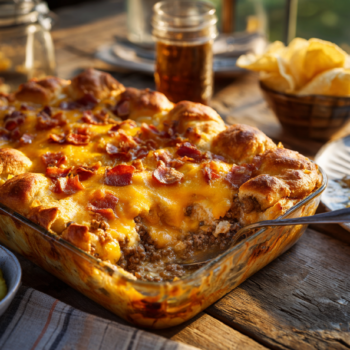
Heavenly Bacon Cheeseburger Crescent Casserole Recipe

Ingredients
 1 pound ground beef (minced beef)
 1 medium yellow onion - finely diced
 1 tablespoon garlic
 1 tablespoon Italian herbs (oregano, rosemary, thyme, and sometimes basil and parsley)
 ¼ cup ketchup (tomato sauce Australia and UK)
 ⅛ cup mustard
- ¼ cup dill pickle relish
- 2 tubes crescent rolls
 1 package bacon - bits
 2 cups cheddar cheese - shredded
Instructions
- Preheat the oven to 375 degrees Fahrenheit. Spray a 9×13 glass baking pan.
- Brown ground beef in a skillet over medium-high heat. While ground beef is cooking, spread one tube of crescent rolls at the bottom of the baking dish. Add onion to ground beef and cook until the onion starts to turn translucent.
- Add seasonings, 3/4 package of bacon bits, ketchup, mustard, and dill relish. Stir to mix thoroughly.
- Pour mixture over crescent rolls in pan, leaving some of the crescent roll edges showing. Top with 1 3/4 cheese. Roll out the other tube of crescent rolls over the mixture.
- Top with the remainder of cheese and bacon bits. Pop the casserole in the oven and cook for about 20 minutes or until the crescent roll top is golden brown. Cut into 8 sections and enjoy.
Nutrition
FAQ
Can I assemble this casserole the night before and bake it in the morning?
It’s better to store the cooked beef separately and assemble just before baking. Raw crescent dough sitting under a wet beef mixture overnight will absorb moisture and turn gummy — the baked result will be noticeably worse than if you assemble and bake fresh.
How do I know the ground beef is fully cooked to a safe temperature?
Ground beef needs to reach an internal temperature of 160°F (71°C). The most reliable way is a meat thermometer in the thickest part of the beef layer after baking, but if you brown the beef fully in the skillet before it goes into the dish — no pink remaining and juices running clear — it will easily hit that temperature during the oven bake.
Can I use a different protein instead of ground beef?
Ground turkey or ground chicken both work in this recipe. If you use either, cook them to 165°F (74°C) internal temperature, and be aware they are leaner than beef, so the filling will be slightly less rich — a tablespoon of Worcestershire sauce stirred in during browning helps with flavor.
My crescent dough keeps tearing when I press it into the dish — what am I doing wrong?
Cold dough tears more easily than room-temperature dough. Let the tube sit on the counter for 10 minutes before opening it, and it will press and stretch into the dish without fighting you. Work from the center outward rather than pulling from the edges.
What to cook next
- Ultimate Cheesy Beef Bake
- Hearty Beef Cauliflower Bake
- Savory Beef Sausage Rolls
- Savory British Beef Pies