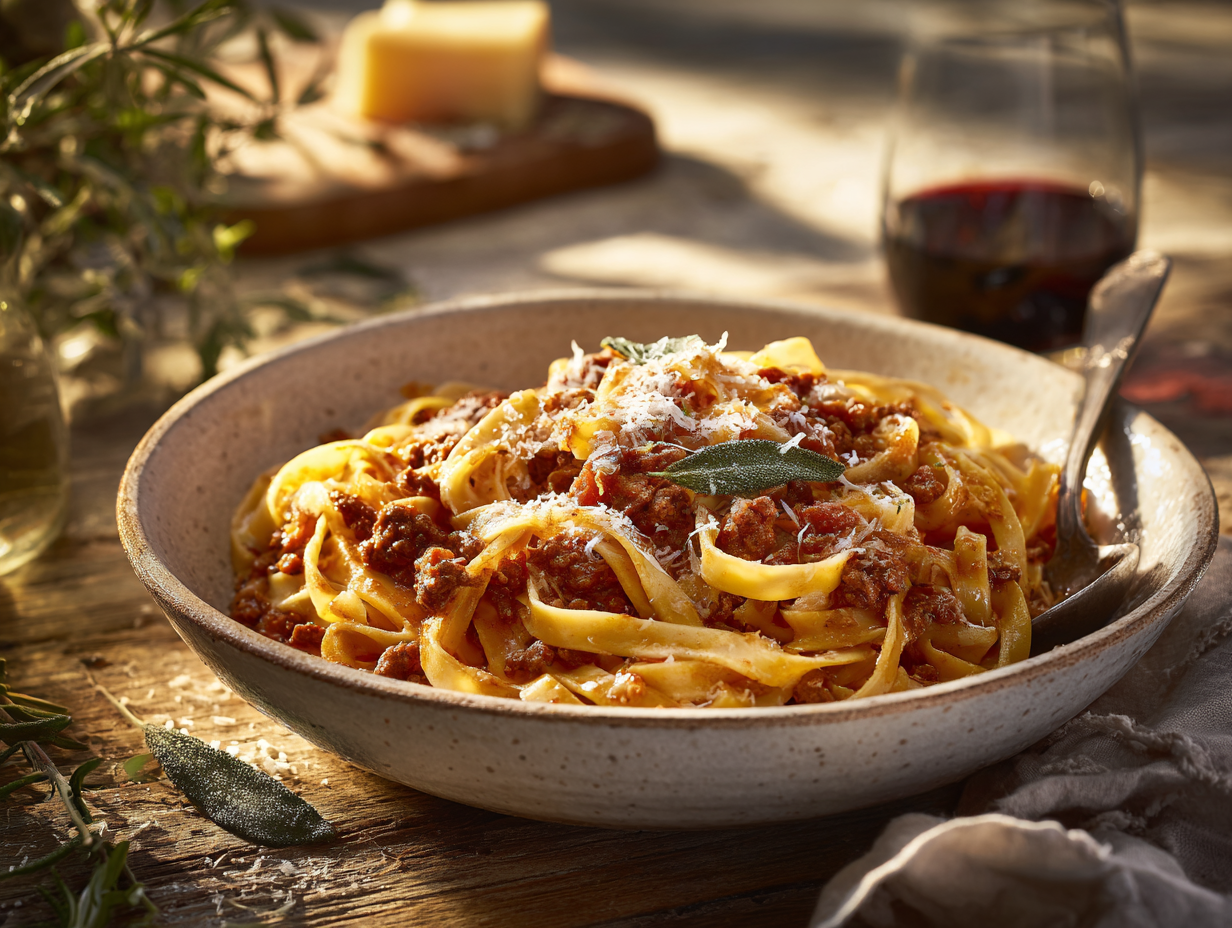
Fettuccine Bolognese is a slow-cooked meat ragù — ground beef, pork, and veal with pancetta, fresh tomatoes, and sage — tossed with egg fettuccine and finished with Parmigiano-Reggiano. It takes real time, around two to three hours of simmering, but most of that is hands-off. The payoff is a high-protein, genuinely filling meal that reheats better the next day than it tastes fresh.
What makes this version work
Two things matter most here. First, the three-meat combination — beef, pork, and veal — gives the sauce a layered flavor that a single ground meat simply can’t match. Beef brings body, pork adds fat and a mild sweetness, and veal keeps the texture fine rather than coarse. Second, the pancetta goes in before the aromatics, not with them. Rendering it first builds a fat base that carries flavor through the entire sauce. Skip that step and the sauce tastes flat no matter how long you simmer it. Everything else — the tomatoes, the sage, the long cook — is doing its job on top of that foundation.
Common problems and fixes
- Sauce is greasy after simmering: The fat has separated instead of emulsifying. Tilt the pot and spoon off the pooled fat, then stir vigorously over medium heat for two to three minutes to bring it back together before serving.
- Meat is clumping in large pieces: Ground meat needs to be broken up constantly during the browning stage, before any liquid goes in. Once liquid is added, the clumps set. Use a wooden spoon or potato masher early and often.
- Sauce tastes thin or acidic after an hour: It needs more time. The acidity from fresh tomatoes mellows significantly between the 90-minute and 2.5-hour mark. Don’t add sugar — just keep the lid slightly ajar and let it reduce.
- Fettuccine is sticking together before serving: Toss the drained pasta immediately with a ladle of sauce rather than letting it sit. If it has already clumped, a splash of the pasta cooking water loosens it without diluting the ragù.
- Parmigiano-Reggiano isn’t melting smoothly into the sauce: The sauce needs to be off the heat and not boiling when you stir in the cheese. High heat causes it to seize and go grainy instead of creamy.
Substitutions that actually work
- Veal: Hard to find in some areas. Ground turkey (dark meat if possible) is the closest substitute for texture — just make sure it reaches 165°F (74°C) internally. Ground pork can also fill the gap if you simply increase the pork portion.
- Pancetta: Unsmoked bacon works fine. Smoked bacon changes the flavor noticeably but isn’t wrong — just different. Skip the garnish of extra pancetta crisps if you go this route; not worth the extra dish.
- Fresh tomatoes: Good-quality canned whole San Marzano tomatoes, crushed by hand, are a reliable year-round substitute and often more consistent than out-of-season fresh ones.
- Egg fettuccine: Fresh pappardelle or tagliatelle work equally well. Dried semolina fettuccine is a workable backup but holds less sauce per strand — use a wider pasta shape if that’s what you have.
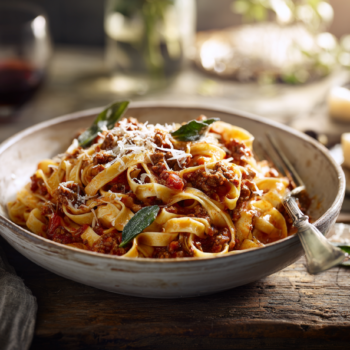
Delicious Homemade Fettuccine Bolognese

Ingredients
 2 tablespoons olive oil
 4 tablespoons butter
- 3 slices pancetta - thin slices (about 1/4 in thick), finely chopped
 1 large yellow onion - diced
 1 medium carrot - peeled and diced
 1 stalk celery - peeled and diced
 ½ pound ground beef (minced beef)
 ½ pound ground pork (minced pork)
 ½ pound ground veal (minced veal)
 1½ teaspoon salt
 1½ teaspoon ground black pepper
 1 teaspoon ground nutmeg
- ½ cup dry white wine
 2 cups beef stock (beef broth or beef bouillon)
 2 large tomatoes - chopped
 5 leaves sage - fresh
 1 piece bay leaf (bay leaves)
- 1 pound egg pasta - such as De Cecco Egg Fettuccine
 ½ cup Parmesan cheese - grated
 ½ cup pecorino romano cheese - grated
Instructions
- Using a large, Dutch oven or a heavy-bottomed pan, preheat 2 tablespoons butter and two turns of the pan’s worth of olive oil over medium heat.
- Sauté the pancetta until crispy (about three minutes). Add the onion, carrot, and celery and sauté an additional eight minutes or so. Remove from the pan, reserving the cooking oil.
- Use a little more oil if necessary, and add the meat to the pan. Season generously with salt and pepper and a good-sized pinch of ground nutmeg. Break up the meat into smaller pieces using a wooden spoon. Brown on all sides.
- Return the vegetables and pancetta to the pan and add the wine. Simmer until the sauce almost completely evaporates. (About a quarter of the liquid should be left in the pan.) Add the stock and reduce it by half. Add the tomatoes, sage, and bay leaf. Reduce heat to low. Cover the pan, and simmer for an hour and a half, stirring occasionally.
- Check the sauce roughly 20 minutes prior to serving. If it seems thin, remove the cover and simmer until thick and fragrant. Taste and adjust seasoning. Remove the sage and bay leaf and discard.
- Bring a large pot of water to a boil. Season generously with salt. Cook pasta per package instructions, less than a minute or two. Remove the pasta from the sauce and allow it to finish cooking there to absorb more flavor. Toss the pasta and the sauce together with the Parmesan and Pecorino Romano until the cheese is melted. Serve immediately.
Nutrition
Frequently asked questions
Can I make this with just ground beef instead of three meats?
Yes, but the sauce will be simpler and slightly less rich. Use an 80/20 ground beef for enough fat content, and make sure it reaches 160°F (71°C). The texture will be coarser than the three-meat version, so break it down as finely as possible during browning.
How do I know when the Bolognese is actually done?
The sauce is ready when the fat has mostly re-incorporated, the tomatoes have fully broken down, and the mixture clings to a spoon rather than running off it. A watery or bright-red sauce needs more time — the color should deepen to a brick-brown and the volume should reduce by roughly a third.
Can I freeze this sauce, and does it hold up?
Bolognese freezes very well for up to three months. Cool it completely, store it in flat portions in zip-lock bags or airtight containers, and thaw overnight in the refrigerator. Reheat gently over low heat with a splash of water or stock to loosen it — high heat can make the meat grainy.
What should I serve with this to make it a complete meal?
The ragù already delivers substantial protein from three meats plus pancetta, so a simple green salad with lemon and olive oil is enough on the side. Crusty bread works if you want to stretch servings further, and a glass of medium-bodied red — Sangiovese or Barbera — holds up well against the richness without fighting it.
What to cook next
- Beef Ricotta Lasagna Rolls
- Creamy Beef Spinach Pasta
- Spicy Calabrian Lamb Ragù
- Authentic Szechuan Dan Dan