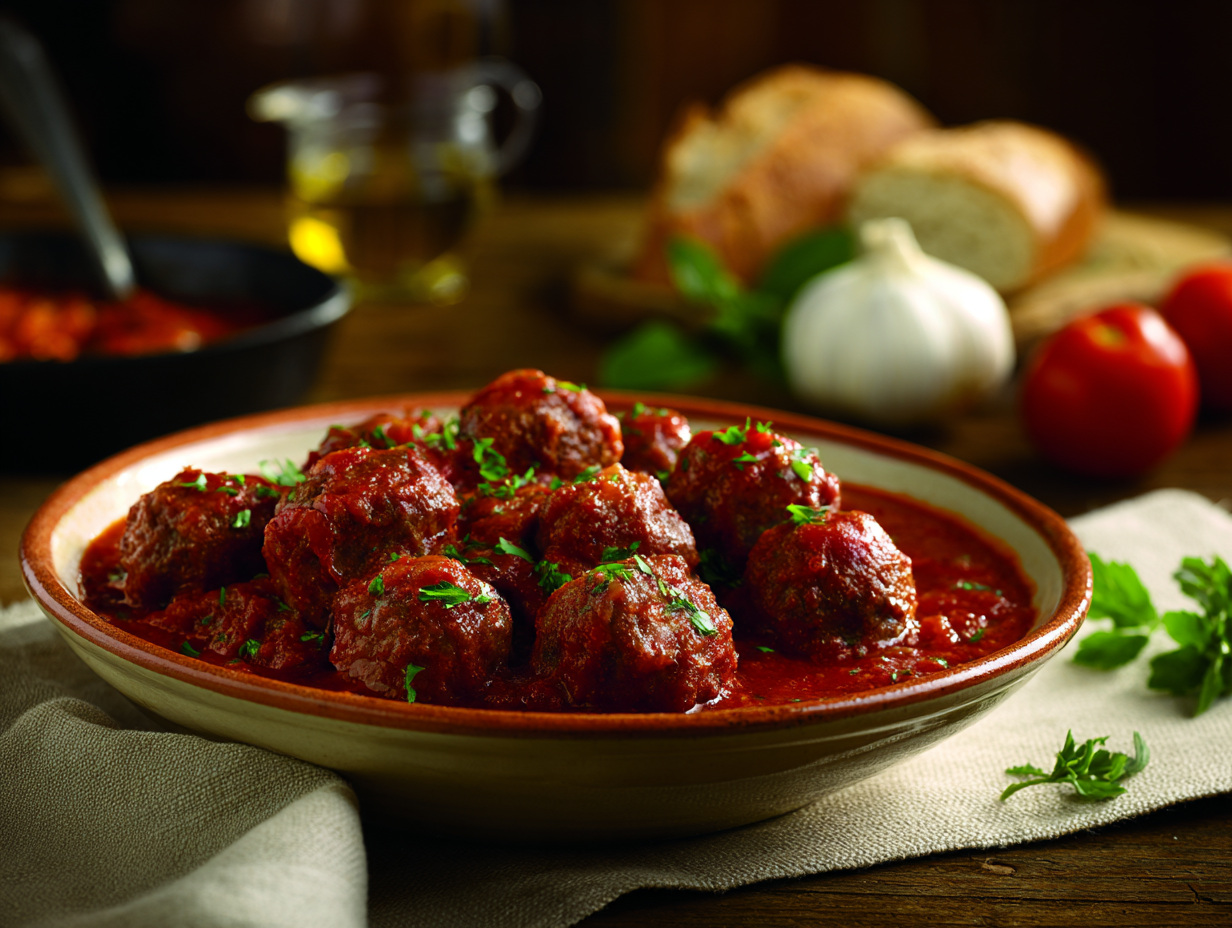
When you talk about iconic Italian-American food in New York City, Rao’s inevitably enters the conversation. Tucked away on East 114th Street in East Harlem, Rao’s is less a restaurant and more a culinary institution. With only about ten tables and a reservation book that is famously “spoken for” years in advance, dining there is closer to being invited into a private club than booking a night out. Since 1896, Rao’s has built its reputation not on trends or reinvention, but on consistency, tradition, and soul-satisfying simplicity. And at the heart of that reputation lies a plate of meatballs in marinara sauce.
To understand why Rao’s meatballs are so legendary, you have to appreciate the era and traditions they come from. Southern Italian immigrants arriving in New York in the late 19th and early 20th centuries brought with them recipes rooted in frugality and flavor. Meat was precious, tomatoes were abundant, and every dish was built around making simple ingredients taste extraordinary. Italian-American cooking evolved from these humble beginnings into something uniquely its own—generous, comforting, and bold. Rao’s meatballs embody that evolution perfectly.
In Italy, meatballs (polpette) are often smaller and served on their own, not necessarily paired with pasta. In Italian-American kitchens, however, meatballs found their soulmate in spaghetti and marinara sauce. The result is the kind of dish that feels like Sunday afternoon at Nonna’s house: a simmering pot on the stove, the scent of garlic and tomatoes filling the air, and a table crowded with family.
Rao’s didn’t become famous because it reinvented meatballs. Quite the opposite—it preserved a way of cooking that many places gradually abandoned in favor of shortcuts. The hallmark of their approach is restraint. High-quality ingredients. No unnecessary fillers. No overcomplication. Just technique, patience, and respect for tradition.
The magic starts with the meat itself. Great meatballs are not dense or rubbery; they are tender, moist, and almost delicate despite their robust flavor. That texture comes from balance—between beef and other meats, between breadcrumbs and liquid, between mixing enough and mixing too much. Overwork the mixture and you lose tenderness. Under-season it and the personality disappears. Rao’s achieves that sweet spot where the meatball is hearty yet light, structured yet yielding.
Then there’s the marinara.
If the meatball is the heart of the dish, the marinara is its soul. Rao’s marinara sauce has achieved near-mythical status. While their meatball recipe has long been shared publicly, the marinara has remained guarded. That mystery only adds to its allure. But the real secret isn’t a hidden spice or complicated technique—it’s discipline.
Authentic marinara sauce is defined by what it does not include. No heavy cream. No sugar overload. No excessive herbs masking inferior tomatoes. It is essentially tomatoes, olive oil, garlic, and a handful of carefully chosen seasonings. The brilliance of a well-made marinara lies in extracting maximum flavor from minimal components.
One of the most important decisions in crafting a marinara is the tomatoes. Italian canned tomatoes—particularly San Marzano varieties—have a unique balance of sweetness and acidity thanks to the volcanic soil in which they’re grown. While fresh tomatoes can be spectacular at peak summer ripeness, canned Italian tomatoes provide consistency and depth year-round. They are harvested and packed at optimal ripeness, preserving a concentrated flavor that forms the foundation of a proper sauce.
At Rao’s, and in our tested version of this recipe, the tomatoes are allowed to shine. The garlic is gently sautéed in olive oil just until fragrant—not browned, not bitter. The tomatoes are crushed by hand or lightly broken down, maintaining some texture. The sauce is simmered patiently, not rushed, allowing the flavors to marry and mellow. This slow integration creates a natural sweetness that eliminates the need for added sugar.
Another defining characteristic of great marinara is restraint with herbs. Fresh basil, added at the right moment, provides brightness and aroma. Too much dried oregano can overpower. Too much seasoning can blur the tomato’s natural character. The goal is harmony.
When the meatballs are nestled into that gently simmering marinara, something transformative happens. The sauce infuses the meat with acidity and herbal notes, while the meatballs release savory richness back into the sauce. It becomes a two-way exchange—a culinary conversation happening right in the pot.
Historically, this method of finishing meatballs in sauce also reflects home cooking practicality. Instead of frying meatballs solely for browning and serving them separately, many Italian-American cooks would brown them lightly and then allow them to finish cooking in sauce. This ensured moisture, tenderness, and flavor integration. It also meant fewer pans and a more unified dish.
Rao’s longevity since 1896 speaks to something deeper than just good food. It reflects a philosophy: if you honor ingredients and technique, you don’t need gimmicks. In a dining world driven by novelty and reinvention, Rao’s stands firmly planted in tradition. That steadiness is comforting. It reminds us that some dishes do not need updating.
For home cooks, recreating Rao’s meatballs in marinara sauce represents more than copying a restaurant recipe. It’s about reclaiming that feeling of abundance and warmth. It’s about slowing down long enough to simmer a sauce properly. It’s about choosing quality tomatoes over convenience blends. It’s about mixing meatballs gently by hand and tasting the sauce as it develops.
Perhaps that’s why this dish resonates so strongly. Meatballs in marinara are deeply nostalgic for many people—whether or not they grew up in an Italian household. It’s the kind of meal that welcomes everyone to the table. It’s unfussy but impressive. Rustic but refined.
Our version of Rao’s marinara has been tested and fine-tuned over the years to capture that balance of brightness, richness, and depth. We resisted the temptation to complicate it. No ready-made sauces. No pre-seasoned shortcuts. Just Italian canned tomatoes, good olive oil, fresh aromatics, and time. Sometimes we swap in fresh tomatoes when they are perfectly in season, but the canned variety consistently delivers that signature flavor profile people associate with classic marinara.
Cooking these meatballs and sauce at home brings a small piece of East Harlem into your kitchen. While most of us will never secure one of those legendary ten tables at Rao’s, we can experience the essence of what made the restaurant famous in the first place: food that feels personal, time-honored, and deeply satisfying.
In the end, the story of Rao’s meatballs in marinara sauce is a story about simplicity done exceptionally well. It’s about a century-old restaurant that never forgot its roots. And it’s about how, with the right ingredients and a bit of patience, you can create a dish worthy of culinary legend right at your own table.
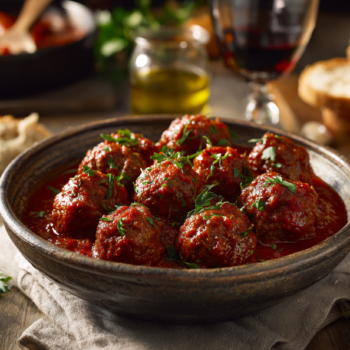
Comforting Rao’s Meatballs in Marinara Sauce Recipe

Ingredients
Marinara Sauce Ingredients
 800 grams Roma tomatoes - canned
 5 medium tomato - fresh
 ¼ cup olive oil
 1 medium yellow onion - minced
 4 cloves garlic
 1 dash sea salt
 1 dash ground black pepper - ground
 2 tablespoons honey
 1 bunch basil - fresh
Meatball Ingredients
 1 kilogram ground beef (minced beef)
- 2 cloves garlic
 2 large egg
 1 cup Pecorino Romano cheese - freshly grated
 1 bunch parsley - chopped
- 1 dash sea salt
- 1 dash ground black pepper
 2 cups breadcrumbs
 2 cups water
- 1 cup olive oil
Instructions
Marinara Sauce Instructions
- Place a saucepan on medium heat and add olive oil. Soften minced onions and garlic for 2 to 3 minutes when the oil is hot.
- Add canned tomatoes to the pan. Remove the skins of fresh tomatoes and add them as well.
- Bring to boil and lower the heat so that the mixture slowly simmers. Let it simmer without a lid for 45 minutes and stir every 10 minutes so that the tomatoes begin to break and about half of the liquid is vaporized.
- Add honey and season with salt and pepper to taste. Add torn basil leaves just before serving.
Meatball Instructions
- Mix all the ingredients except the oil with the ground meat. Make the meatball mixture nice and even with your hands. If you are using only beef (as we did), you can safely check the seasoning and add salt and pepper, if needed. The mixture should be fluffy and very moist. Roll 8 large meatballs with wet hands.
- Pour the oil into a large saucepan and bring it to 150 degrees Celsius. Put the meatballs in the oil. The oil level should go to the middle of the meatballs. Fry the meatballs from one side for about 10 minutes (the reason why the oil is not very hot is that the big meatballs’ interior cooks properly without burning them). Turn the other side and cook for another 10 minutes.
- Make some pasta (check out our previous post for instructions on how to make fresh pasta from scratch) and serve the meatballs with the marinara sauce.