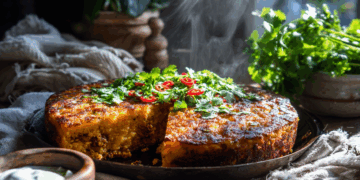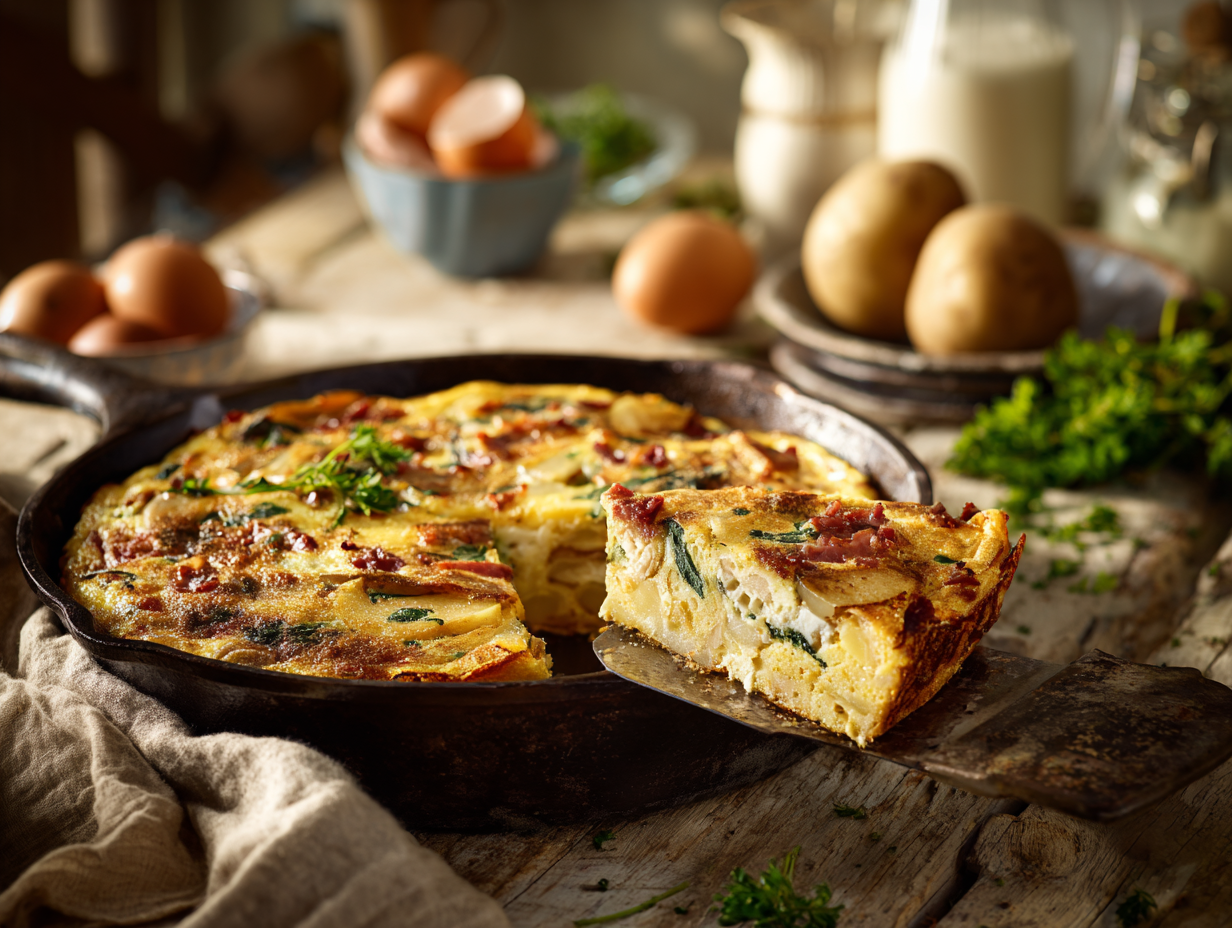
This frittata combines sliced potatoes, turkey bacon, spinach, and parsley in a stovetop-to-oven egg dish that works for breakfast, lunch, or dinner. It comes together in about 35 minutes and uses ingredients most people already have on hand. The result is a filling, protein-forward meal that reheats well and holds its shape when sliced.
Before you start
Two things determine whether this frittata turns out well. First, cook the potatoes through before adding the eggs — underdone potatoes won’t soften further once the egg sets, and you’ll end up with hard, starchy chunks in every bite. A fork should slide in easily before you move on. Second, keep the heat moderate when the eggs go in. High heat tightens egg proteins fast and turns the texture rubbery and dry. Medium-low is the right setting; the edges should just barely pull away from the pan before it goes into the oven to finish.
Smart swaps
- Turkey bacon: This is a leaner cut than pork bacon and cooks faster, so watch it closely — it can go from crisp to dry in under a minute. If you substitute regular pork bacon, drain the extra fat from the pan before adding the eggs.
- Spinach: Fresh or frozen both work. If using frozen, squeeze out as much water as possible first or the egg mixture will be watery.
- Milk: Whole milk gives the softest texture, but 2% works fine. Skip plant-based milks here — they can make the eggs weep liquid as they cook.
Storage and reheating
Cool the frittata completely before storing. Wrapped tightly or in an airtight container, it keeps in the refrigerator for up to 4 days. To reheat, a dry skillet over low heat for 3–4 minutes per side keeps the texture better than a microwave, which tends to make eggs rubbery — skip the microwave if you can. For freezing, cut into individual portions, wrap each one in plastic wrap, and freeze for up to 2 months. Thaw overnight in the fridge before reheating. Because this contains ground poultry (turkey bacon), make sure any reheated portion reaches 165°F (74°C) at the center before eating.
Mistakes to avoid
- Skipping the oven-safe pan check: Not all skillets can go under a broiler or into the oven. Plastic or rubber handles will melt. Use a cast iron or stainless steel pan, or transfer the mixture to an oven-safe baking dish before finishing.
- Crowding the pan with wet vegetables: Spinach releases water as it cooks. If you add it straight from rinsing without patting it dry, the egg mixture turns watery and the frittata won’t set properly in the center.
- Cutting it too soon: Slicing while the frittata is still hot causes it to fall apart. Let it rest for 5 minutes out of the oven — the egg continues to firm up during that time and slices cleanly.
- Under-seasoning the egg mixture: Eggs need more salt than you think, especially with potatoes in the mix. Taste the egg mixture before it goes in the pan and season it properly — bland frittata is the most common complaint and the easiest to prevent.
- Not checking the internal temperature: Because turkey bacon is ground poultry, the finished frittata should reach 165°F (74°C) at the thickest point. A cheap instant-read thermometer removes all guesswork — skip the garnish instead, not worth the extra dish.
Mesmerizing Potato And Turkey Bacon Frittata Recipe

Ingredients
 8 large egg
 3 large russet potatoes - peeled and sliced into 1/4 inch-thick rounds
- 7 strips smoked turkey bacon - cooked chopped, and mince (alternatively, ham, regular bacon, chicken, beef, or any other protein of your choice, you can be creative)
 ½ cup milk - alternatively, heavy cream or milk
 ⅓ cup almond flour - optional
 ½ medium green pepper (green capsicum) - seeded and diced
 ½ medium tomato - seeded and chopped
- ½ medium firm yellow tomato - seeded and chopped
 ½ medium red onion - chopped
 1 cup baby spinach - chopped
 1 tablespoon parsley - finely chopped
 2 tablespoons canola oil - alternatively, olive or vegetable oil
 1 teaspoon ground black pepper
 ½ tablespoon beef stock (beef broth or beef bouillon)
 1 pinch salt
Instructions
- Preheat the oven to 375°F.
- Cook turkey bacon in a skillet until crisp. Turkey bacon has less fat than pork. If the skillet is too dry while cooking the turkey bacon, add 1 teaspoon of canola or olive oil. Once the turkey bacon is ready, transfer to a bowl lined with a paper towel.
- Boil potatoes in 2 cups of water, seasoned with 1/4 teaspoon. Salt for about 10 minutes or until potatoes are cooked but not overcooked. Strain excess water and set potatoes aside to cool.
- Heat 2 tablespoons of canola oil in a skillet. Add onions, tomatoes, and bell pepper and sauté for 1 minute, stirring intermittently. Add black pepper and 1/4 teaspoon salt. Stir; add spinach and sauté for 30 seconds. Set aside to cool completely.
- Crack and whisk eggs in a bowl. Add half-and-half, almond flour and mix thoroughly. Mince 6 of the cooked turkey bacon set aside earlier and add to the egg mixture. Add chicken bouillon and the cooled sauce set aside in step 4. Ensure that the sauce is completely cooled before adding it to the eggs.
- Grease a round baking pan with butter, then neatly line the bottom of the greased pan with the cooked potatoes. Pour egg mixture over the assembled potatoes and bake in the oven for 45 minutes or until cooked.
- Garnish with the last turkey bacon and chopped parsley. I also prefer citrus fruit or any other piece of fruit on the side to cleanse my palate afterward. A slice of grapefruit and watermelon are good for this recipe.
Nutrition
FAQ
Can I use pre-cooked or leftover potatoes instead of raw?
Yes, and it actually saves time. Pre-cooked potatoes — roasted, boiled, or even leftover home fries — just need a quick warm-through in the pan before the eggs go in, since they’re already soft.
How do I know when the frittata is fully cooked?
The center should not jiggle when you gently shake the pan, and an instant-read thermometer inserted at the thickest point should read 165°F (74°C). A frittata that looks set on top but reads below that temperature needs more time — the eggs can look done before the interior is safe.
My frittata stuck to the pan. What went wrong?
The pan likely wasn’t hot enough before the oil or butter was added, or the fat wasn’t spread evenly before the egg mixture went in. Heat the pan first, then add fat and swirl it to coat the sides as well as the bottom before pouring in the eggs.