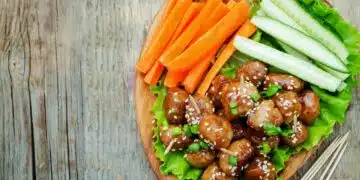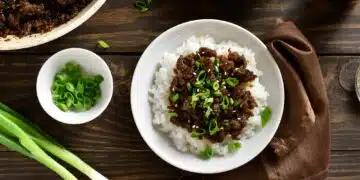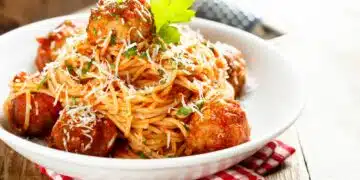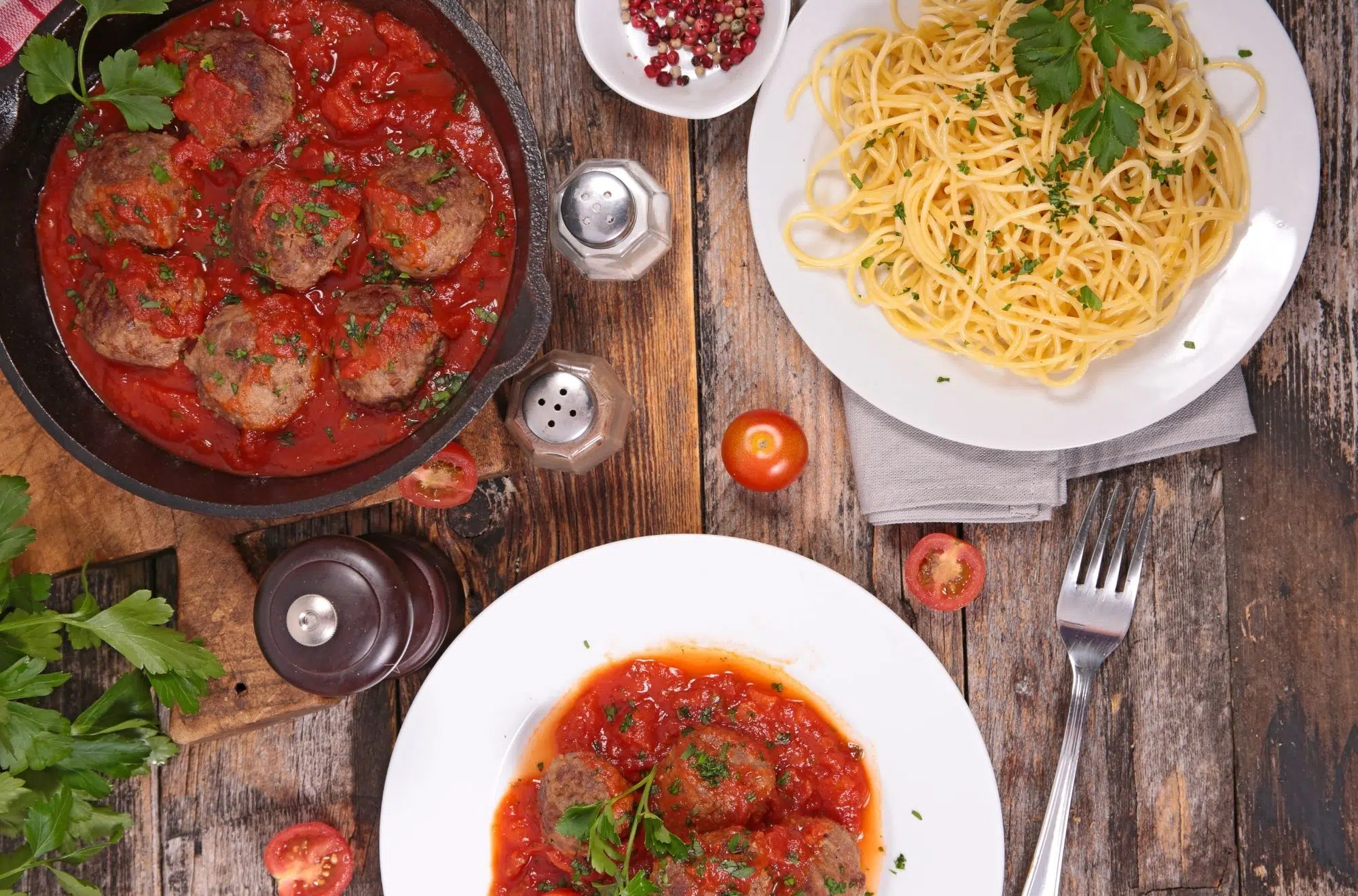
The picture above displays a bit of my soul. I always had Spaghetti Sauce And Meatballs on a weekly basis when I was young, I think. I remember my mom starting the sauce around noon, and then the house would smell of tomato and garlic for the rest of the day. As we came in and out of the house while playing, the aroma got stronger the closer we got to dinner. My cousin had (and still has, I would guess) a penchant to take whatever bread was around, drench it in sauce, and then eat it with gusto, maybe even with a meatball on it. In time, I acquired the same habit. Simply put, this spaghetti sauce and meatballs is THE representative Italian-American dish. We all do it in some shape or form.
Any Italian who makes Spaghetti Sauce And Meatballs has their own variation (kind of like how everyone has their own version of meatloaf, as I noted a few recipes back). I have my own recipe for Spaghetti Sauce And Meatballs based on the one my mom taught me, which she learned from my grandmother. My cousin has his recipe for sauce and meatballs, probably based on my mom’s, and then suffused with his own interpretation.
My cousin gave me the recipe below a few weeks ago. He has a few recipes for sauce and balls, but he told me that I need to make this and then, after I taste it, to try not to play with myself. Go figure, I changed it a bit when I made it yesterday, and it is quite different from Spaghetti Sauce And Meatballs (I will post MY sauce sometime in the near future…all good things to those who wait).
Still, I stayed pretty close to what he sent me and, no joke, it’s one of the best I’ve ever made and/or eaten. What is superior in this recipe compared to mine is that it takes 1/3 of the time, which is a beautiful thing for people who are busy. He told me that he got it from a New York Times cookbook, and I tried to find it online. Alas, I found nothing near it, but my mentioning it here will serve as the equivalent of documentation. If I come across it in the future, I will notate it then.
Spaghetti Sauce and Meatballs
Note: Start making the balls when the sauce has been cooking for about 10 minutes or so.
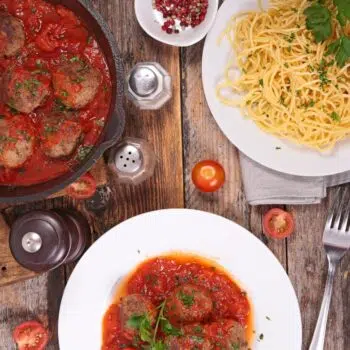
Heavenly Spaghetti Sauce And Meatballs #1

Ingredients
TO MAKE THE MEATBALLS:
 1 pound ground veal (minced veal) - you could probably use beef if you’re in a pinch or if you’re anti-veal
 2 teaspoons olive oil
 ½ medium yellow onion - chopped
 2 cloves garlic - minced
 1 tablespoon dried dill - crushed, or 1/4 cup fresh dill, chopped
 1 tablespoon parsley - chopped, or 1 teaspoon dried
 ⅛ teaspoon nutmeg
 1 teaspoon salt
 ½ teaspoon ground black pepper
 ¼ cup Parmesan cheese - grated
 1 large egg - beaten
 ½ cup dried breadcrumbs - use dried if needs be
 ¼ cup all purpose flour (plain flour Australia and UK)
 2-5 tablespoons vegetable oil - veggie or olive for frying
TO MAKE THE SAUCE:
- ¼ cup olive oil
- 1 medium yellow onion - chopped
- 4 cloves garlic - peeled and smashed with the side of a knife
 ½ cup white wine - or red, if that’s what you have
 2 28- cans passata or crushed tomatoes (tomato puree with seeds removed) - 28-ounce each, if you have diced, put them in a bowl and crush them with your hands
 1 tablespoon dried basil
- 1 tablespoon salt - and then to taste as it cooks
- ½ tablespoon ground black pepper - and then some more to taste
Instructions
TO MAKE THE MEATBALLS:
- Heat the 2 teaspoons of olive oil in a small skillet over medium heat and add the onion and garlic. Cook this until translucent and soft, about 5 minutes, and then set it aside to cool.
- In a large bowl, add the veal, dill, parsley, nutmeg, salt, pepper, cheese, egg, and bread crumbs. Add the cooled onion and garlic mixture now. Wash your hands well. Then, mix this puppy up with your hands (it’s the only way) and don’t be afraid to handle the meat too much. Just get it all mixed together very well.
- Have a glass of cold water next to you for you to keep your hands moist as you roll the balls. Take about a 1/4 cup of the meat mixture and shape it into a ball. Repeat until you have roughly 15 to 18 balls of fairly equal size.
- In a large skillet, heat about 3 tablespoons of oil over medium-high heat. When it’s ready, a drop of water will sizzle and pop; don’t put in the meatballs until this happens.
- Dredge each meatball in the flour and shake off the excess. Put half of the meatballs in the hot oil in a single layer, and cook these guys until they’re quite brown on every side. Use a fork and tongs or some combination like it to move the balls around in the oil.
- Shake off any excess oil (or drain them on paper towels) and put them directly into the simmering sauce. Once they’re all in the sauce, cook them for about 30 minutes long, and they’re ready to go.
- To serve, remove the balls to a separate bowl and pass them around the table with a serving spoon.
TO MAKE THE SAUCE:
- In a heavy-bottomed saucepan or pot or dutch oven, heat the oil over medium-high heat until hot. Add the onions and cook them for a few minutes. Reduce the heat to medium-low and add the garlic. Cook the onions and the garlic slowly for 20 minutes or so until the onion is golden brown (note: This is KEY! Browning the onions is where a lot of the flavor comes from, so don’t rush it).
- Once they’re golden, raise the heat to be medium-high again and add the wine. Scrape up any brown bits from the bottom of the pan if there are any.
- Add the tomatoes, basil, salt, and pepper and get it boiling.
- Reduce the heat and let it simmer, partly covered, for 30 minutes. Stir it once in a while. Add the meatballs and cook for another thirty minutes or longer until the pasta is ready. If the sauce gets too thick, add some water to it.
- Make whatever pasta you want according to the package instructions, drain, and then put it back in the pot. Immediately add about a ladle or two of the sauce and mix it well into the pasta. It coats the pasta.
- Fill a bowl with pasta, top with a ladle of sauce, and pass the Parmigiano and the meatballs. Serve it with some good Italian or French bread, and end it all with a light salad. Everyone’s happy.