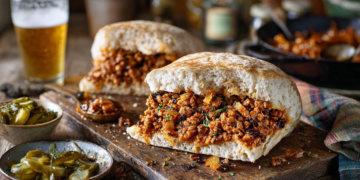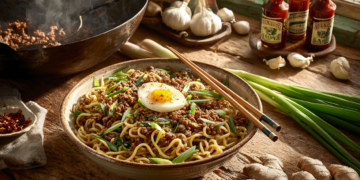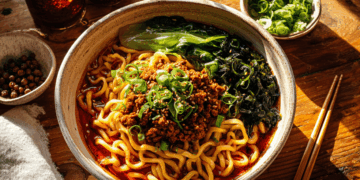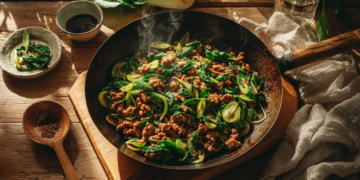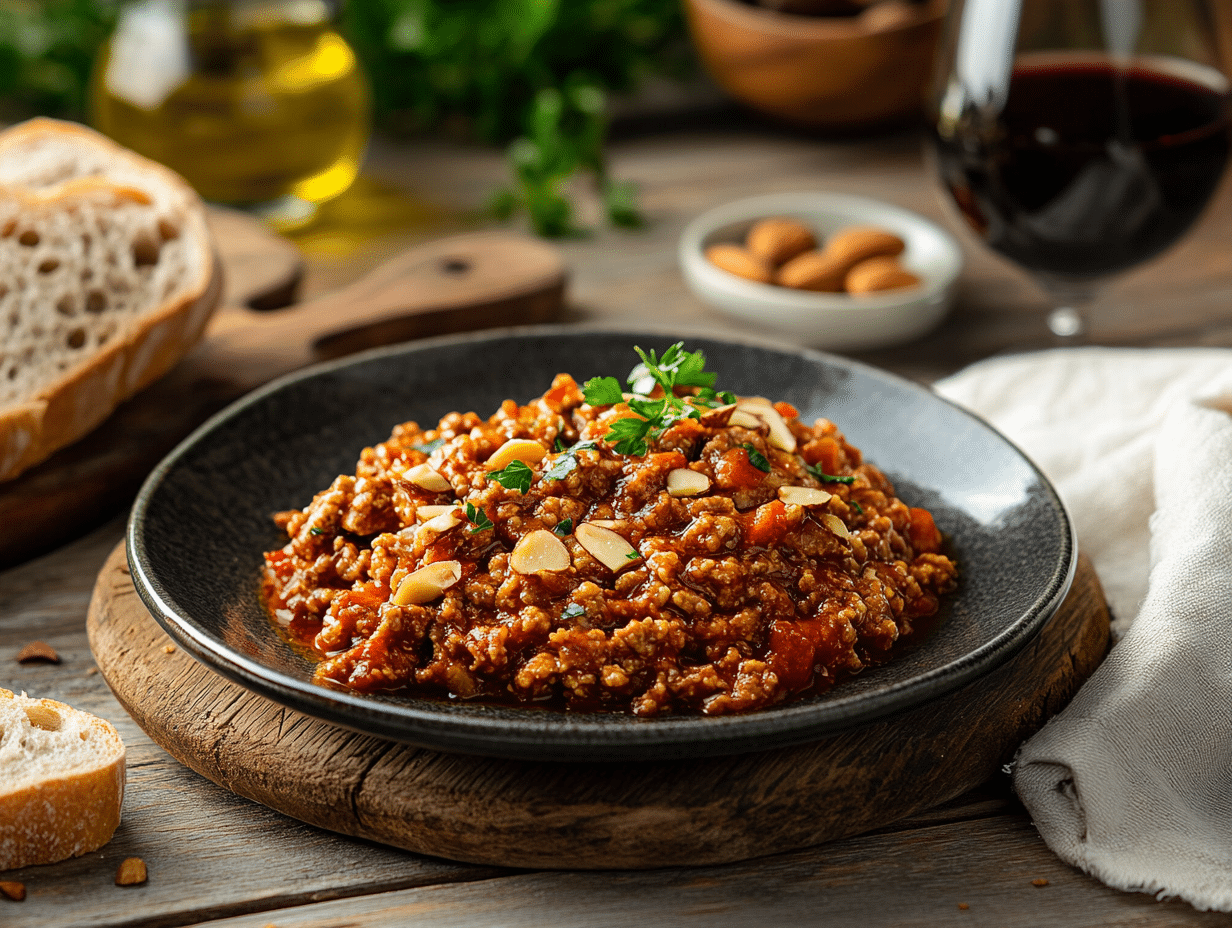
This is ground pork cooked with onion and garlic, then sauced with a blended romesco made from roasted red peppers, toasted almonds, smoked paprika, and red wine vinegar. The whole thing comes together in about an hour, and most of that time is hands-off simmering. It works over rice, mashed potatoes, or with bread — whatever you have.
Shopping notes
- Roasted red peppers: Jarred, drained peppers work perfectly here. No need to roast your own on a weeknight.
- Almonds: Buy them pre-toasted if you can find them — it cuts one step. Marcona almonds give a slightly creamier sauce if you want to spend a little more.
- Smoked paprika: Make sure it says smoked (pimentón ahumado), not sweet or hot. It’s doing most of the flavor work in the sauce.
- Ground pork: Standard supermarket ground pork is fine. Organic is optional — the sauce is bold enough that the difference is minimal.
Before you start
The romesco blends in about 60 seconds, but the order of operations matters: get the pork fully browned and cooked to 160°F (71°C) before you add the sauce. If you pour the romesco over undercooked pork and then try to finish it, the sauce can scorch on the bottom of the pan before the meat is safe. Brown the pork first, drain any excess fat if there’s a lot of it, then add the sauce and drop the heat to a gentle simmer. That 10-minute simmer at the end isn’t just for flavor — it also keeps the sauce from splitting.
What can go wrong
- Sauce is grainy or separated: The almonds need enough blending time to break down fully. Blend for at least 60 seconds, scraping the sides once. Under-blended almonds leave a gritty texture that doesn’t smooth out once it hits the pan.
- Sauce tastes flat: Red wine vinegar loses its punch quickly when heated. If the finished dish tastes dull, add a small splash of vinegar right at the end, off the heat.
- Pork is dry and crumbly: This usually means the heat was too high during browning. Medium heat and breaking the mince into small pieces early gives you more surface contact and keeps it from drying out.
- Sauce sticks and burns during the simmer: Keep the heat low — a bare simmer, not a bubble. Stir every couple of minutes. The almond content makes this sauce more prone to catching than a tomato-based one.
- Too thick after simmering: Stir in a tablespoon or two of water to loosen it. The sauce thickens as it cooks down, and the right consistency should coat the pork without glueing it together.
Leftovers and meal prep
Leftovers keep well in an airtight container in the fridge for up to 3 days. The sauce actually thickens overnight, so add a splash of water when reheating in a pan over medium-low heat — skip the microwave if you can, as it tends to dry the pork out. For freezing, portion into freezer bags and freeze flat for up to 2 months; thaw overnight in the fridge before reheating. If you want to get ahead, the romesco sauce itself can be blended and refrigerated up to 3 days in advance, so on the night you’re cooking, you’re just browning pork and stirring — about 20 minutes total. Skip storing it with bread on the side — soggy bread reheats badly and isn’t worth the extra container.
Pork Mince with Romesco Sauce

Ingredients
 1 lb ground pork (minced pork) - preferably organic
 2 tablespoons olive oil - extra virgin
 1 medium onion - finely chopped
 3 cloves garlic - minced
- 1 cup red peppers - drained, roasted, and chopped
 50 g almonds - toasted
 1 teaspoon smoked paprika
 3 tablespoons red wine vinegar
Instructions
- Heat the olive oil in a large skillet over medium heat. Add the finely chopped onion and minced garlic, cooking until the onion becomes translucent and fragrant, about 5 minutes.
- Add the pork mince to the skillet, breaking it apart with a wooden spoon. Cook until browned and cooked through, approximately 10 minutes.
- In a blender or food processor, combine the roasted red peppers, toasted almonds, smoked paprika, and red wine vinegar. Blend until smooth and creamy.
- Pour the Romesco sauce over the cooked pork, stirring well to combine. Allow the mixture to simmer gently for another 10 minutes to meld the flavors. Season with salt and pepper to taste.
Notes
Nutrition
Common questions
Can I use a different nut if I don’t have almonds?
Yes — hazelnuts are the most traditional substitute and work well. Walnuts also blend smoothly, though they add a slightly bitter edge; use a little less vinegar to balance it.
How do I know the pork is cooked through before adding the sauce?
Ground pork needs to reach an internal temperature of 160°F (71°C) — no pink should remain. In practice, after about 10 minutes over medium heat with regular stirring, it will be fully browned and safe; a meat thermometer confirms it quickly if you’re unsure.
Can I make this ahead and reheat it for dinner?
Yes, and it reheats well. Reheat gently in a pan over medium-low with a splash of water to loosen the sauce, stirring occasionally until it’s hot all the way through.
What’s the best thing to serve this with?
Rice and mashed potatoes both work well because they soak up the sauce. Crusty bread is the fastest option if you want to skip cooking a side entirely.
What to cook next
- Savory Pork Noodle Stir-Fry
- Spiced Pork Mince Flatbreads
- Spicy Calabrian Lamb Ragù
- Spicy Beef Stuffed Peppers