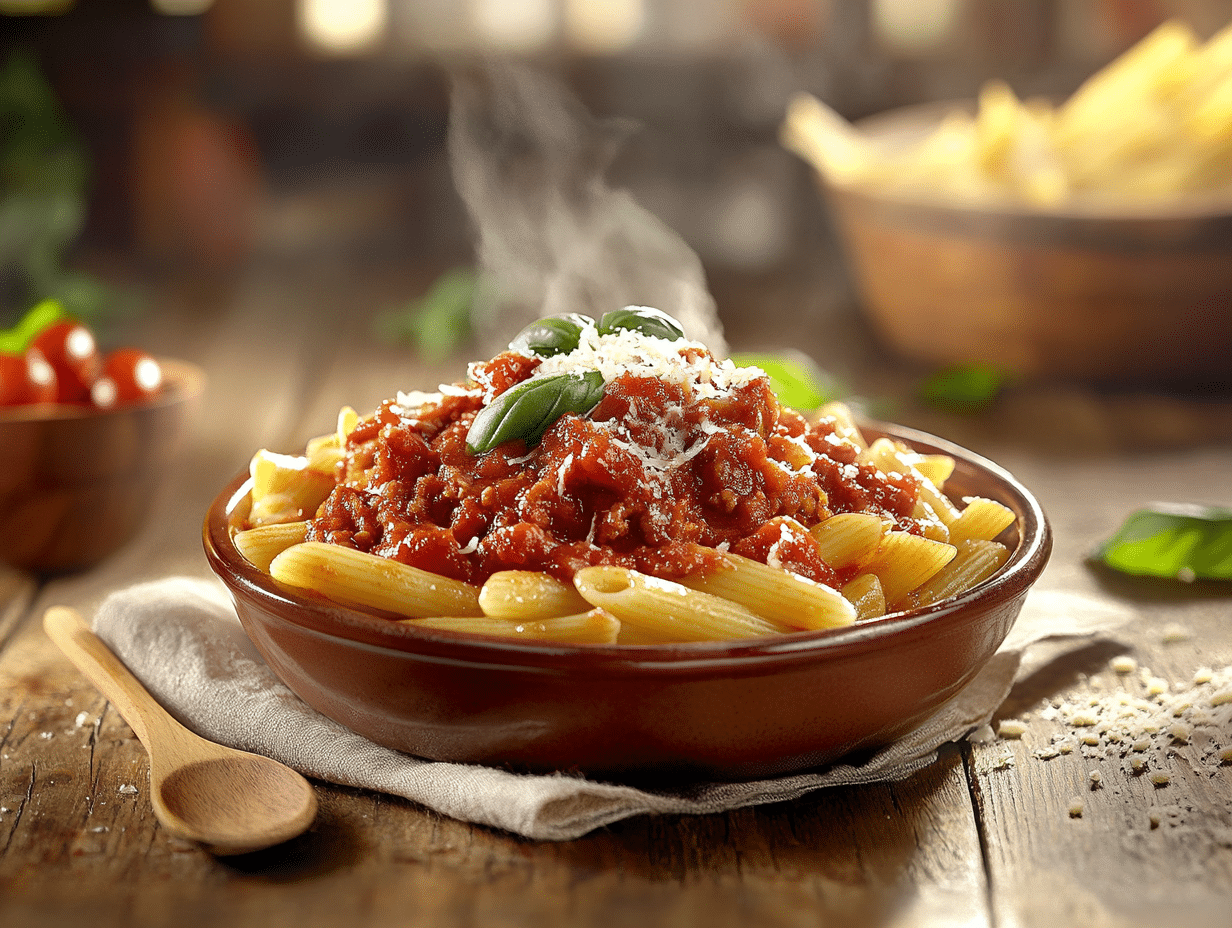
This is a pork mince ragu simmered with fresh tomatoes, garlic, chilli, and a small hit of cinnamon, served over a measured 50g portion of penne. The honest reason to make it: it comes together in one pan in 35 minutes, and the sauce-to-pasta ratio is deliberately heavy on the meat, so it actually fills you up.
Shopping notes
- Lean pork mince: Most supermarkets stock it labelled as 5% fat or less. If you can only find standard pork mince, drain the fat off after browning before adding the tomatoes.
- Baby Pomodorino tomatoes: Any small cherry tomato works. They burst during cooking and add a fresher note than tinned alone — don’t skip them if you can help it.
- Knorr chicken gel stock cube: A standard chicken stock cube dissolved in a tablespoon of hot water is a direct swap. Beef stock also works but makes the sauce darker and heavier.
- Cinnamon in a savoury sauce: Use ground cinnamon from a jar you already have — no need to buy anything special. A level teaspoon is correct; more than that tips the sauce into sweet territory.
What makes this version work
Two things matter here. First, browning the onion, garlic, and chilli properly before the mince goes in — this takes a few extra minutes but builds the base flavour the tomatoes will absorb later. Rushing this step and adding the mince while the onion is still pale gives you a flat-tasting sauce no amount of simmering will fix. Second, the pasta portion is cooked separately and added to a measured amount of ragu rather than stirring everything together in one big batch. That keeps the pasta from soaking up all the sauce and turning stodgy, and it means leftovers stay as ragu rather than a congealed pasta block — much easier to reheat well.
Common problems and fixes
- Sauce is watery: The fresh tomatoes release a lot of liquid. If the ragu looks thin after the Pomodorino tomatoes go in, turn the heat up slightly and leave the lid off for the last 5–8 minutes to reduce it down.
- Pork mince clumping in large chunks: Break it up with a wooden spoon as soon as it hits the pan and keep moving it. Once it steams rather than fries it sticks together — work quickly over medium-high heat.
- Sauce tastes flat or acidic: The stock cube does a lot of work here. Make sure it’s fully dissolved and stirred in. If the tomatoes are particularly sharp, a small pinch of sugar stirred in at the end balances it without sweetening the sauce noticeably.
- Pork not cooked through: Ground pork must reach 160°F (71°C) at the centre — no pink remaining. If you’re unsure, use an instant-read thermometer before adding the tomatoes, since the colour of the meat can be misleading once the spices are mixed in.
- Pasta sticking together after draining: Toss it with a tiny drizzle of olive oil immediately after draining if it’s sitting for more than a minute before you add it to the ragu. Skip the garnish — not worth the extra dish.
Make-ahead notes
The ragu keeps well in the fridge for up to 3 days in a sealed container — store it without the pasta mixed in so the penne doesn’t go soft. It also freezes well for up to 2 months; portion it into 200g servings before freezing so you can defrost exactly what you need. Reheat from fridge in a small saucepan over medium heat with a splash of water to loosen it, stirring until piping hot throughout (at least 165°F / 74°C). Cook fresh pasta when you’re ready to eat rather than reheating cooked pasta alongside the sauce.
Pork Mince Ragu with Penne Pasta (35 Minutes)

Equipment
Ingredients
 1.75 pounds ground pork (minced pork) - (lean) minced pork, about 1 lb 12 oz — makes approximately 4 x 200g ragu portions
- 4 medium Italian tomatoes - chopped
- 5 oz baby Pomodorino tomatoes - fresh, about 150 g
 1 teaspoon cinnamon
 ½ teaspoon paprika
 2 cloves garlic - finely chopped
- 1 piece chicken stock pot or gel stock cube - such as Knorr, or 1/2 standard chicken stock cube dissolved in 2 tablespoons boiling water
 1 large onion - finely chopped
- ⅓ oz basil leaves - (fresh) roughly chopped, about 8-10 leaves (10 g)
 1 medium red chilli - finely chopped
 3.5 oz penne pasta - uncooked weight, 50g per serving
 2 tablespoons olive oil - 30ml
 1 pinch salt - to taste
 1 pinch ground black pepper - (freshly ground) to taste
Instructions
- Heat the olive oil in a large non-stick frying pan over medium heat. Add the finely chopped onion, garlic, and red chilli. Sauté for 5-6 minutes, stirring occasionally, until the onion is softened and golden brown.2 tablespoons olive oil, 1 large onion, 2 cloves garlic, 1 medium red chilli
- Add the lean pork mince to the pan, breaking it up with a wooden spoon. Cook for 6-7 minutes over medium-high heat until browned all over, with no pink remaining.1.75 pounds ground pork (minced pork)
- Sprinkle in the cinnamon and paprika, then stir well to coat the mince evenly. Cook for 1 minute until the spices are fragrant.1 teaspoon cinnamon, 1/2 teaspoon paprika
- Add the chopped Italian tomatoes and the chicken stock pot (or dissolved stock cube). Stir well, scraping up any browned bits from the bottom of the pan. Bring to a gentle simmer.4 medium Italian tomatoes, 1 piece chicken stock pot or gel stock cube
- Once the sauce has simmered for 3-4 minutes and the stock has been absorbed, add the baby Pomodorino tomatoes whole. Stir gently and continue simmering for 8-10 minutes until the tomatoes have softened and begun to burst.5 oz baby Pomodorino tomatoes
- When the ragu is thick and rich, remove from the heat and stir through the roughly chopped fresh basil. Season to taste with salt and freshly ground black pepper.1/3 oz basil leaves, 1 pinch salt
- While the ragu simmers, bring a medium saucepan of salted water to a rolling boil. Cook 100g of penne pasta (50g per serving) according to the packet instructions until al dente. Drain in a colander, reserving 2 tablespoons of pasta water.3.5 oz penne pasta
- Divide the cooked penne between two warmed bowls. Spoon approximately 200g of the pork ragu over each portion of pasta, adding a splash of reserved pasta water if needed to loosen the sauce. Serve immediately with an extra basil leaf on top if desired.
Notes
Nutrition
Frequently asked questions
Can I use regular pork mince instead of lean pork mince?
Yes, but drain the excess fat from the pan after browning and before adding the tomatoes. Standard pork mince can release a significant amount of fat that will make the finished sauce greasy if left in.
Is 50g of uncooked penne really enough pasta for one person?
It is when the ragu portion is 200g — the sauce is protein-heavy enough that the meal is filling. If you’re used to larger pasta portions, cook 75g and adjust accordingly, but try the 50g version first.
Can I use tinned tomatoes instead of fresh Italian tomatoes and Pomodorino?
Yes — one 400g tin of chopped tomatoes replaces the fresh Italian tomatoes. Add a handful of halved cherry tomatoes from a punnet in place of the Pomodorino if you want some texture, or just use the tin on its own.
What can I use instead of penne?
Any short pasta with ridges or tubes — rigatoni, fusilli, or farfalle — all hold this sauce well. Avoid long pasta like spaghetti; the chunky mince sauce doesn’t cling to it the same way.
How do I know when the pork mince is fully cooked?
Ground pork is safe to eat at 160°F (71°C) internal temperature with no pink remaining — use an instant-read thermometer if you’re unsure. The cinnamon and paprika can tint the meat, so colour alone isn’t a reliable guide here.
If you liked this one
- Savory Pork Noodle Stir-Fry
- Creamy Beef Spinach Pasta
- Spicy Calabrian Lamb Ragù
- Spiced Pork Mince Flatbreads