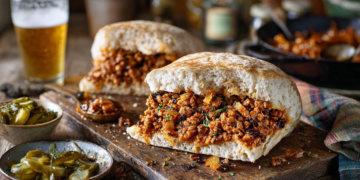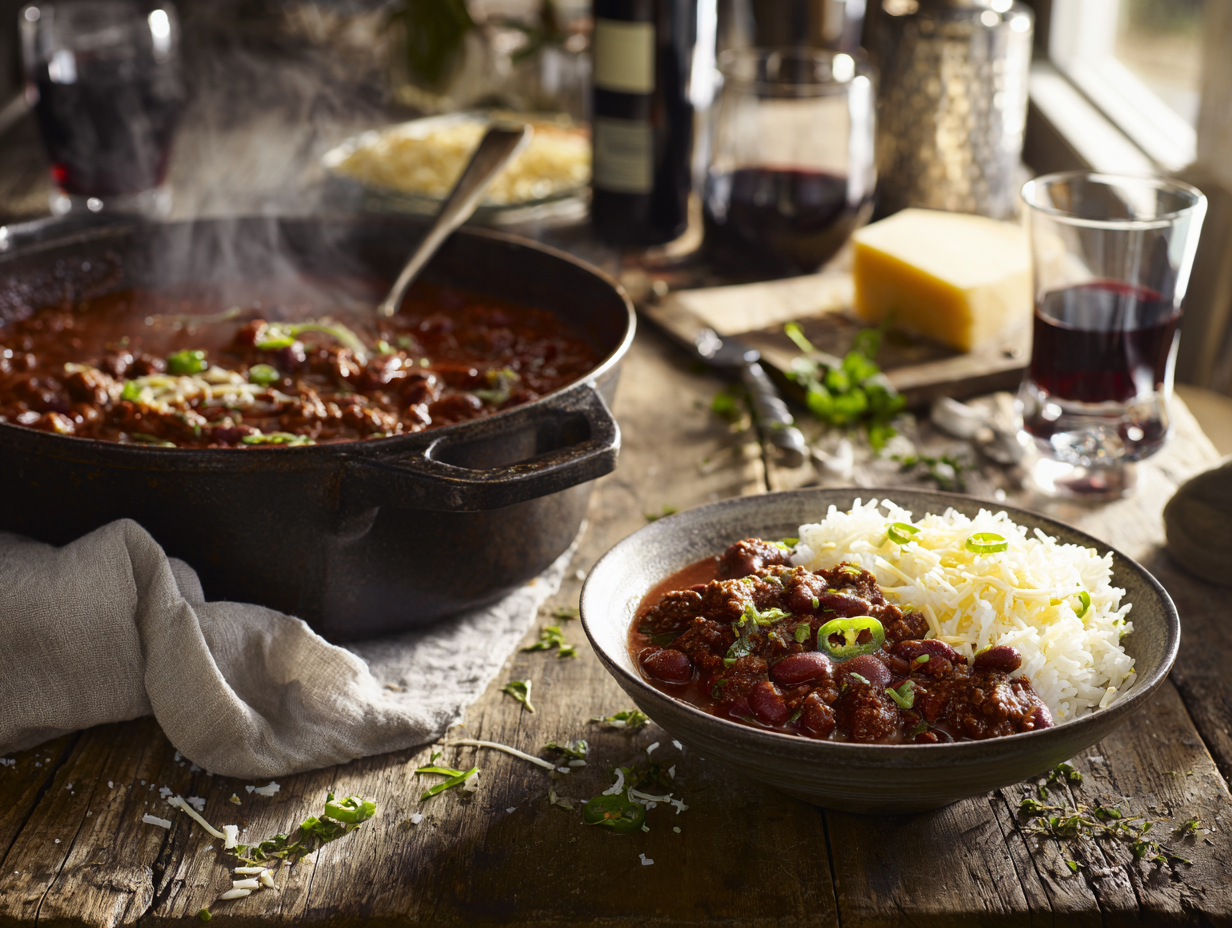
This is a ground beef chilli cooked low and slow in the oven with a full pour of red wine — Shiraz works well — alongside tomatoes, jalapeños, and a short list of spices. The wine reduces into the sauce over a long bake, giving the finished dish a darker, more savoury flavour than a standard stovetop chilli. It makes a generous pot that feeds a crowd and tastes even better reheated the next day.
Smart swaps
- Shiraz: Any full-bodied dry red works — Merlot, Cabernet Sauvignon, or a budget cooking red. Avoid anything labelled “cooking wine” with added salt; it throws off the seasoning.
- Jalapeños: Fresh jalapeños are ideal, but pickled ones (drained well) or a teaspoon of crushed red pepper flakes are fine substitutes.
- Thickening without potato: A drained, rinsed can of kidney or black beans stirred in for the last 30 minutes adds body and stretches the pot further for a bigger group.
The technique that matters
Browning the ground beef properly before anything else goes in is the step that sets this chilli apart. Work in batches if your pot is crowded — overcrowding steams the meat instead of browning it, and you lose the deep, savoury crust that flavours the whole dish. Once the meat is browned and the aromatics and spices have had a minute in the fat, use the wine to deglaze: pour it in and scrape every browned bit off the bottom of the pot before it goes into the oven. Those stuck-on bits dissolve into the sauce and add more flavour than any extra seasoning will.
Mistakes to avoid
- Skipping the lid for the whole bake: Bake covered for most of the time and only remove the lid near the end if you want to reduce the sauce. Starting uncovered dries the top layer of meat before the flavours have had time to develop.
- Using a wine you wouldn’t drink: Cooking concentrates flavours. A wine that tastes sharp or vinegary in the glass will taste sharper in the finished chilli.
- Not checking internal temperature: Ground beef must reach 160°F (71°C). With a long oven braise this is rarely an issue, but if you pull it early, check with a thermometer before serving.
- Adding too much jalapeño heat upfront: Heat intensifies as the chilli reduces. Start conservative — you can always add hot sauce at the table, but you can’t take heat back out once it’s in.
- Serving straight from the oven: Give it 10 minutes off the heat before serving. The sauce tightens slightly and the temperature evens out, which matters when you’re filling bowls for kids and adults at the same time.
Storage and reheating
Cool the chilli completely before storing — skip the garnish on anything you’re putting away, not worth the extra dish. Refrigerate in a sealed container for up to 4 days; the flavour genuinely improves by day two as the spices settle. For longer storage, freeze in portion-sized containers for up to 3 months. Reheat on the stovetop over medium-low heat, stirring occasionally, until it reaches a full simmer and hits 165°F (74°C) at the centre. Add a small splash of water if the sauce has thickened too much during storage.
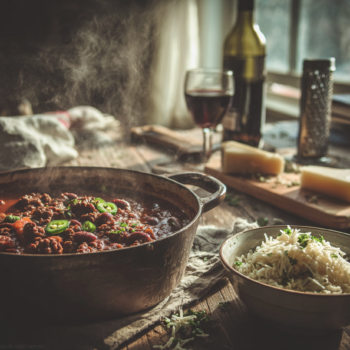
Savoury Wine Chili Recipe

Ingredients
 2 pounds ground beef (minced beef)
 1 pound ground pork (minced pork)
- ½ pound bacon strips - diced
 1 big onion - coarsely chopped
 4 medium jalapeño - chopped
 1 head garlic - bashed and skinned, unchopped
 3 large tomato
 1 bunch kale
 30 ounces tomato paste
 2 tablespoons chili powder (chilli powder in British English)
 2 tablespoons cumin
 2 tablespoons brown sugar
 2 tablespoons paprika - sweet Spanish
 1 teaspoon thyme
 1 teaspoon oregano
- ½ teaspoon celery powder
 ½ teaspoon salt
 ½ teaspoon ground black pepper
 3 small bay leaf (bay leaves)
 1 medium red pepper - chopped
- 3 ½ cups Shiraz
 1 ½ cups vegetable stock (vegetable broth or vegetable bouillon)
 1 can red kidney beans
Instructions
- Pour wine and stock into a medium pot and bring to a boil; reduce to simmer uncovered until reduced by half.
- Meanwhile, sweat beef and pork until cooked through in a dutch oven. Remove from dutch oven to large strainer. Add a little oil to the dutch oven, heat to medium-high, add bacon and cook until lightly browned.
- Add cooked bacon to the pork and beef mixture. Keep bacon fat in a dutch oven. Add jalapenos and onion to the dutch oven and saute until slightly browned; add half of the garlic, chilli powder, paprika, celery powder, cumin, and brown sugar and keep moving for 2 minutes. Add tomato paste; mix in and keep pushing for 2 more minutes. Add wine stock reduction, stirring until well mixed.
- Preheat oven to 350 degrees Fahrenheit.
- In a food processor, pulse tomatoes until lumpy. Add kale and pulse until it is chopped (3 to 4 pulses).
- Add tomato-kale mix and all remaining ingredients into a dutch oven and bring to a strong simmer. Cover and place in the oven for 1 1/2 hours. Then reduce the range to 300 degrees Fahrenheit and cook for another 1.5 hours. Remove from oven and let it sit for 15 minutes if you can resist the smell!
Nutrition
Your questions, answered
Can I make this on the stovetop instead of in the oven?
Yes — keep the lid on and simmer over low heat for 60 to 90 minutes, stirring every 15 minutes or so to prevent scorching at the base. The oven method is more hands-off and gives more even heat, but the stovetop result is close as long as your flame is genuinely low.
How do I know when the chilli is done?
The sauce should be thick enough to coat a spoon and the meat should be completely tender with no pink remaining — ground beef must reach an internal temperature of 160°F (71°C). If the sauce still looks thin, remove the lid and give it another 15 minutes uncovered.
Can I double the recipe to feed a larger group?
Yes, and this recipe scales well. Use a larger Dutch oven or divide between two oven-safe pots — don’t try to crowd everything into one undersized vessel or the liquid won’t reduce properly. Add an extra 15 to 20 minutes to the bake time and check the sauce consistency before pulling it from the oven.
What to cook next
- Hearty Beef Kale Soup
- Spicy Beef Stuffed Peppers
- Hearty Beef Cauliflower Bake
- Spicy Calabrian Lamb Ragù