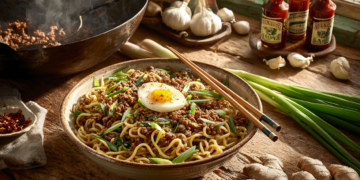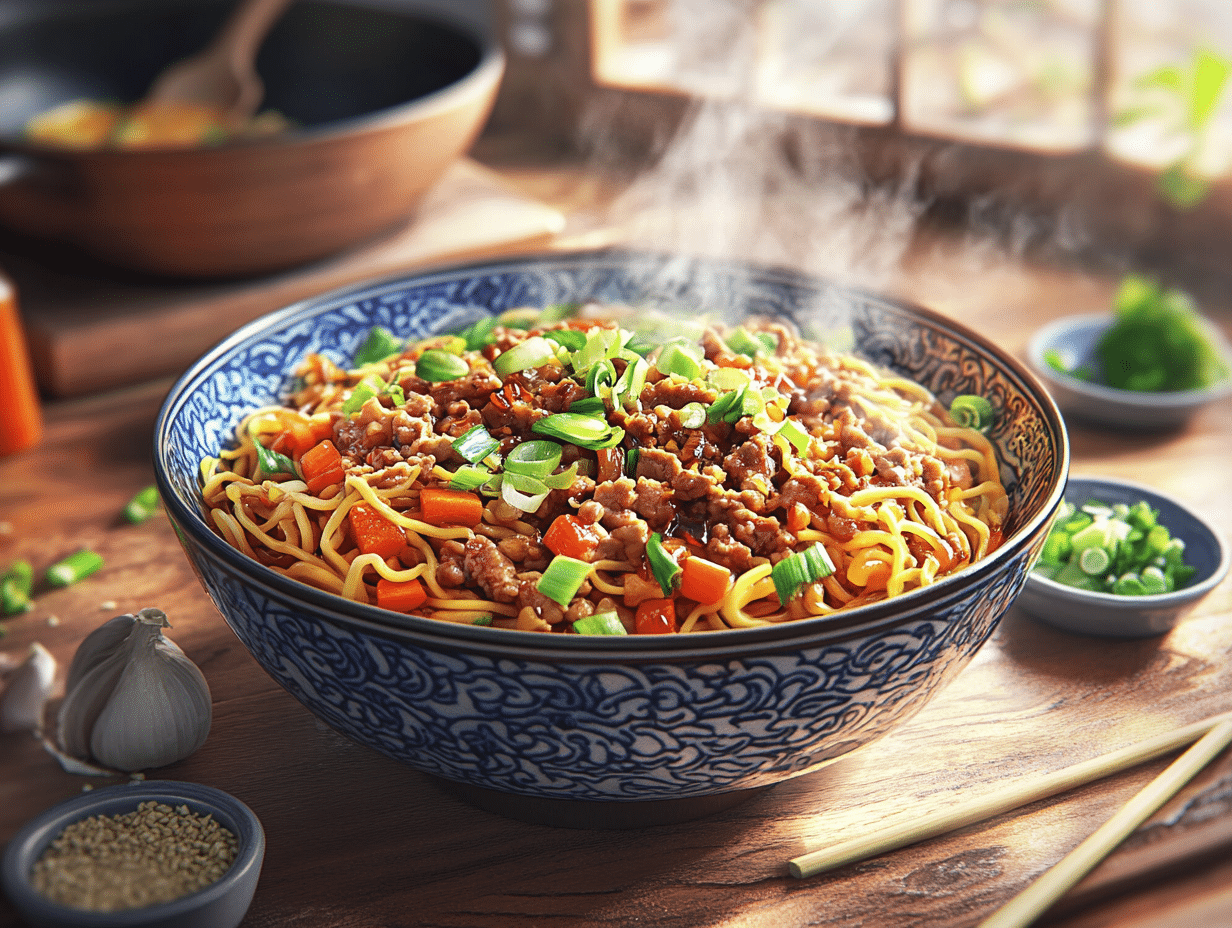
Pork mince chow mein is a stir-fried noodle dish built around ground pork, egg noodles, and a short list of vegetables, all pulled together with soy sauce, oyster sauce, and sesame oil. It comes together in about 35 minutes and puts a genuinely filling, protein-forward meal on the table without much cleanup. If you need a fast weeknight dinner that actually satisfies, this is a reliable one.
Why this recipe works
Two things make this dish work. First, browning the pork mince properly — letting it sit in the hot wok without constant stirring — builds a savory crust that adds real flavor to the whole pan. Ground pork reaches a safe internal temperature of 160°F (71°C) during this step, so don’t rush it or pull it early. Second, rinsing the cooked noodles under cold water stops them cooking further and keeps them from clumping into a starchy mass when they hit the hot wok again. Both steps take less than a minute of extra attention and make a noticeable difference in the finished dish.
Smart swaps
- Egg noodles: Fresh egg noodles cook faster than dried — check them at 2 minutes. In a pinch, thin spaghetti works, though the texture is slightly softer.
- Oyster sauce: If you’re cooking for someone avoiding shellfish, hoisin sauce is the closest swap — use the same quantity. The flavor is a little sweeter but still works.
- Ground pork: Lean ground chicken or turkey can replace the pork. Both are safe at 165°F (74°C), so cook them a touch longer than the recipe’s 5-minute mark and verify with a thermometer — do not serve either pink.
- Sesame oil: Don’t substitute another oil here. Sesame oil is a finishing flavor, not a cooking fat. If you’re out, skip it rather than replace it.
If something goes sideways
- Noodles are clumping in the wok: Add a tablespoon of water or a small splash of soy sauce and toss quickly over high heat. The steam loosens them without making the dish watery.
- Vegetables are releasing too much water: Your heat is too low. Crank it up and don’t overcrowd the wok — cook in two batches if needed. Excess moisture turns the stir-fry into a braise.
- Pork mince is grey and steaming instead of browning: Same cause — pan isn’t hot enough or there’s too much meat in at once. Push it to the edges, let the pan recover heat, then spread the meat back out.
- Dish tastes flat: Add a small extra splash of soy sauce at the end, not more sesame oil. Sesame oil added mid-cook loses its punch — it belongs at the finish.
- Noodles soaked up all the sauce and it’s dry: Stir in a tablespoon of water and a small drizzle of soy sauce off the heat. Toss until the noodles loosen up.
Make-ahead notes
Leftovers keep well in an airtight container in the fridge for up to 3 days. Reheat in a wok or skillet over medium-high heat with a tablespoon of water to loosen the noodles — the microwave works but softens the vegetables noticeably. You can also freeze portions for up to 2 months; thaw overnight in the fridge before reheating. Skip the spring onion garnish if you’re planning to store it — not worth the extra dish, and it wilts to nothing anyway.
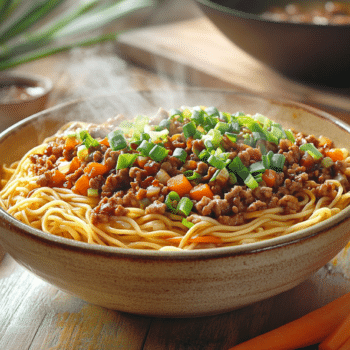
Pork Mince Chow Mein

Ingredients
 200 grams egg noodles - Fresh or dried
 300 grams ground pork (minced pork) - Preferably lean
 2 tablespoons vegetable oil - For stir-frying
 1 cup carrot - Sliced thinly
 1 cup cabbage - Shredded
 1 medium onion - Sliced finely
 2 tablespoons soy sauce
 1 tablespoon oyster sauce
 1 teaspoon sesame oil
 3 cloves garlic - Minced
 1 teaspoon ginger - Grated
 1 bunch spring onions - Chopped
Instructions
- Cook the egg noodles according to the package instructions until al dente. Drain and rinse under cold water to prevent sticking. Set aside.
- In a large wok or skillet, heat 2 tablespoons of vegetable oil over medium-high heat (180°C / 356°F). Add the pork mince and stir-fry until browned, about 5 minutes. Use a spatula to break apart any clumps.
- Push the pork mince to the side of the wok. Add the onion, garlic, and ginger to the center, and sauté until the onion is translucent and fragrant, around 3 minutes.
- Add the carrots and cabbage to the wok, stir-frying until the vegetables are just tender, about 4 minutes. The cabbage should still have a slight crunch.
- Return the cooked noodles to the wok, along with the soy sauce, oyster sauce, and sesame oil. Toss everything together until well combined and heated through, about 2 minutes.
- Garnish with spring onions before serving. Mix well to incorporate the flavors.
Notes
Nutrition
Your questions, answered
Can I use dried noodles instead of fresh, and does it change the cooking time?
Yes, dried egg noodles work fine — just follow the package time and aim for al dente, since they’ll cook further in the wok. Fresh noodles only need 2 to 3 minutes, so check them early to avoid overcooking.
How do I know the pork mince is fully cooked and safe to eat?
Ground pork needs to reach an internal temperature of 160°F (71°C) — no pink should remain. A quick-read thermometer is the reliable way to check; color alone can be misleading with mince.
Is this enough food for a full meal, or do I need to serve something alongside it?
At 393 calories per serving with 300 grams of pork across four portions, it’s a complete meal on its own for most people. If you’re feeding hungrier eaters or want more volume, a simple side of steamed edamame or a fried egg on top adds protein without much extra work.
Try these next
- Savory Pork Noodle Stir-Fry
- Authentic Szechuan Dan Dan
- Japanese Pork Lettuce Cups
- Horopito Pork Stir Fry