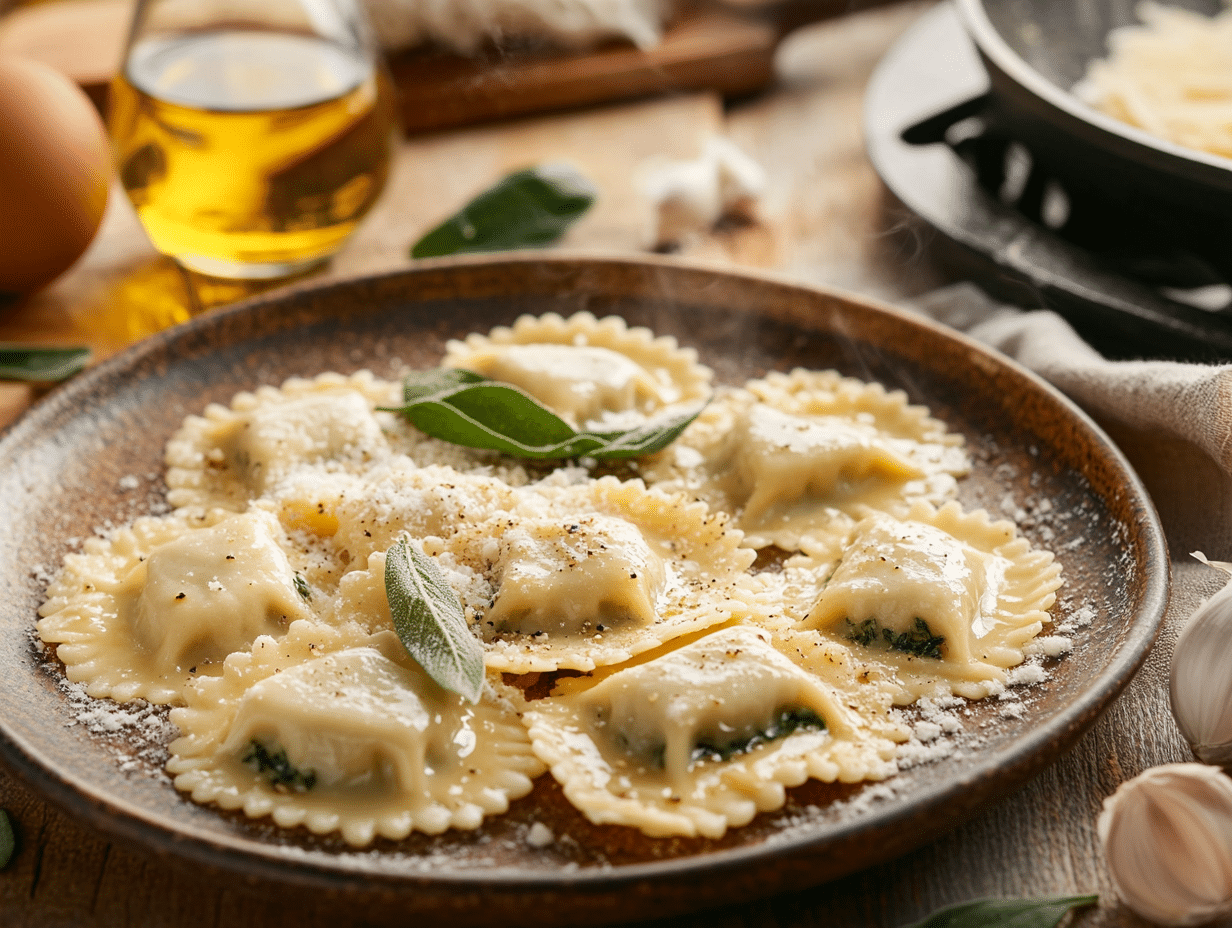
These are hand-rolled pork and spinach ravioli finished in a brown butter and sage sauce. The filling is ground pork cooked with garlic, fresh spinach, Parmesan, and a pinch of nutmeg — straightforward ingredients that come together fast once the dough is resting. The main time investment is the pasta itself, but the actual hands-on work is shorter than the 90-minute prep time suggests.
About the ingredients
- Ground pork: Standard supermarket ground pork works fine here. Higher-fat blends (around 20% fat) give a juicier filling than lean pork, which can turn dry and crumbly after cooking.
- Fresh spinach: You need it briefly sautéed and squeezed dry before chopping. Skipping the squeeze is the single most common reason ravioli burst — excess water turns to steam and blows out the seams.
- Nutmeg: Pre-ground is fine. Freshly grated is slightly more fragrant but the difference in a filling this well-seasoned is minor.
- Unsalted butter for the sauce: Salted butter works in a pinch, but it makes it harder to control the final seasoning since the pasta water and Parmesan already add salt.
- Sage: Fresh only for the sauce — dried sage turns bitter when fried in butter.
The short version of why this works
Two things actually drive the result. First, resting the dough for 30 minutes is not optional — it relaxes the gluten so the sheet rolls thin without springing back, which means you get a tender wrapper instead of a chewy one. Second, the brown butter sauce works because you stop cooking it at the right moment: once the milk solids turn golden and smell nutty, pull the pan off the heat immediately and add the sage. Another 20 seconds and it’s burnt. Those two steps — a properly rested dough and a watched butter — are where this dish succeeds or fails.
Mistakes to avoid
- Rolling the sheets unevenly: Thick patches stay doughy while thin patches tear. Work from the center outward and rotate the sheet regularly. Hold it up to the light — you should just see your hand through it.
- Overfilling: A tablespoon of filling sounds small but it’s correct. More than that and you can’t seal the edges cleanly, and the ravioli split when they hit the boiling water.
- Boiling too hard: A rolling boil batters the ravioli against each other. Drop to a steady medium boil once they go in — they only need 3 to 4 minutes and gentler water keeps them intact.
- Not checking the pork is fully cooked: Ground pork must reach 160°F (71°C) internally — never serve it pink. The filling cooks again briefly when the ravioli boil, but get it fully cooked in the skillet first so you’re not guessing.
- Making the sauce too early: Brown butter goes from perfect to acrid quickly and doesn’t hold well. Make it while the ravioli are in the water, not before — skip the garnish plate on the side too, not worth the extra dish.
Storage and reheating
Cooked ravioli keep in an airtight container in the fridge for up to 3 days. Toss them with a little olive oil before storing so they don’t stick together. To reheat, drop them into simmering water for 60 to 90 seconds rather than microwaving — the microwave makes the pasta gummy and can burst the filling. Uncooked assembled ravioli freeze well: lay them in a single layer on a floured tray, freeze until solid (about 2 hours), then transfer to a freezer bag. Cook straight from frozen in boiling water for 5 to 6 minutes. Don’t refrigerate uncooked assembled ravioli for more than a few hours or the moisture from the filling softens the dough and they’ll stick to the tray.
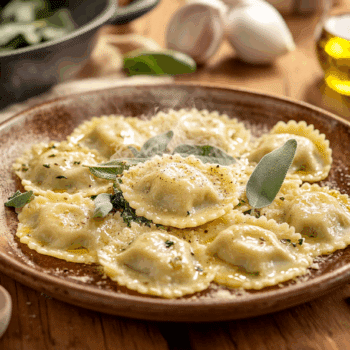
Pork Mince and Spinach Ravioli

Equipment

Ingredients
For the Pasta Dough:
 2 cups all purpose flour (plain flour Australia and UK) - plus extra for dusting
 3 large eggs - room temperature
 1 tbsp olive oil - extra virgin
For the Filling:
- 1 tbsp olive oil
 1 clove garlic - minced
 1 lb ground pork (minced pork) - organic preferred
 1 ½ cups spinach - fresh, briefly sautéed and finely chopped
 ¼ cup Parmesan cheese - freshly grated
 1 tsp sea salt
 ¼ tsp nutmeg - freshly grated preferred
For the Sauce:
 3 tbsp unsalted butter
 8 leaves sage - fresh, or more to taste
Instructions
- Make the Dough: Place flour in a mound on a clean work surface. Make a well in the center and add eggs and olive oil. Gradually incorporate the flour into the wet ingredients using a fork, then knead by hand until a smooth, elastic dough forms—about 10 minutes. Wrap in plastic and rest for 30 minutes at room temperature.
- Prepare the Filling: In a skillet over medium heat (350°F / 175°C), add olive oil and minced garlic. Once fragrant (about 30 seconds), add the pork and cook until no longer pink. Stir in chopped spinach, Parmesan, salt, and nutmeg. Cook for another minute. Let cool slightly before using.
- Roll the Dough: Divide rested dough into 4 pieces. Roll each piece into a thin sheet using a pasta machine or rolling pin (setting 5 or about 1/16 inch thick). Keep sheets lightly floured and covered.
- Assemble Ravioli: Place small mounds of filling (around 1 tablespoon) spaced 1.5 inches apart on a dough sheet. Brush edges with water, top with another sheet, and press around each mound to seal. Cut into squares using a pasta cutter or knife. Ensure edges are sealed well.
- Cook the Ravioli: Bring a large pot of salted water to a gentle boil (not a rolling boil). Cook ravioli in batches for 3–4 minutes or until they float. Remove with a slotted spoon.
- Make the Sauce: In a small sauté pan over medium heat, melt butter. Add sage leaves and let them sizzle until crisp and the butter browns slightly (about 3 minutes). Remove from heat.
- Serve: Plate ravioli and spoon over sage butter. Garnish with a few extra sage leaves and a touch of grated Parmesan.
Notes
- If fresh spinach is unavailable, frozen chopped spinach (well-drained) will work.
- To enhance the dough elasticity, add a splash of warm water if needed.
- Use semolina flour in combination with all-purpose for more structure if rolling very thin pasta.
- You may freeze assembled ravioli on parchment-lined trays before cooking.
Nutrition
Frequently asked questions
Can I make the pasta dough the night before?
Yes — wrap it tightly in plastic and refrigerate it overnight. Take it out 20 minutes before you want to roll it so it comes back to room temperature and relaxes enough to roll without tearing.
Can I use wonton wrappers instead of homemade pasta dough?
You can, and it cuts the prep time significantly. The texture is chewier and slightly thicker than fresh pasta, but the filling works perfectly well inside them — seal the edges with water and press firmly, and cook for 2 to 3 minutes.
How do I know when the ravioli are done cooking?
They’re ready when they float to the surface and have been there for about 1 minute — total cook time is roughly 3 to 4 minutes from when they go in. Cut one open if you’re unsure; the filling should be steaming hot all the way through with no pink pork visible.
If you liked this one
- Crispy Pork Dumpling Delight
- Beef Ricotta Lasagna Rolls
- Savory Pork Noodle Stir-Fry
- Cumberland Sausage Mince Pie