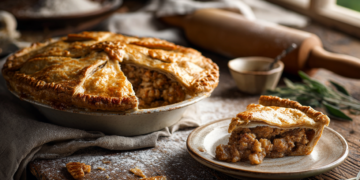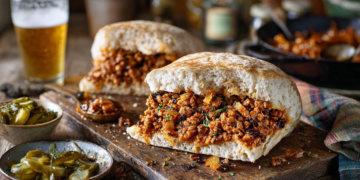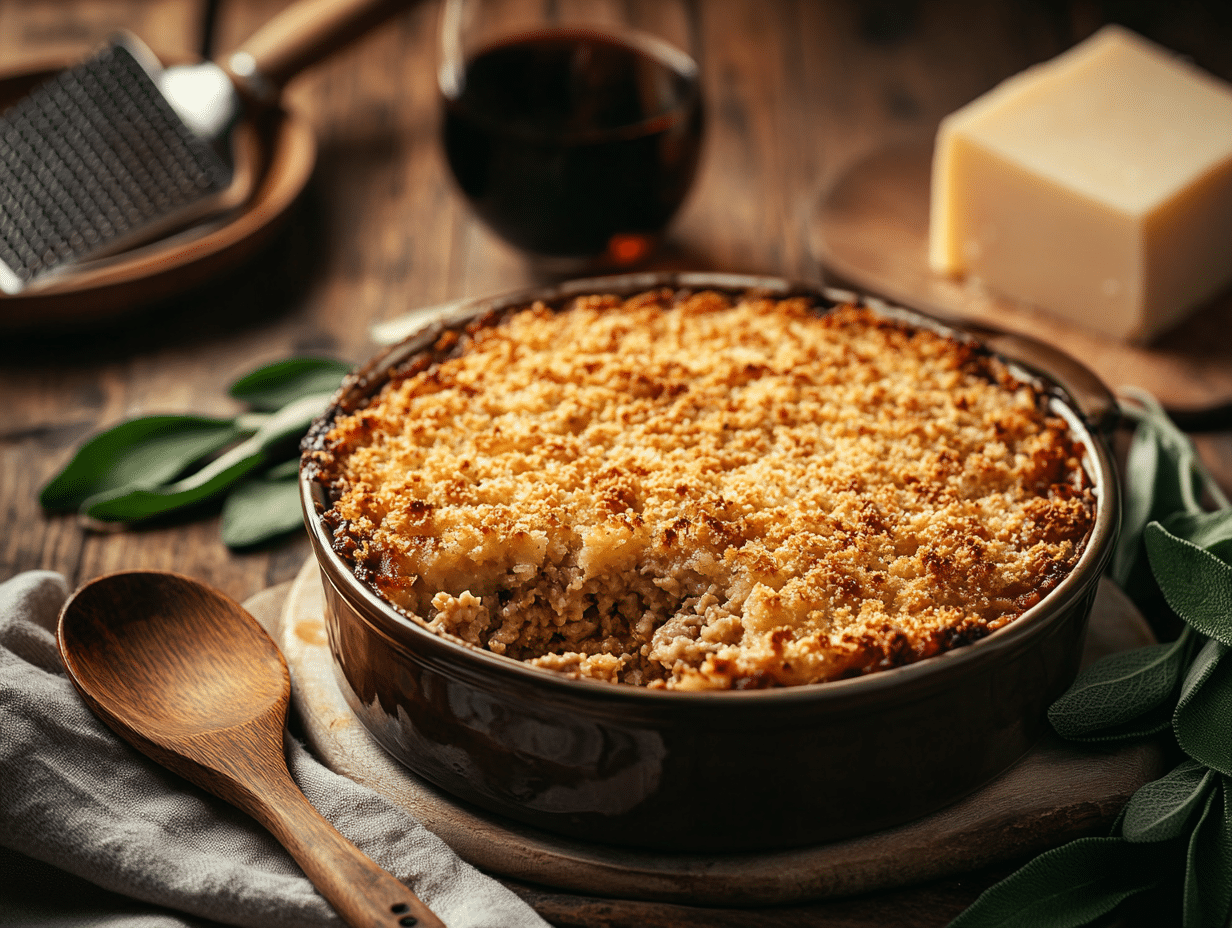
This is a baked ground pork dish with a crispy Parmesan and breadcrumb crust — straightforward to make and genuinely satisfying on a weeknight. The ingredient list is short and mostly pantry staples, so it comes together without a special shopping trip. Ground pork stays juicy here because it simmers in chicken stock before going into the oven, which makes the technique forgiving even if your oven runs hot.
The technique that matters
The two-step cook — stovetop first, then oven — is what keeps the pork from drying out and gives the topping room to brown without overcooking the meat underneath. On the stovetop, you’re building flavor and cooking off excess moisture so the mixture isn’t soupy when it goes into the baking dish. The simmer with chicken stock is doing real work: it keeps the ground pork at 160°F (71°C) safe-zone temperatures while keeping it tender. In the oven, the breadcrumb and Parmesan layer needs dry heat to crisp up, which it can only do properly if the pork mixture beneath it isn’t releasing steam. Don’t rush the stovetop reduction — if the mixture still looks wet when you transfer it, give it another two or three minutes.
What can go wrong
- Soggy topping: If the pork mixture is too wet when it goes into the baking dish, steam prevents the breadcrumbs from crisping. Reduce the stock fully on the stovetop until the liquid is mostly absorbed before transferring.
- Pale, soft crust after 20 minutes: Oven temperatures vary. If the top isn’t golden at the 20-minute mark, switch to broil for 3–4 minutes and watch it closely — it can go from pale to burnt fast.
- Bland filling: Ground pork needs seasoning at the browning stage, not just at the end. Salt the meat while it cooks, not after the dish is assembled — seasoning the top doesn’t reach the filling.
- Breadcrumbs clumping or sliding off: Mixing the breadcrumbs with olive oil before sprinkling is key. Dry breadcrumbs without fat don’t brown evenly and tend to shift. If you’re out of olive oil, melted butter works just as well.
- Watery dish after resting: Ground pork with higher fat content releases liquid as it cools. Tilt the baking dish and spoon off any pooled liquid before serving — it takes ten seconds and keeps the crust from going soft.
Keeping and reheating
Leftovers keep well in a sealed container in the fridge for up to three days. The crust softens overnight, which is unavoidable — skip the garnish before storing, not worth the extra dish. To reheat, spread portions in an oven-safe dish and bake uncovered at 180°C (350°F) for 12–15 minutes; this brings the pork back up to a safe 160°F (71°C) and re-crisps the topping better than a microwave ever will. The microwave is faster but turns the crust rubbery, so use it only if you’re genuinely short on time and don’t mind the texture change. This dish also freezes well for up to two months — freeze before adding the breadcrumb topping, then add a fresh layer when you’re ready to bake from frozen, adding about 10 extra minutes to the oven time.
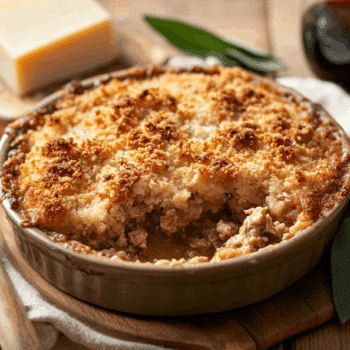
Pork Mince and Sage Gratinata

Equipment

Ingredients
 2 tbsp Olive oil - Extra virgin preferred
 500 g ground pork (minced pork) - Choose a mix with some fat for better flavor
 1 small Onion - Finely chopped
 2 cloves Garlic - Minced
 1 tsp Sage - Fresh, finely chopped
 250 ml Chicken stock - Low sodium preferred
 100 g Breadcrumbs - Panko or homemade for best texture
 50 g Parmesan cheese - Freshly grated
Instructions
- Preheat oven to 180°C (350°F).
- Heat 1 tbsp of olive oil in a skillet over medium heat. Add the chopped onion and garlic, sautéing until soft and translucent, about 5 minutes.
- Add the pork mince and cook until browned, breaking it up with a wooden spoon, about 7-8 minutes. Stir in the sage.
- Pour in the chicken stock and simmer for 10 minutes until slightly reduced.
- Transfer the pork mixture to a baking dish.
- In a bowl, mix breadcrumbs, Parmesan, and 1 tbsp of olive oil. Sprinkle evenly over the pork mixture.
- Bake for 20 minutes or until golden and crispy on top.
Notes
- For extra crispiness, broil for the last 5 minutes.
Nutrition
Common questions
Can I use dried sage instead of fresh?
Yes — use about one-third of the amount, so roughly a third of a teaspoon in place of 1 teaspoon fresh. Dried sage is more concentrated and can turn bitter if you use too much, so start with less and taste as you go.
What can I use instead of chicken stock if I don’t have any?
Vegetable stock works fine and keeps the dish lighter. In a pinch, water with a small pinch of salt and a splash of white wine or even a little soy sauce will add enough depth — the sage and pork carry most of the flavor anyway.
Can I swap the Parmesan for a different cheese?
Pecorino Romano is the most direct substitute and gives a slightly sharper result. A hard aged cheddar also works and melts into the breadcrumbs well — just grate it finely so it distributes evenly across the topping.
Do I have to use panko, or will regular breadcrumbs do?
Regular dried breadcrumbs work fine — the crust will be a little denser but still crispy. Stale bread blitzed in a food processor is also a solid option and often cheaper than buying a box of panko.
How do I know the pork is fully cooked before it goes in the oven?
Ground pork needs to reach 160°F (71°C) — never serve it pink. By the time you’ve browned it for 7–8 minutes and simmered it in stock for 10 minutes, it will be well past that temperature, but a quick check with an instant-read thermometer before transferring to the baking dish removes any doubt.
Try these next
- Savory Pork Stottie Filling
- Hearty Beef Cauliflower Bake
- Beef Ricotta Lasagna Rolls
- Cumberland Sausage Mince Pie