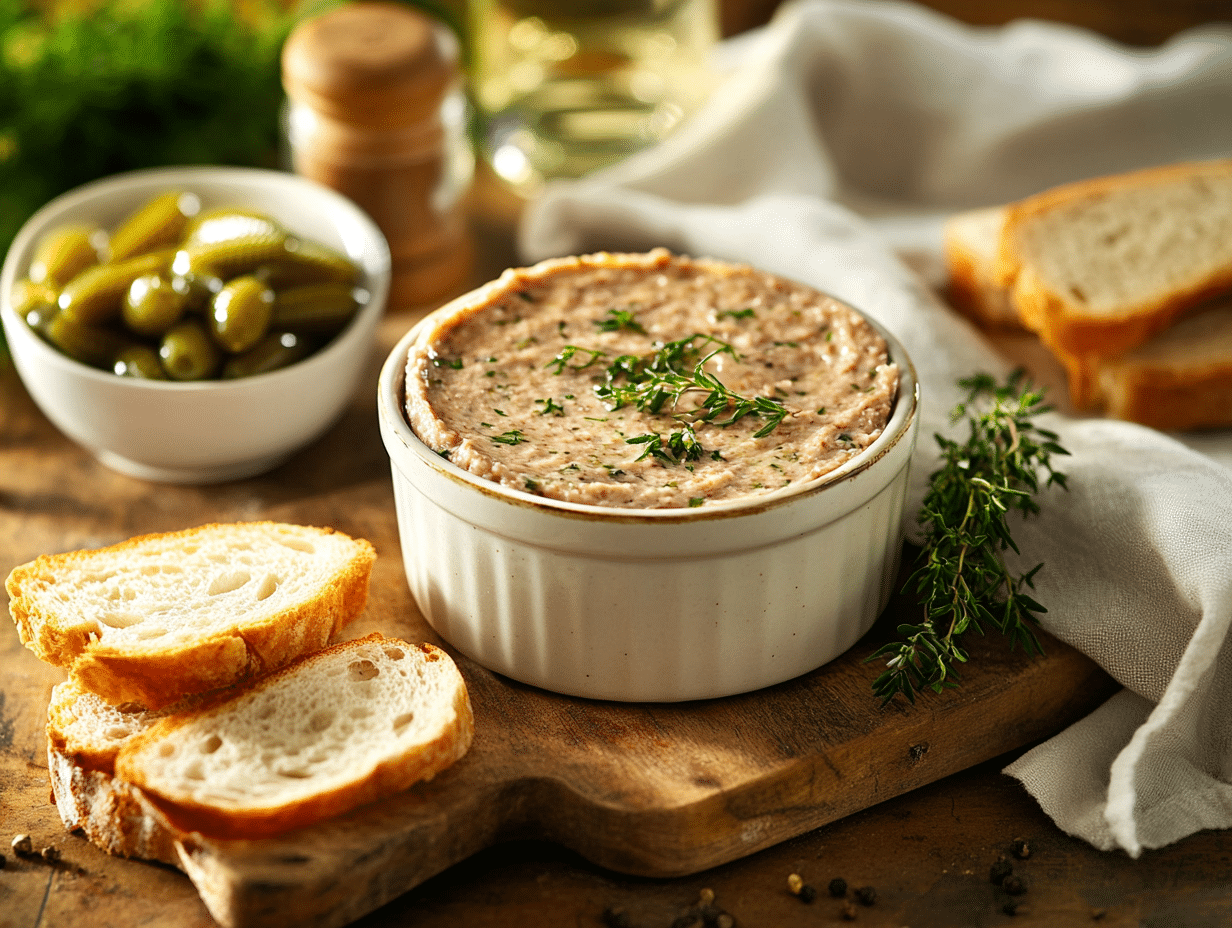
This is a stovetop pork pâté made with ground pork, tarragon, fennel seeds, and dry white wine — cooked in one skillet, then blended and chilled in a mold. It takes about 75 minutes total and serves 8 as an appetizer spread. If you want something genuinely impressive to put on a board without spending all day in the kitchen, this is a solid choice.
The short version of why this works
Two things carry this recipe. First, the wine reduction: when you add the wine to the browned pork and aromatics, it picks up everything stuck to the pan and concentrates as it simmers, building a deeper, more cohesive flavor than the individual ingredients suggest. Don’t rush that 15-minute simmer — the wine needs to fully absorb into the meat, not just cook off on the surface. Second, chilling time matters more than most people expect. Pressing the blended pâté into a mold and refrigerating it for at least an hour lets the fat redistribute and the texture firm up, so it slices cleanly and tastes more rounded than it does warm from the pan.
Mistakes to avoid
- Skipping the temperature check. Ground pork must reach an internal temperature of 160°F (71°C) — never serve it pink. If you don’t have a meat thermometer, get one before you start. It’s the single most useful tool for cooking any ground meat safely.
- Blending while the mixture is still hot. Hot food in a food processor can steam and splatter. Let the mixture cool for at least 10–15 minutes off the heat before blending. It also blends more evenly once slightly cooled.
- Using a wine you wouldn’t drink. Cooking wine sold in bottles labeled “cooking wine” is often salted and flat. Use any dry white wine you’d pour in a glass — it doesn’t need to be expensive, but it needs to taste decent on its own.
- Under-seasoning before chilling. Cold dulls salt perception. Taste the mixture and season it slightly more assertively than you think necessary before pressing it into the mold — it will taste more balanced once cold.
- Pressing the pâté in loosely. Air pockets cause the pâté to crumble when you try to slice or spread it. Use the back of a spoon to press the mixture firmly and evenly into the terrine or mold before refrigerating.
Ingredient notes
- Fennel seeds: Lightly crushing them before adding — with the flat of a knife or a quick pulse in a mortar — releases more flavor than dropping them in whole. Skip the garnish of whole seeds on top; not worth the extra dish.
- Dried vs. fresh tarragon: The recipe gives you both options. Dried works well here because the long simmer time would mute fresh tarragon anyway, so save fresh for finishing a dish, not cooking into one.
- No-alcohol swap: Replace the white wine with unsalted chicken stock plus one teaspoon of apple cider vinegar. The vinegar replaces the acidity the wine provides; without it the pâté can taste flat.
- Ground pork fat content: Standard ground pork from the supermarket (around 20–25% fat) works well. Very lean ground pork will produce a drier, grainier result — avoid anything labeled “extra lean” for this recipe.

Pork Mince and Tarragon Pâté

Ingredients
Ingredients
 500 grams ground pork (minced pork) - preferably organic
 1 tablespoon olive oil - extra virgin
 1 medium onion - finely chopped
 2 cloves garlic - minced
 1 teaspoon fennel seeds - lightly crushed
- 1 teaspoon dried tarragon - or 2 teaspoons fresh tarragon
 1 cup white wine - dry
 0.5 teaspoon salt - to taste
 0.5 teaspoon ground black pepper - freshly ground, to taste
Instructions
- In a medium-sized skillet, heat the olive oil over medium heat. Add the finely chopped onion and sauté until translucent and fragrant, about 5 minutes.
- Stir in the minced garlic and fennel seeds, and cook for another 1-2 minutes, until the garlic is golden and the fennel seeds are aromatic.
- Add the pork mince, breaking it up with a wooden spoon. Cook until it begins to brown, approximately 8-10 minutes.
- Mix in the dried tarragon, followed by the white wine. Let the mixture simmer until the wine reduces and incorporates, about 15 minutes.
- Season with salt and freshly ground black pepper to taste. Remove from heat and allow to cool slightly.
- Blend the mixture to a smooth consistency using a food processor. Alternatively, for a rustic texture, use a fork to mash the mixture while maintaining some texture.
- Press the pâté into a terrine or a mold and refrigerate for at least an hour before serving.
Notes
Nutrition
FAQ
How do I know when the pork is fully cooked?
The pork is done when it reads 160°F (71°C) on an instant-read thermometer — no pink should remain. Ground pork browns unevenly, so color alone isn’t a reliable indicator; a thermometer is the only way to be sure.
Can I make this ahead of time?
Yes, and it actually improves overnight. The flavors settle and the texture firms up further after 8–12 hours in the fridge. Keep it covered tightly with plastic wrap pressed directly onto the surface to prevent a dry skin from forming.
Do I need a food processor, or can I use a blender?
A blender works, but process in small batches and make sure the mixture has cooled first. A food processor gives you more control over texture — pulse for a chunkier result, run continuously for smooth — which is harder to manage in a standard blender.
How long does the pâté keep in the fridge?
It keeps for up to 3 days covered in the refrigerator. After that, the texture starts to deteriorate and the flavor can turn. If you want to make a larger batch, it also freezes well for up to one month — slice or portion it before freezing so you can thaw only what you need.
What to cook next
- Sweet Savory Scotch Eggs
- Savory Pork Apple Pasties
- Cumberland Sausage Mince Pie
- Swedish Dill Pork Sausage