
This is a ground pork terrine packed with chopped chestnuts, bacon, herbs, and a touch of allspice — baked low and slow in a water bath until it slices cleanly. The main reason to make it is that you mix it, pack it, and walk away; it does the rest overnight in the fridge, and it’s ready to serve cold whenever you need it.
The short version of why this works
Two things matter here. First, the water bath: surrounding the mold with an inch of hot water keeps the oven heat gentle and even, which stops the outside of the terrine from seizing up and squeezing moisture out before the center cooks through. Without it, you get a dry, crumbly slice. Second, the overnight press: once the terrine hits 160°F (71°C) and cools, you weight it down in the fridge for several hours. That compression closes any air gaps left from packing, firms the fat back into the meat, and gives you a terrine that holds a clean slice instead of falling apart on the board. Neither step is difficult — they just require planning ahead.
Substitutions that actually work
- Chestnuts: Vacuum-packed or jarred cooked chestnuts are the practical choice. If you can’t find them, roughly chopped roasted hazelnuts or walnuts work — they’re firmer, so use a bit less. Skip water chestnuts; the texture is wrong.
- Ground veal: Fully optional. A straight 1.5 lb of ground pork shoulder is the simpler route and costs less. If you want a leaner second meat, ground turkey works but adds no fat, so don’t reduce the cream.
- Heavy cream: Whole milk works in a pinch. The terrine will be very slightly less rich but still holds together fine.
- Bacon lining: If you’re skipping bacon, brush the mold generously with lard or softened butter and line it with parchment. You lose the flavor wrap but the terrine still unmolds cleanly — skip the garnish of extra bacon on top, not worth the extra dish.
- Allspice: A small pinch of ground cloves plus a pinch of nutmeg is a workable substitute if your spice drawer is running low.
Keeping and reheating
Wrapped tightly in the mold or in plastic wrap, the terrine keeps in the fridge for up to 5 days — and honestly tastes better on day 2 or 3 once the flavors have had time to settle. For longer storage, slice it first, wrap individual slices in plastic, and freeze for up to 2 months; thaw overnight in the fridge. This terrine is designed to be served cold or at room temperature, so reheating is rarely necessary. If you do want it warm, place slices in a covered baking dish with a splash of water and heat at 300°F (150°C) for about 15 minutes — don’t microwave it, the texture suffers.
If something goes sideways
- The terrine won’t unmold cleanly: Run a thin knife around the edges before inverting. If it still sticks, set the mold in a shallow pan of hot water for 30 seconds — the fat just inside the bacon layer will release.
- The center is still pink after the listed bake time: Oven temperatures vary. Trust the thermometer, not the clock — pull it only when the internal temp reads 160°F (71°C). If your oven runs cool, add 15-minute increments with the foil on.
- The slices crumble instead of holding together: The mixture was probably underweighted during the overnight press. Next time, use a second loaf pan filled with canned goods on top of the foil. A crumbly terrine is still good — serve it chunked on crackers instead.
- The top looks grey and unappetizing after unmolding: That’s oxidation on the exposed meat surface, not spoilage. Slice off the very top layer before serving; the interior will be the right color.
- The terrine tastes flat or underseasoned: Ground pork mixtures are hard to taste-test raw for seasoning. Next time, fry a small patty of the mixture in a pan before packing the mold and adjust salt from there.
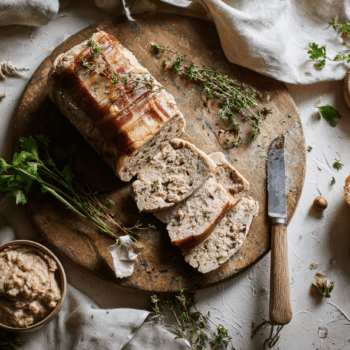
Minced Pork and Chestnut Terrine

Equipment

Ingredients
- 1 lb ground pork shoulder - fresh, ideally with 20–30% fat for moisture
 ½ lb ground veal - optional, or substitute with additional pork
- 1 cup chestnuts - cooked, roughly chopped; vacuum-packed or jarred for convenience
 1 medium yellow onion - finely diced
 2 cloves garlic - minced
 ¼ cup parsley - (flat-leaf) finely chopped, fresh preferred
 ½ tsp thyme - (leaves) fresh, or 1/4 tsp dried thyme
 ¼ tsp allspice - ground
 1 tsp kosher salt - adjust to taste
 ½ tsp black peppercorns - cracked
 1 large egg - beaten
 ¼ cup heavy cream
 10 slices bacon - (thin) to line mold; optional but adds moisture and flavor
Instructions
- Preheat your oven to 325°F (160°C). Prepare a roasting pan large enough to hold the terrine mold and pour in 1 inch of water for a hot water bath.
- Line your terrine mold or loaf pan with bacon slices, slightly overlapping, leaving enough overhang to cover the top later.
- In a mixing bowl, combine the ground pork shoulder, veal (if using), chopped chestnuts, onion, garlic, parsley, thyme, allspice, salt, pepper, egg, and heavy cream. Use clean hands or a wooden spoon to mix until just combined—avoid overworking to keep the terrine tender.
- Pack the mixture into the bacon-lined mold firmly to eliminate air pockets. Fold the overhanging bacon slices over the top of the mixture.
- Cover the terrine tightly with aluminum foil. Place the mold into the roasting pan and bake in the preheated oven for 1 hour and 30 minutes, or until the internal temperature reaches 160°F (71°C).
- Once cooked, remove the terrine from the water bath. Cool at room temperature for 1 hour, then press the terrine with a weighted object (such as cans) and refrigerate overnight to allow flavors to mature and the texture to set completely.
- Unmold the terrine by inverting it onto a platter. Slice with a sharp knife warmed in hot water for clean edges.
Notes
- For a twist, incorporate chopped dried cherries or figs for a note of sweetness.
- To make this gluten-free, ensure all processed ingredients are certified GF, especially bacon and chestnuts.
- Substitute veal with chicken thigh meat for a lighter flavor profile.
Nutrition
FAQ
Can I make this without a terrine mold?
Yes — a standard 9×5 loaf pan works fine. The shape will be slightly different but the recipe behaves exactly the same way. Just make sure whatever pan you use is deep enough to hold the mixture without it mounding above the rim, since you need the foil to seal flat on top.
Do I really need to press it overnight, or can I serve it the same day?
You can eat it the same day once it’s cooled to room temperature, but it will be softer and harder to slice neatly. The overnight rest in the fridge under weight is what gives you clean, firm slices — if you’re serving it on a board or as a starter, that rest is worth it.
Can I use pre-seasoned ground pork or breakfast sausage instead of plain ground pork shoulder?
It’s not ideal because pre-seasoned pork already contains salt, sugar, and spices that will clash with the allspice and thyme in this recipe. If plain ground pork shoulder isn’t available, use plain ground pork with no added seasoning and reduce the salt in the recipe by half, then adjust after doing a small pan-fry test.
Try these next
- Cumberland Sausage Mince Pie
- Sweet Savory Scotch Eggs
- Savory Pork Apple Pasties
- Rustic Game Sausage Pie