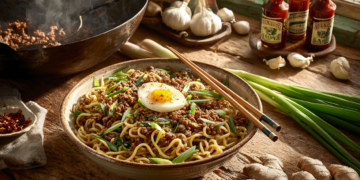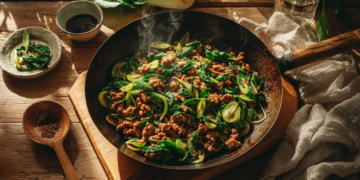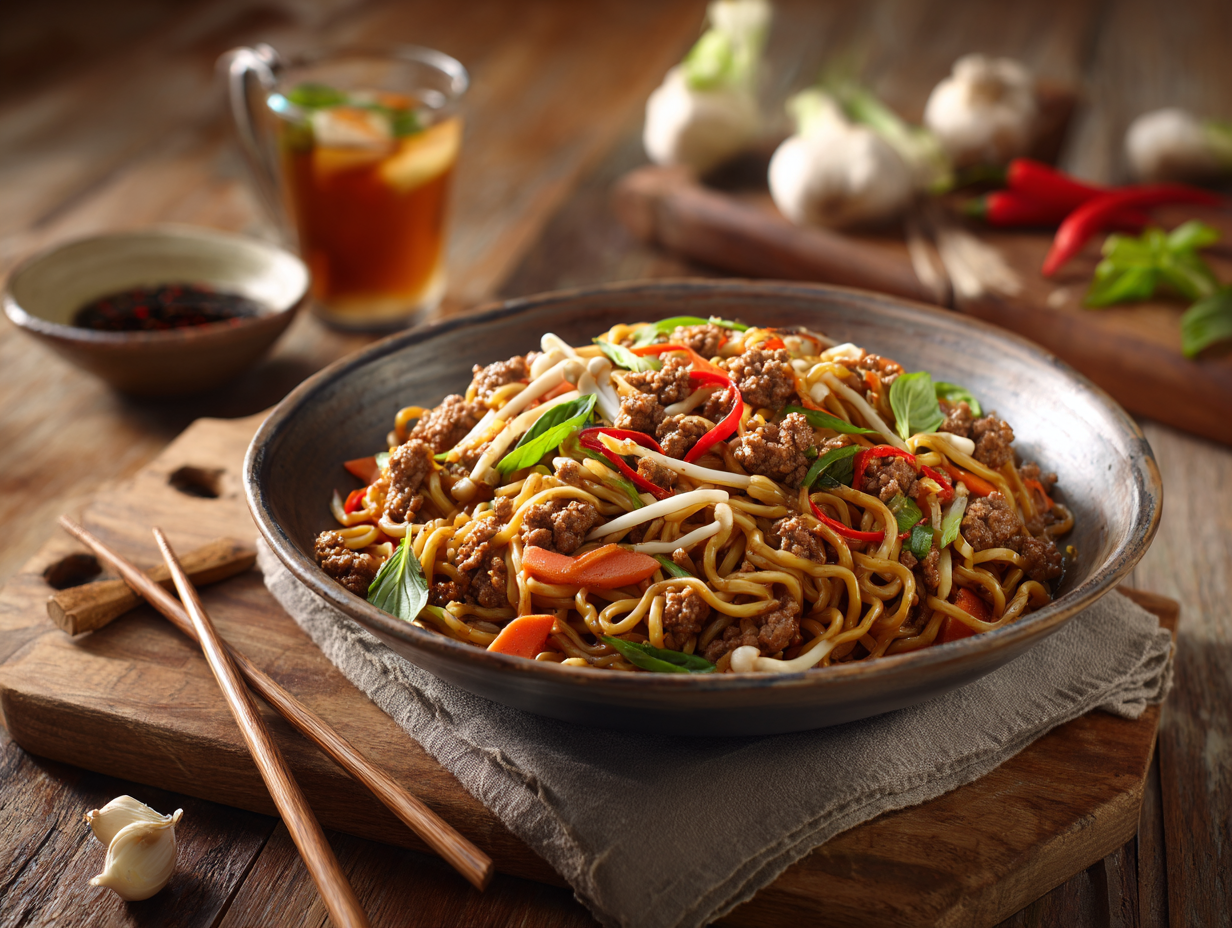
Yakisoba is a Japanese stir-fried noodle dish built around seasoned ground pork, chewy wheat noodles, and a savory-sweet sauce made from soy sauce, oyster sauce, and sugar. It comes together in one pan in under 30 minutes, which makes it genuinely useful on nights when you need a filling meal fast. The ground pork carries the protein load here, and the mix of shiitake, enoki, carrots, and chili means you’re getting a complete meal without cooking anything separately.
The short version of why this works
Two things drive this recipe. First, browning the ground pork properly before anything else goes in — that means leaving it alone in a hot pan long enough to get some color, not just steaming it gray. That sear builds the savory base the whole dish depends on. Second, the sauce goes in at the end, not the beginning. Adding it too early causes the noodles to absorb liquid before they’ve had a chance to pick up any heat from the pan, and you end up with soft, sticky clumps instead of noodles with some chew. Both steps take maybe 90 extra seconds of patience and they make a real difference in the finished dish.
What can go wrong
- Ground pork not reaching safe temperature: Ground pork must hit 160°F (71°C) internally — no pink remaining. Because it’s broken up in the pan it usually cooks through quickly, but if you’re using a thick cast iron pan on lower heat, check with a thermometer rather than guessing by color alone.
- Noodles clumping before they hit the pan: Pre-cooked or fresh yakisoba noodles stick together badly if they sit after draining. Rinse them briefly with cold water right after cooking and toss with a tiny drop of neutral oil if you’re not stir-frying immediately.
- Watery vegetables diluting the sauce: Mushrooms, especially enoki, release a lot of moisture. Cook them on high heat and don’t crowd the pan — if the pan is too full, they’ll steam and the excess liquid will wash out the sauce flavor.
- Sauce burning before the noodles are coated: The sugar in the sauce scorches fast on a very hot wok. Add the sauce off the direct center of the heat, toss quickly, and keep everything moving for the first 20 seconds after it goes in.
- Under-seasoned pork: Ground pork is mild on its own. If the finished dish tastes flat, the fix is almost always more soy sauce added in small increments at the table, not more sugar or oyster sauce.
Leftovers and meal prep
Leftover yakisoba keeps well in an airtight container in the fridge for up to 3 days. The noodles will absorb more sauce as they sit, so when reheating, add a small splash of water or soy sauce to the pan before warming over medium heat — this loosens them up without making the dish soupy. Skip the microwave if you can; it turns the noodles gummy. For meal prep, the ground pork and vegetables can be cooked ahead and refrigerated separately from the noodles for up to 3 days, then combined in the pan at mealtime. Freezing the finished dish is possible but the noodle texture suffers noticeably after thawing, so it’s not recommended unless you’re out of other options. If you do freeze it, use within 6 weeks and reheat straight from frozen in a covered pan with a tablespoon of water.
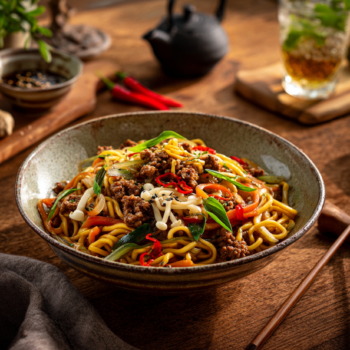
Quick and Easy Yakisoba

Ingredients
- 2 packs yakisoba noodles
- 1 cup Yakisoba sauce
 3 cups ground pork - cooked and seasoned (with soy sauce, pepper, and sesame oil)
 1 medium red onion - sliced
- 4 cloves of garlic - minced
 2 stalks green onions - chopped
 2 large shiitake mushrooms - sliced
- 1 bunch enoki mushrooms - ends cut and separated
 2 medium carrots - julienned
 1 medium red chilli - minced
 3 sprigs Thai basil - chopped
 2 tablespoons olive oil - garlic
 1 pinch salt
 1 pinch ground black pepper
Instructions
- Clean or wash all your produce. Slice your red onion and mushrooms, mince your garlic and chilli, and chop your green onion and Thai basil. Using a mandoline, julienne your carrots (this is my favourite way to cut carrots, especially if they’re stir-fried).
- Sautee the red onion briefly in some garlic olive oil, then add the carrots and enoki mushrooms. Continue sauteing until the onions become translucent and the carrots are cooked (but still have some crunch left).
- Push everything in the pan to one side. Add a tablespoon of garlic olive oil to the other side, and add the rest of your veggies. Sautee for 2 minutes, then mix the contents of the pan together. Season to taste; personally, I added some ground pepper but not much salt because my pork was already well seasoned, and the yakisoba sauce that I added later also adds to the saltiness.
- Set everything aside in a large bowl. Mix in your ground meat or protein of choice.
- Boil the noodles according to the package instructions, making sure not to overcook. Soggy noodles in a yakisoba dish? No thanks.
- Add in your meat and veggies, and mix thoroughly.
- Some yakisoba noodles come with yakisoba seasoning. Here is when you can add that in and mix. I used the seasoning as well as premade yakisoba sauce. If you don’t have either, you can easily make your own sauce with 1 part soy sauce, 1 part oyster sauce, and 1 to 2 parts sugar.
- Once everything is thoroughly mixed, you’re ready to serve! Garnish with some extra green onion, and you’re set to chow down.
Nutrition
Frequently asked questions
Can I use a different ground meat instead of pork?
Yes — ground chicken or ground turkey work well and keep the dish light, but cook them to 165°F (74°C) and expect a slightly drier result since they have less fat than pork. Ground beef is a reasonable swap too, though it changes the flavor profile toward something heavier; cook it to 160°F (71°C) and drain excess fat before adding the vegetables.
What noodles should I use if I can’t find yakisoba noodles?
Fresh or dried Chinese wheat noodles (chow mein noodles) are the closest substitute and are available in most Asian grocery stores. Ramen noodles — even the ones from instant packs — work in a pinch; just discard the seasoning packet and cook the noodles according to package directions before adding them to the stir-fry.
How do I know the ground pork is fully cooked?
The pork is done when it reads 160°F (71°C) on an instant-read thermometer and there is no pink remaining anywhere in the meat. Because it’s crumbled into small pieces it usually cooks through in 5–7 minutes over medium-high heat, but always verify with a thermometer rather than relying on timing alone.
Can I make the sauce ahead of time?
Yes, and it’s worth doing — mix the soy sauce, oyster sauce, and sugar together and store in a small jar in the fridge for up to a week. Having it pre-mixed means you can add it to the pan in one move without fumbling with multiple bottles while everything else is cooking.
Is this dish enough on its own for dinner, or do I need a side?
It’s a complete meal as written — the ground pork provides substantial protein, and the combination of mushrooms, carrots, and chili covers your vegetables. A fried egg on top adds extra protein if you’re feeding someone with a bigger appetite, and it costs almost nothing extra. Skip the garnish — not worth the extra dish.
Try these next
- Savory Pork Noodle Stir-Fry
- Japanese Pork Lettuce Cups
- Authentic Szechuan Dan Dan
- Horopito Pork Stir Fry