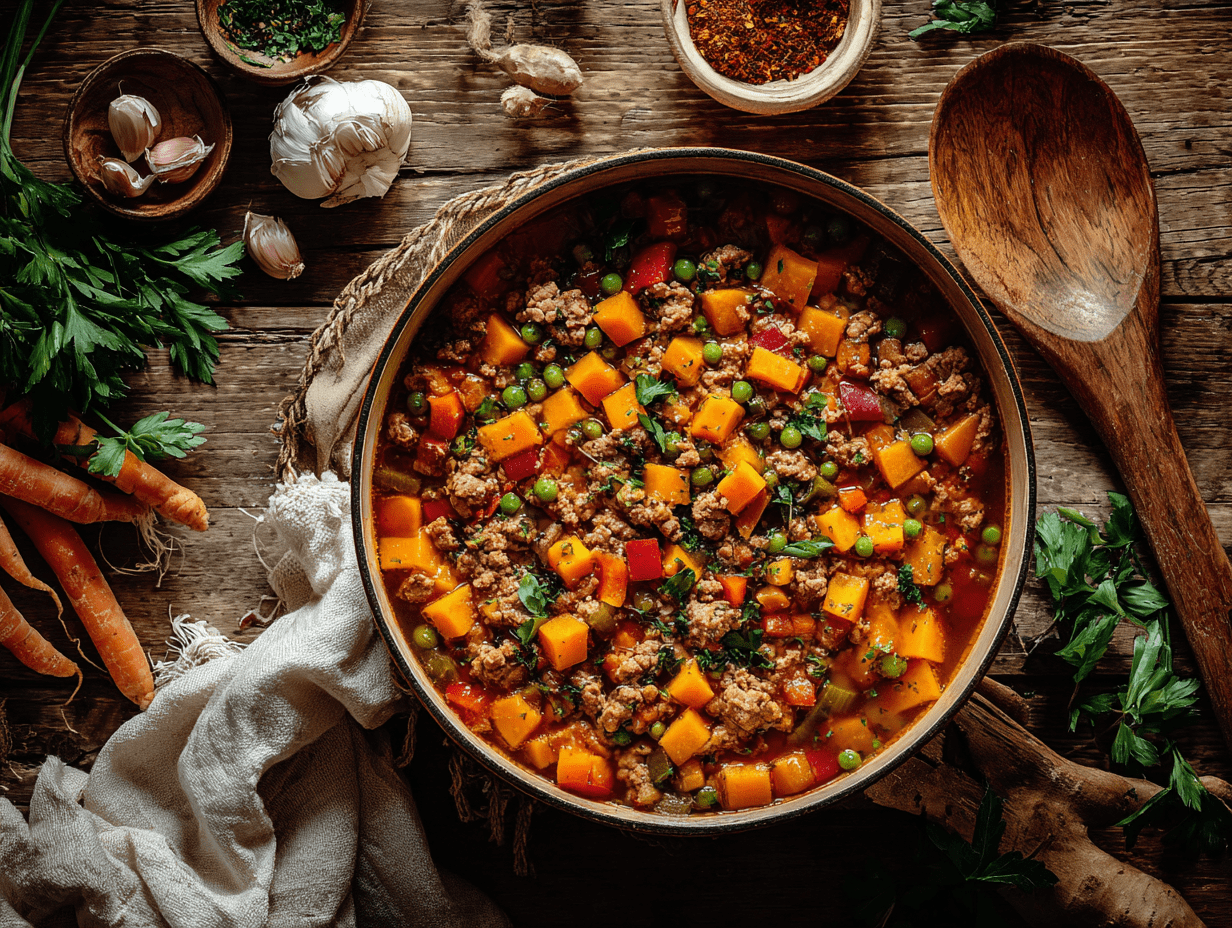
This is a one-pot ground pork stew built around butternut squash, tomato, and a short list of pantry spices. It simmers low and slow until the broth is rich and the vegetables are completely tender. If you want a filling weeknight meal with almost nothing to wash up afterward, this is a solid choice.
Why this recipe works
Two things carry this dish. First, browning the ground pork properly before adding any liquid — not just cooking it through, but letting it sit undisturbed long enough to get some color on the bottom of the pot. That caramelization builds the flavor base the whole stew depends on. Second, the tomato paste goes in early, right after the aromatics, so it cooks in the fat for a minute or two before any liquid is added. That step kills the raw, tinny edge and pushes the paste toward something deeper and slightly sweet. Everything else — the squash, the broth, the spices — just needs time. The long simmer isn’t fussiness; it’s what makes the squash break down enough to thicken the broth naturally without any extra steps.
Shopping notes
- Butternut squash: Pre-cut squash from the produce section works fine here and saves real time. Avoid the frozen cubed variety — it turns to mush before the pork is fully cooked through.
- Smoked paprika: Worth buying if you don’t have it. Regular sweet paprika gives color but not the same depth. A small tin keeps for months.
- Ground pork: Standard supermarket ground pork (around 80/20 fat ratio) works well. Leaner blends can make the stew taste flat — the fat renders into the broth and matters here.
- Cumin: The recipe uses it sparingly. Don’t be tempted to add more; it can easily overpower the squash.
Leftovers and meal prep
This stew keeps well. Refrigerate leftovers in an airtight container for up to 4 days — the flavor actually improves by day two as the spices settle in. For freezing, let it cool completely, then portion into freezer-safe containers; it holds for up to 3 months. The squash softens further after freezing but doesn’t fall apart badly enough to be a problem. Reheat on the stovetop over medium-low, adding a small splash of water or broth if it’s thickened up too much. Make sure reheated pork reaches 160°F (71°C) throughout before serving. This also makes a strong meal-prep base — cook a full batch on Sunday and reheat portions through the week.
If something goes sideways
- Broth is watery at the end: Remove the lid and raise the heat to medium for 10–15 minutes. The squash will also continue to break down and thicken things as you stir — skip the garnish and just give it time uncovered.
- Pork is clumping into large chunks: Break it up with a wooden spoon as soon as it hits the hot pot, before it has a chance to set. Once it browns into a large mass it’s harder to separate without losing the sear.
- Squash turned to mush early: It was cut too small or added too soon. Next time, cut pieces no smaller than 1-inch cubes and add them after the liquid comes to a simmer, not before.
- Stew tastes flat or bland: Check salt first — underseasoning is the most common culprit. If salt doesn’t fix it, a small squeeze of lemon juice or a splash of red wine vinegar stirred in at the end can lift the whole pot without adding another dish.
- Bottom of the pot is catching and burning: The heat is too high. Drop it to low, add a quarter cup of broth or water, and scrape the bottom immediately. Those stuck bits will dissolve into the broth and aren’t wasted.

Uruguayan Minced Pork Cazuela

Equipment
Ingredients
 2 tablespoons olive oil - extra-virgin for depth and richness
 1 pound ground pork (minced pork) - choose well-marbled pork for best flavor
 1 medium yellow onion - finely chopped
 2 cloves garlic - minced
 1 medium red pepper (red capsicum) - diced
 1 medium carrot - peeled and diced
 1 cup butternut squash - peeled and cubed
- 1 cup peeled tomatoes - preferably canned San Marzano, roughly chopped
 2 tablespoons tomato paste
 2.5 cups chicken stock - preferably homemade or low-sodium
 1 teaspoon paprika - sweet smoked paprika preferred
 ¼ teaspoon cumin - ground
 1 teaspoon dried oregano
 1 teaspoon salt - or to taste
 ½ teaspoon ground black pepper - freshly ground preferred
 ½ cup peas - frozen ; thawed
 2 tablespoons parsley - fresh ; chopped, for garnish
Instructions
- Heat olive oil in a large heavy pot or Dutch oven over medium-high heat (about 350°F / 175°C). Once shimmering, add minced pork and cook until browned and caramelized, about 8–10 minutes. Stir occasionally to ensure even browning.
- Add chopped onion and sauté until translucent and lightly golden, about 5 minutes. Stir in minced garlic and cook for an additional minute until fragrant.
- Incorporate diced red bell pepper, carrot, and butternut squash, stirring to coat them in the aromatic base. Allow the vegetables to soften slightly, about 5 minutes.
- Mix in chopped peeled tomatoes and tomato paste, stirring to combine. Let it cook uncovered for 3–4 minutes to concentrate the tomato flavor.
- Pour in the chicken stock, then add paprika, cumin, oregano, salt, and pepper. Stir well and bring the mixture to a gentle boil.
- Reduce heat to low, cover the pot, and let simmer gently for 45 minutes, stirring occasionally. The liquid should reduce and thicken into a rich stew consistency.
- Uncover and fold in the peas. Simmer for an additional 5–7 minutes until they’re bright green and tender. Adjust seasoning to taste.
- Serve hot in shallow bowls with a sprinkle of fresh parsley on top. Optionally drizzle with olive oil for extra richness.
Notes
- For added depth, deglaze the pan with a splash of dry white wine after browning the pork.
- Substitute sweet potatoes for butternut squash for a sweeter profile.
- For a vegetarian version, replace pork with lentils and mushrooms, and use vegetable broth.
- If short on time, use pre-diced vegetables available in most grocery stores.
Nutrition
FAQ
Can I use a different meat instead of ground pork?
Ground beef works as a straight swap and is the most common alternative. Keep in mind ground beef has a stronger flavor that will shift the character of the stew slightly, but the technique and timing stay the same — cook to 160°F (71°C) either way.
How do I know when the pork is fully cooked and safe to eat?
Ground pork must reach an internal temperature of 160°F (71°C) — do not serve it pink. In a stew like this, the pork is broken into small pieces and simmers for over an hour, so it will be well past that threshold by the time the vegetables are tender; a quick check with an instant-read thermometer in the thickest part of the liquid confirms it.
Can I make this in a slow cooker?
Yes, but brown the pork and cook the aromatics and tomato paste in a skillet first — don’t skip that step or the stew will taste steamed rather than developed. Transfer everything to the slow cooker and cook on low for 6–7 hours or high for 3–4 hours.
What can I substitute for butternut squash?
Pumpkin or sweet potato are the closest swaps in terms of texture and sweetness. Regular potato works too but won’t add any sweetness, so the balance of the dish shifts a little toward savory.
Is this recipe freezer-friendly before cooking, or only after?
Freeze it after cooking, not before. Raw ground pork mixed with cut vegetables doesn’t freeze and thaw well — the texture of the squash suffers badly. The cooked stew freezes cleanly for up to 3 months.
My stew has too much liquid — should I add a thickener like cornstarch?
Cornstarch works but isn’t necessary. Simmering uncovered for 10–15 extra minutes is usually enough, and the starch from the squash does the job naturally as it breaks down. If you do use cornstarch, mix 1 teaspoon with 1 tablespoon cold water before stirring it in, and bring the stew back to a brief boil to activate it.
More mince recipes to try
- Peruvian Cilantro Pork Stew
- Pork Sajta Bolivian Style
- Hearty Criollo Beef Locro
- Spicy Lamb Pumpkin Stew