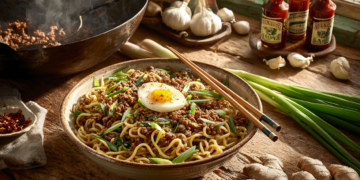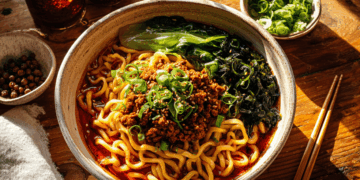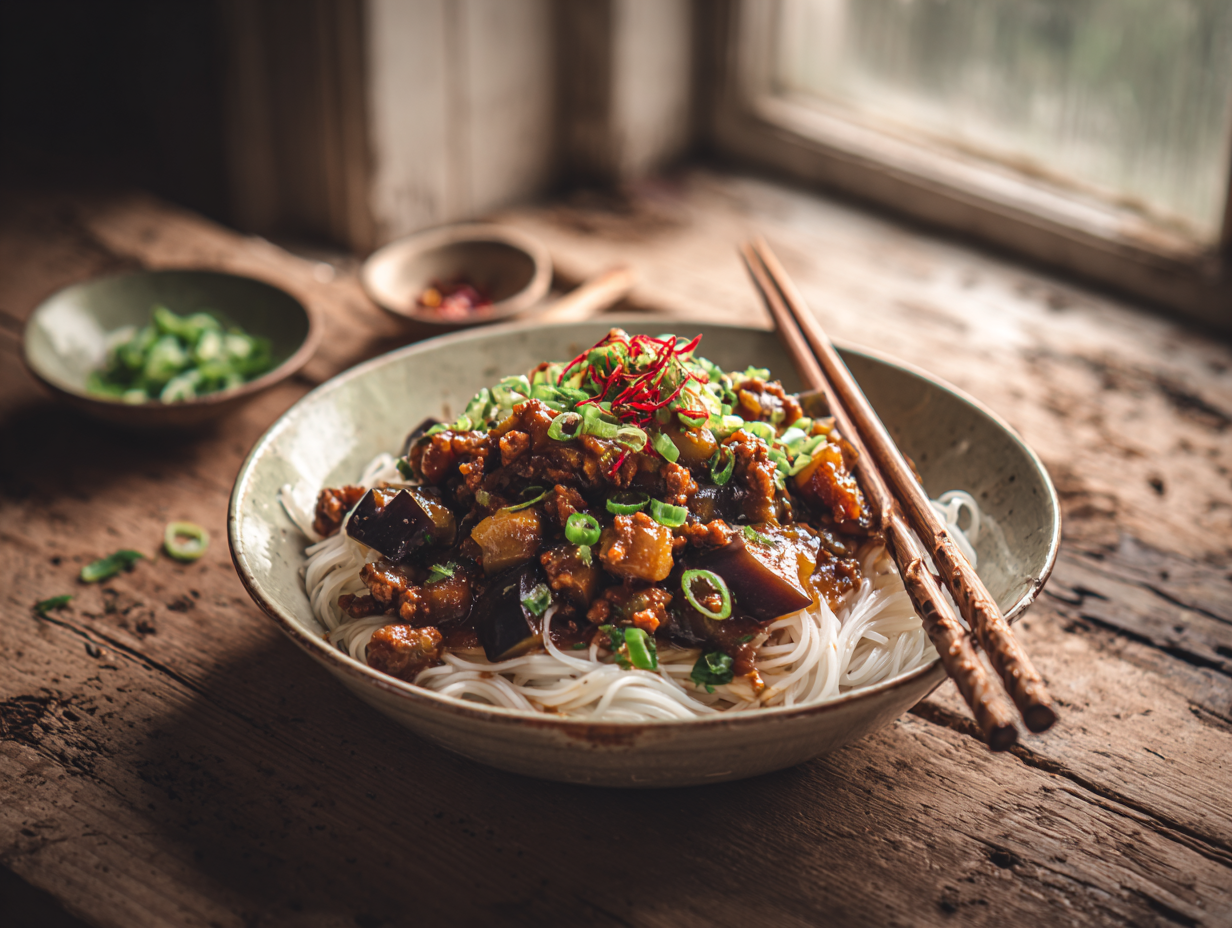
When I first tasted this delicious pork mince with eggplant and rice noodles, it was one of those meals that instantly transports you—not just to a different kitchen, but to a different way of thinking about everyday ingredients. Pork mince is something many of us grow up with. It’s affordable, versatile, and reliable. Eggplant, too, is widely available and often underrated. Yet when these two humble ingredients are brought together with fragrant seasonings and soft rice noodles, they transform into something deeply comforting and surprisingly sophisticated.
The Inspiration Behind the Dish
This particular recipe was inspired by a neighbour’s dinner invitation. Sometimes the best culinary discoveries don’t come from cookbooks or cooking shows, but from sharing a table with others. There’s something special about tasting a home-cooked dish someone else has prepared with care. That night, what stood out was the harmony of flavours: the richness of the pork mince, the silky texture of the eggplant, and the neutral, slightly chewy rice noodles absorbing all the savoury juices.
Pork mince is a staple in many cuisines around the world, especially in Asian cooking. It readily absorbs marinades and spices, making it ideal for dishes that rely on layered flavours. In Southeast Asian and East Asian cuisines, minced pork is often paired with vegetables that balance its richness—eggplant is a perfect example. This combination is particularly common in Chinese, Thai, and Vietnamese home cooking, where texture plays just as important a role as flavour.
Why Pork Mince Works So Well
Pork mince has a natural sweetness and a rich, savoury depth thanks to its fat content. When cooked properly, it remains juicy and tender. It also browns beautifully, creating caramelized bits that add complexity to any dish.
In this recipe, the pork mince acts as the flavour foundation. When sautéed with aromatics—such as garlic, ginger, or onions—it releases flavourful juices that coat the eggplant and soak into the rice noodles. Unlike larger cuts of meat, mince distributes evenly throughout the dish, ensuring every bite carries that satisfying savoury note.
Another reason pork mince shines here is its adaptability. You can adjust the seasoning to suit your taste. Prefer extra heat? Add chilli flakes or fresh chopped chillies. Want more depth? A splash of soy sauce, fish sauce, or even a hint of oyster sauce can elevate the entire pan. Pork mince embraces bold flavours without overpowering them.
The Magic of Eggplant
Eggplant is often misunderstood. Some avoid it, thinking it can be bitter or spongy. But when cooked correctly, eggplant becomes luxuriously soft and almost creamy inside, while absorbing all the surrounding flavours like a sponge—in the best possible way.
In this dish, eggplant plays a crucial role. Its mild flavour balances the richness of the pork mince, and its soft texture contrasts beautifully with the chewiness of the rice noodles. When sautéed or stir-fried until tender, eggplant soaks up the savoury pork juices and seasonings, making each bite deeply satisfying.
One key to cooking eggplant successfully is giving it enough heat and not overcrowding the pan. Proper browning enhances its natural sweetness and removes any trace of bitterness. The result is a silky, flavour-packed component that feels almost luxurious despite being such a modest vegetable.
Rice Noodles: The Perfect Companion
Rice noodles bring everything together. Light yet filling, they act as the perfect canvas for the robust pork and tender eggplant. Unlike wheat-based noodles, rice noodles have a delicate texture and subtle flavour that doesn’t compete with the main ingredients.
Their slightly chewy consistency provides contrast to the softness of the eggplant and the crumbliness of the mince. They also absorb sauces beautifully, ensuring that no flavour is wasted. Every strand becomes coated in the savoury mixture, turning the dish into a cohesive, comforting bowl of goodness.
Rice noodles also make this meal feel lighter than it might with heavier pasta or rice. Even though the pork brings richness, the noodles keep the overall dish balanced and not overly heavy.
A Balance of Flavours and Textures
What makes this recipe truly memorable is the balance. Good cooking often comes down to contrasts and harmony:
- Richness from the pork mince
- Soft creaminess from the cooked eggplant
- Gentle chewiness from the rice noodles
- Aromatic depth from seasonings and spices
Together, they create a dish that feels complete. It’s savoury but not overwhelming, hearty but not heavy. This balance is likely why the meal left such a lasting impression on me after that dinner with my neighbours.
The Comfort Factor
There’s something inherently comforting about a bowl of noodles. Across cultures, noodle dishes are associated with warmth, hospitality, and home cooking. This pork mince with eggplant and rice noodles recipe fits beautifully into that tradition.
It’s the kind of meal you can prepare on a busy weeknight, yet it tastes like something that took much longer to develop. The ingredients are simple and accessible, but when combined thoughtfully, they create deep, layered flavours.
It’s also a highly adaptable recipe. You can add extra vegetables—like bell peppers or bok choy—for more colour and nutrition. You can increase the spice level if you enjoy heat, or add fresh herbs such as Thai basil or coriander for brightness. A squeeze of lime at the end can lift the entire dish with a hint of acidity.
Cultural Influences
While this isn’t tied to one single traditional recipe, it clearly draws inspiration from Asian stir-fry techniques. The quick cooking method preserves texture and freshness, while layering ingredients in stages builds complexity. The combination of minced pork and eggplant is especially popular in Sichuan cuisine, where bold sauces bring everything to life.
However, this dish remains flexible and approachable. It doesn’t require hard-to-find ingredients to be delicious. At its core, it’s about technique and balance rather than strict authenticity.
Why You’ll Keep Coming Back to It
After recreating this dish at home, I realized it’s the kind of recipe that easily becomes part of your regular meal rotation. It’s budget-friendly, satisfying, and endlessly customizable. Most importantly, it doesn’t feel repetitive or boring—something that can happen with standard pork mince recipes.
If you find yourself stuck making the same pork burgers, meatballs, or basic stir-fries, this recipe offers a refreshing alternative. The addition of eggplant changes the texture dynamic completely, and rice noodles provide a pleasant departure from the usual rice or pasta.
Every time I make it, I’m reminded of that dinner invitation and how food connects people. A simple meal shared with neighbours sparked a new favourite in my kitchen. Sometimes, all it takes is one bite of something different to break you out of a cooking rut.
This delicious pork mince with eggplant and rice noodles dish is more than just another pork recipe—it’s a reminder that with a few thoughtful ingredients and a willingness to try something new, everyday cooking can become exciting again.
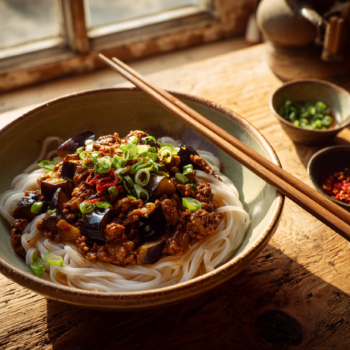
Delicious Pork Mince With Eggplant And Rice Noodles

Ingredients
 1 large eggplant (brinjal, aubergine, or guinea squash) - cut into cubes
 ⅜ pound ground pork (minced pork)
 3 tablespoons vegetable oil
 1 pinch salt
 ¼ cup white wine
 1 teaspoon soy sauce
 1 medium yellow onion - chopped
 2 clove garlic - crushed
 ½ teaspoon ginger - peeled and diced
 1 pinch ground black pepper
 1 medium red pepper (red capsicum) - chopped
 1 medium green pepper (green capsicum) - chopped
 ½ pound vermicelli rice noodles
Instructions
- Cut the eggplant into cubes.
- Fry the eggplant cubes in a heated pan with oil until they become soft.
- Then, tap them with some paper to get rid of the extra oil.
- In a pot, heat oil and cook the minced pork until it changes colour.
- Add the soy sauce, sliced onion, crushed garlic and ginger; Cook for 5 minutes.
- Pour wine, stir and let it boil until the alcohol evaporates (2-3 minutes).
- Add the fried eggplant, salt, pepper and stir. Add some water if there isn't much luquid in the pan.
- Cook for 15 minutes, then add chopped peppers and stir. Adjust seasoning if needed.
- Turn off the heat, cover the pan and set it aside.
- Cook some rice or noodles and serve.