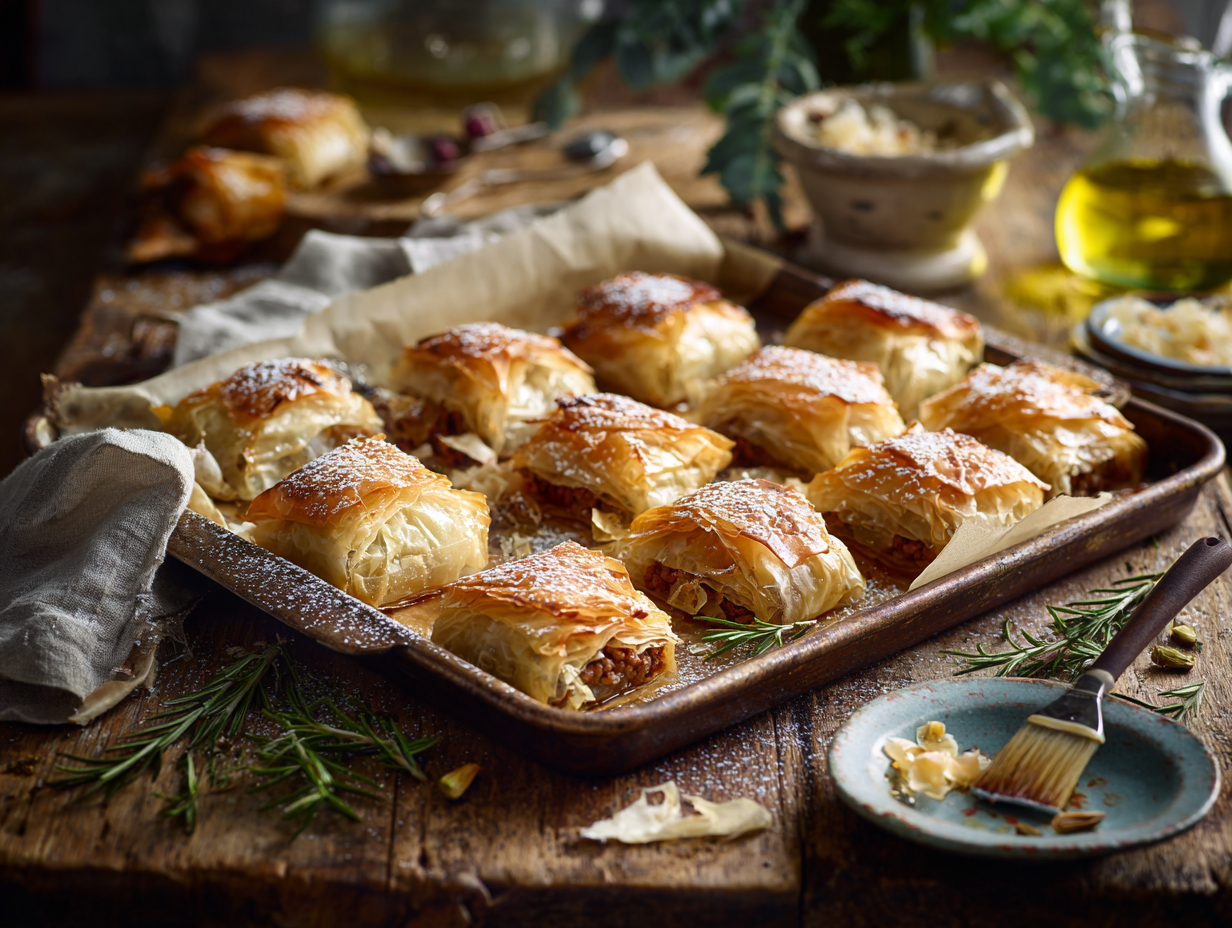
These are small filo parcels filled with seasoned ground pork, baked until the pastry is golden and crisp, then dusted with powdered sugar. Filo is much faster to work with than shortcrust — no rolling, no chilling — which makes this a genuinely low-stress bake. If you want something a little different to bring to a holiday gathering, this is a solid choice.
Why this recipe works
Two things matter here. First, filo dries out and tears if you leave it exposed, so brushing each layer with rapeseed oil as you go keeps it pliable and gives you those distinct, crisp layers once baked. Second, ground pork needs to reach 160°F (71°C) all the way through — never serve it pink. Because the parcels are small, the pork cooks quickly at 180°C (350°F), but that compact size also means the heat reaches the center reliably. A meat thermometer pushed into the filling of one parcel before you pull the tray is the simplest way to be sure.
Smart swaps
- Filo pastry: Frozen filo works fine — thaw it overnight in the fridge, not on the counter, so it stays manageable. Don’t refreeze unused sheets; press them flat, wrap tightly in cling film, and refrigerate for up to two days.
- Rapeseed oil: A neutral vegetable oil or melted unsalted butter both work. Butter gives a slightly richer flavor; oil keeps things lighter.
- Ground pork: Ground turkey is a reasonable swap, but cook it to 165°F (74°C) and expect a slightly drier filling — add a small splash of stock if it looks tight in the pan.
- Powdered sugar: Skip the garnish — not worth the extra dish if you’re serving these as a savory snack rather than a sweet one.
Storage and reheating
Cool the parcels completely before storing — trapping steam makes the pastry go soggy fast. Refrigerate in a single layer in an airtight container for up to 3 days. To reheat, put them on a wire rack set over a baking tray and warm at 180°C (350°F) for 8–10 minutes; this keeps the bottom crisp instead of steaming it soft. They also freeze well before baking: assemble, freeze on a tray until solid, then transfer to a freezer bag for up to 6 weeks. Bake from frozen at 180°C (350°F) for about 20–22 minutes, checking that the internal temperature of the pork filling hits 160°F (71°C).
Common problems and fixes
- Filo tearing when you fold: The sheets have dried out. Lay a barely damp tea towel over the stack of unused sheets while you work. Even a minute of exposure to air stiffens filo enough to crack.
- Filling leaking out during baking: The parcel wasn’t sealed firmly enough, or there was too much filling. Use a light brush of oil on the final flap to act as glue, and keep the filling to a level tablespoon per parcel.
- Pastry pale and soft after 15 minutes: Ovens vary. If the parcels look underdone, give them another 4–5 minutes and check again. Make sure your oven was fully preheated before the tray went in — filo needs immediate heat to start crisping.
- Greasy finished parcels: Too much oil was applied per layer. A light brush is enough — you’re coating the surface, not soaking it. Excess oil pools at the base and prevents the bottom from crisping.
- Filling dry or crumbly: Ground pork was overcooked before assembly, or the fat content was very low. Pull the pork off the heat as soon as it’s just cooked through and no longer pink — it will finish cooking inside the parcel in the oven.
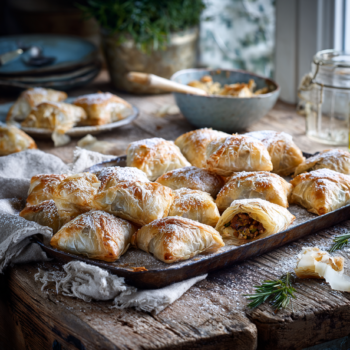
Light and Flaky Filo Mince Pie Parcels

Ingredients
- 1 package filo pastry
 1 pound ground pork (minced pork)
 1 pinch salt
 1 pinch ground black pepper
- 1 tablespoon rapeseed oil
- 3 tablespoons Powdered sugar
Instructions
- Take each pastry sheet and cut it into equal size squares.
- Paint one square with rapeseed oil with a pastry brush and then lay a matching square directly on top.
- Paint the new top square with rapeseed oil and repeat, so there are 3 layers of filo; the top one does not need to be painted with the oil.
- Add salt and pepper to the mince.
- Take roughly 2 teaspoons of mincemeat and add to the middle of the square with a spoon.
- Fold the filo around the mincemeat into a neat parcel.
- Add parcels to a lined baking tray.
- Bake in the oven at 180 degrees for roughly 15 minutes until they are golden brown
- Remove and sprinkle with powdered sugar.
Nutrition
Common questions
How do I know when the ground pork inside is fully cooked?
The safest check is a meat thermometer — the filling needs to reach 160°F (71°C). If you don’t have one, cut a parcel open after the recommended bake time; the pork should be completely gray with no pink remaining and the juices should run clear.
Can I prepare these ahead of time?
Yes — assemble the parcels, place them on a lined tray, cover loosely with cling film, and refrigerate for up to 4 hours before baking. Don’t leave them much longer than that or the filo starts to absorb moisture from the filling and loses its crispness.
My filo sheets keep sticking together. What am I doing wrong?
Filo sheets stick when they’re slightly damp or have been handled too much. Work on a clean, dry surface and separate sheets one at a time, keeping the rest covered. If sheets are genuinely fused, don’t force them apart — use that section as a double layer instead.
Do I need to pre-cook the ground pork before wrapping it in filo?
Check your specific recipe card, as methods vary — some recipes use pre-cooked filling, others use raw. If the recipe calls for raw pork, the 15-minute bake at 180°C is designed to cook it through, but always verify with a thermometer since parcel size affects timing.
Can I use a different fat instead of rapeseed oil to brush the filo?
Yes, melted unsalted butter is the most common alternative and gives a slightly richer result. Avoid olive oil — its stronger flavor competes with the filling, and it can make the pastry a little heavier.
Why is powdered sugar on a meat-filled parcel?
It’s a sweet-savory contrast that echoes older British mince pie traditions where sweet and savory were combined. It’s entirely optional — leave it off if you’re serving these as a straightforward savory snack.
More mince recipes to try
- Cumberland Sausage Mince Pie
- Moroccan Lamb Apricot Briouats
- Savory Pork Apple Pasties
- Mediterranean Lamb Feta Pie