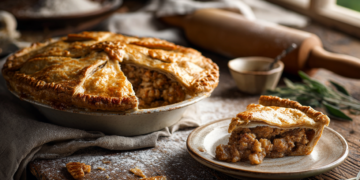
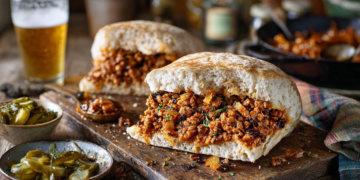
This is a one-pot baked dish of browned ground pork, onion, garlic, and thyme simmered in dry cider, topped with thinly sliced potatoes and finished in the oven. It takes about an hour start to finish and makes six solid servings. The honest reason to make it: the filling reheats well all week, and the potato topping holds up better than pastry when you pull it from the fridge the next day.
The technique that matters
Two steps carry the whole dish. First, brown the ground pork properly — don’t rush it and don’t crowd the pot. Ground pork releases a lot of moisture, so if the pan is too full, it steams instead of browns and you lose the flavor base the cider sauce depends on. Work in batches if your pot is under 5 quarts. Second, the flour goes in after the pork is back in the pot with the onion and garlic — stir it in and let it cook for a full minute before adding the cider. That brief cooking removes the raw flour taste and gives the sauce a clean, slightly thickened consistency rather than a starchy one. Ground pork must reach an internal temperature of 160°F (71°C) — the oven stage at 180°C (350°F) for 45 minutes handles this comfortably, but check the filling with a thermometer the first time you make it.
Keeping and reheating
Cool the hotpot to room temperature within two hours of baking, then refrigerate in the pot or transfer to a sealed container. It keeps well for up to 4 days in the fridge. To reheat individual portions, spoon into an oven-safe dish, cover with foil, and warm at 180°C (350°F) for 15–20 minutes until the filling is steaming hot throughout — or microwave on medium power in 2-minute intervals, covered, to avoid drying out the potato topping. For freezing, the filling freezes better than the assembled hotpot: the potato slices turn watery on thawing. Freeze the pork and cider mixture alone in airtight containers for up to 3 months, then slice and layer fresh potatoes on top before baking from thawed.
If something goes sideways
- Sauce is too thin after baking: The potatoes release starch as they cook, which usually thickens things up, but if the sauce is still watery, remove the lid for the last 10 minutes of baking to let it reduce. Skip adding extra flour at this stage — it clumps.
- Potatoes are still firm at 45 minutes: Slice thickness is the usual culprit. Aim for 3–4mm (about ⅛ inch). If they’re still underdone, cover the pot back up and give it another 10–15 minutes. A fork should slide through with no resistance.
- Filling tastes flat or too sweet: Dry cider varies a lot by brand. If the sauce tastes sweet rather than savory, stir in a small splash of cider vinegar and a pinch more salt before the potatoes go on. Taste the filling before it goes in the oven — that’s the right moment to fix seasoning.
- Pork is grey and greasy, not browned: The fat rendered out before a crust could form. Drain off excess fat after browning, then continue. The dish will still taste good — you just won’t have as much depth in the sauce.
- Leftovers dry out when reheated: Add a tablespoon or two of water or stock to the container before covering and reheating. The potato topping absorbs liquid as it sits in the fridge, so the filling needs a little help loosening back up.

Minced Pork and Cider Hotpot

Ingredients
 15 ml olive oil - extra virgin for richness
 1 kg ground pork (minced pork) - preferably organic
 1 large onion - finely chopped
 2 cloves garlic - minced
 0.5 g thyme - fresh, or 1 gram (1/2 teaspoon) dried
- 500 ml dry cider - a good quality for depth
 2 tablespoons flour - all-purpose
 300 g potatoes - thinly sliced
Instructions
- Preheat the oven to 180°C (350°F). In a large oven-proof pot, heat the olive oil over medium heat. Add the minced pork, and cook, stirring frequently, until browned. Use your senses to ensure the pork develops a deep brown color for optimal flavor.
- Remove the pork from the pot and set aside. Add the chopped onion to the same pot, cooking until translucent and fragrant, about 5 minutes.
- Return the browned pork to the pot, then add minced garlic and thyme. Sprinkle the flour over, and stir to coat the meat and absorb any remaining fat, creating a light roux.
- Carefully pour in the cider, stirring to deglaze the pot. Let the mixture simmer for a moment, enhancing the beautiful aroma.
- Layer the sliced potatoes evenly over the top of the pork mixture. Season with salt and pepper to taste.
- Cover the pot and transfer it to the preheated oven. Bake for 45 minutes, ensuring the potatoes become fork-tender.
Notes
Nutrition
FAQ
Can I use sweet cider instead of dry?
You can, but the sauce will taste noticeably sweeter and less balanced. If sweet cider is all you have, add a teaspoon of cider vinegar to the pot when you deglaze to cut through the sugar.
Do I need to peel the potatoes before slicing?
No — the skins soften fully during the 45-minute bake and are barely noticeable. Leaving them on saves time and the skins help the slices hold together when you’re serving and storing.
Can I assemble this the night before and bake it the next day?
Yes, and it works well. Make the pork and cider filling, cool it completely, then layer the raw potato slices on top, cover, and refrigerate overnight. Add 5–10 minutes to the bake time since everything starts cold.
What’s the best way to portion this for the week without the potatoes going soggy?
Divide the filling into individual containers and store the potato topping separately — or just accept that the potatoes soften further by day 3 and serve those portions as more of a stew. The flavor doesn’t suffer; it’s purely a texture thing.
Can I double the recipe in the same pot?
Only if you have a very large oven-safe pot — at least 8 quarts. The bigger issue is browning: doubling the pork in one go almost guarantees steaming instead of browning. Brown in three or four batches and don’t skip that step.
Is there a way to make the potato topping crispier on top?
Remove the lid for the last 10 minutes of baking and brush the potatoes lightly with olive oil. They won’t get chip-crispy, but the edges will brown and firm up. Honestly, skip adding cheese on top — it makes the potatoes greasy and masks the cider flavor.
What to cook next
- Savory Pork Apple Pasties
- Cumberland Sausage Mince Pie
- Savory British Beef Pies
- Savory Pork Stottie Filling