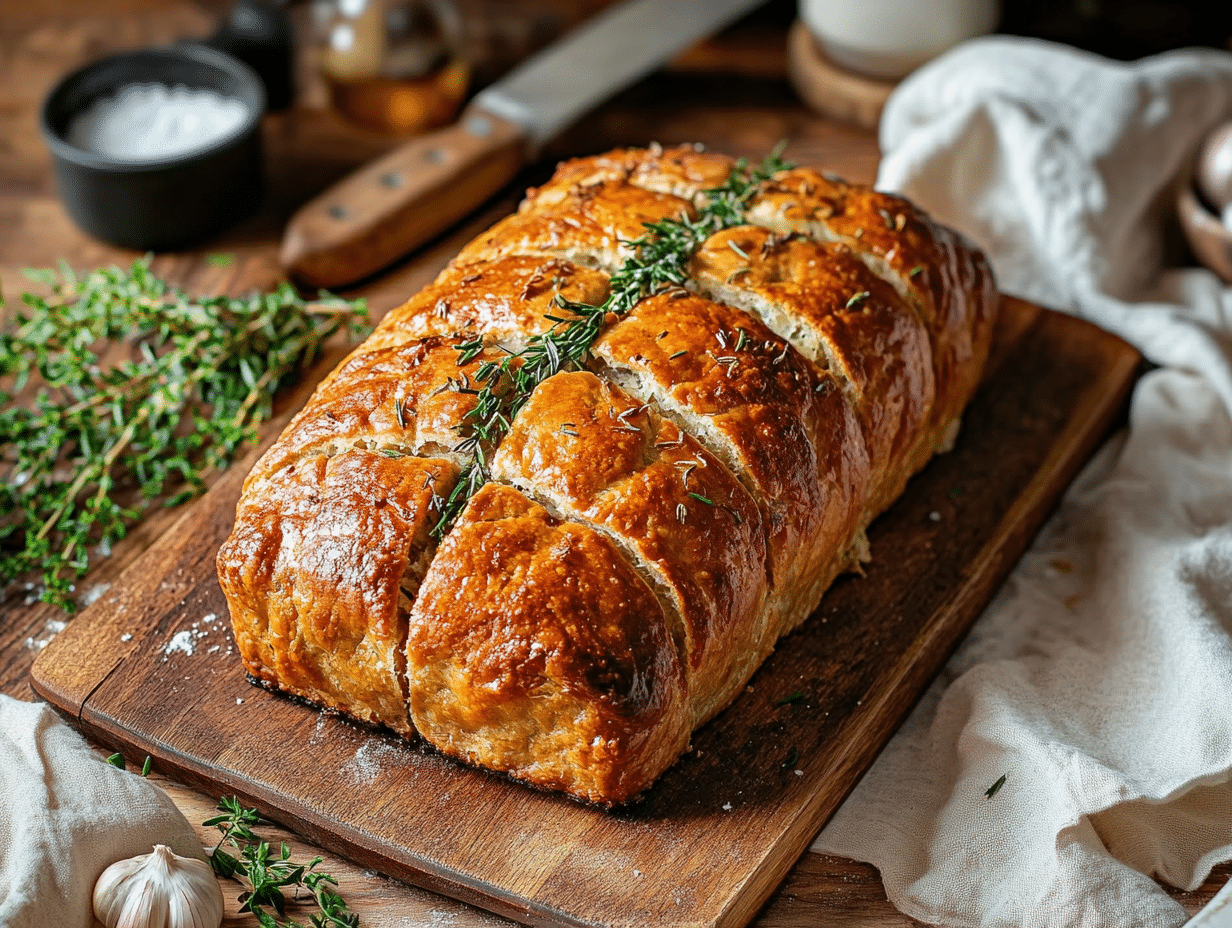
This is a savory soda bread with ground lamb baked right into the dough — one loaf that covers bread and protein in a single bake. It uses self-rising flour and buttermilk, so there’s no yeast and no waiting for a rise. Make it once and you’ll see why it’s worth keeping in regular rotation.
Substitutions that actually work
- Self-rising flour: If you don’t have it, use 3 cups all-purpose flour plus 4½ teaspoons baking powder and ¾ teaspoon salt — works identically here.
- Buttermilk: Mix 1 cup whole milk with 1 tablespoon white vinegar or lemon juice, let it sit 5 minutes. The acidity is what matters for the rise.
- Fresh rosemary: Dried rosemary works at 1 teaspoon (half the fresh quantity), but rub it between your palms first to wake up the oils.
- Ground lamb: Ground beef (80/20) is a straightforward swap. The fat content is similar, so the dough texture won’t change much.
The technique that matters
The single most important step is letting the cooked lamb mixture cool before it touches the flour. Hot meat melts the fat into the flour immediately and can start activating the leavening in the self-rising flour too early — you end up with a dense, greasy crumb. Spread the cooked lamb on a plate or sheet pan for 10 minutes rather than leaving it in the hot pan. Also, mix the dough only until it just comes together. Overworking a soda bread dough tightens the gluten and fights the baking powder, giving you a tough loaf. Shaggy and slightly sticky is exactly right before you shape it.
Common problems and fixes
- Dough is too wet to shape: Add flour one tablespoon at a time — the lamb releases some fat as it cools, and the exact amount varies. You want dough that holds its shape when patted, not a batter.
- Loaf is browned outside but raw in the center: Your oven is running hot, or the loaf was shaped too thick. Check internal temperature — ground lamb must reach 160°F (71°C). Tent with foil and bake in 5-minute increments if the crust is done but the center isn’t.
- Flat loaf with no lift: Old self-rising flour is usually the culprit. Test yours by dropping a teaspoon into warm water — it should bubble actively. If it doesn’t, replace it.
- Lamb mixture is greasy in the dough: Drain excess fat from the pan after browning the lamb before you let it cool. A tablespoon or two of rendered fat is fine; a pool of it is not.
- Cross doesn’t open during baking: The knife wasn’t deep enough — cut at least 1.5 cm (about ½ inch) into the dough. A shallow score closes back up in the oven heat.
Make-ahead notes
The cooked lamb filling can be made up to three days ahead and kept in a sealed container in the fridge — this is the step worth doing on a Sunday so the actual bake takes under 20 minutes of active work. The baked loaf keeps well wrapped at room temperature for one day, or refrigerated for up to four days; skip the garnish and wrap it plain so nothing gets soggy. For longer storage, slice the cooled loaf, wrap individual slices in plastic, and freeze for up to two months. Reheat slices straight from frozen in a 180°C (350°F) oven for 12–15 minutes, or in a toaster oven — microwaving works but softens the crust. The lamb filling alone also freezes well for up to two months if you want to batch-cook it separately and bake fresh loaves through the week.
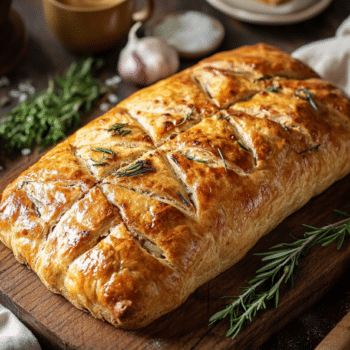
Minced Lamb and Rosemary Damper

Ingredients
 500 grams ground lamb (minced lamb) - Preferably grass-fed for richer flavor
 2 tablespoons olive oil - Extra virgin for best quality
 1 medium onion - Finely chopped
 3 cloves garlic - Minced
 2 teaspoons rosemary - Fresh, chopped
- 3 cups self-rising flour - Sifted
- 1 cup buttermilk - Shaken well
 1 teaspoon salt
 1 teaspoon ground black pepper - Freshly ground
Instructions
- Preheat your oven to 200°C (392°F). Prepare a baking sheet with parchment paper.
- In a large skillet, heat olive oil over medium heat. Add the finely chopped onion, and sauté until translucent, about 5 minutes.
- Add minced garlic and fresh rosemary, and cook for another 2 minutes until fragrant.
- Add minced lamb to the skillet, season with salt and black pepper, and cook until browned, about 10 minutes. Remove from heat and let cool slightly.
- In a large mixing bowl, combine the self-rising flour and slightly cooled lamb mixture. Pour in the buttermilk gradually while mixing to form a soft dough.
- Turn the dough out onto a floured surface, gently knead it, and shape into a round loaf, about 3 cm thick. Place it on the prepared baking sheet.
- Make a cross incision on top of the loaf with a sharp knife.
- Bake in the preheated oven for 25-30 minutes, or until the damper is golden brown and hollow-sounding when tapped on the bottom.
- Let the damper cool slightly before slicing and serving.
Notes
Nutrition
FAQ
How do I know when the damper is fully cooked through?
Tap the bottom of the loaf — it should sound hollow, and an instant-read thermometer inserted into the center should read at least 160°F (71°C) for the ground lamb to be safe. Don’t rely on color alone; a golden crust can appear well before the interior is done.
Can I make individual rolls instead of one large loaf?
Yes — divide the dough into 8 equal portions and shape each into a round about 2 cm thick. Reduce the bake time to 15–18 minutes and still check the internal temperature. Individual rolls are easier to portion and reheat through the week.
Can I cook this in a camp oven or Dutch oven over coals?
Yes, and it works well. Preheat the Dutch oven, line it with parchment, and place coals on the lid as well as underneath to mimic an oven environment. Cooking time will be similar — 25 to 35 minutes — but check it earlier since heat distribution varies.
My dough feels sticky and hard to shape — is something wrong?
No — soda bread dough is stickier than yeast bread dough, and that’s normal. Flour your hands and the surface generously, handle the dough as little as possible, and pat it into shape rather than kneading it smooth.
Can I use a lean ground lamb (below 10% fat)?
You can, but the loaf will be drier. If you’re using very lean lamb, add an extra tablespoon of olive oil to the skillet when cooking the meat to compensate for the lower fat content in the dough.
Does the baked loaf freeze well, and how should I reheat it?
It freezes well for up to two months when sliced and individually wrapped. Reheat slices in a 180°C (350°F) oven for 12–15 minutes from frozen — this keeps the crust from going rubbery in a way that microwaving doesn’t.
Try these next
- Savory Lamb Rosemary Pies
- Gourmet Lamb Sausage Rolls
- Spiced Lamb Curry Scrolls
- Levantine Lamb Za’atar Flatbread