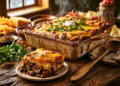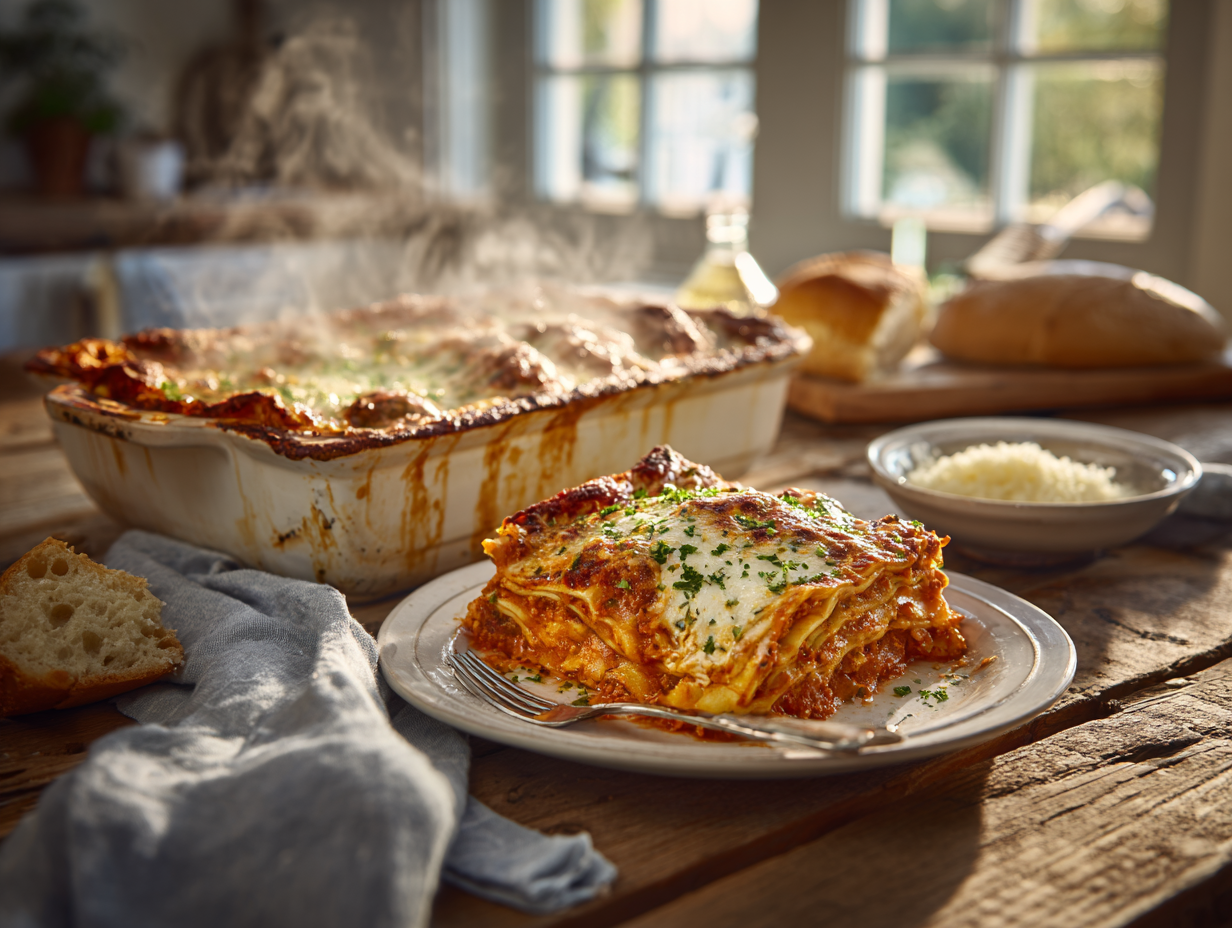
Creamy Bronx Lasagna is a baked ground beef and ricotta lasagna built on a lighter tomato sauce — not a heavy meat ragù — so the cheese layers stay the star. It feeds a crowd without requiring anything exotic, and the leftovers are arguably better than the first serving.
Before you start
Two things determine whether this lasagna holds together or slides apart on the plate. First, let your ricotta drain. Spoon it into a fine-mesh strainer over a bowl for at least 20 minutes before mixing — wet ricotta turns the layers soupy no matter how carefully you build them. Second, keep the tomato sauce on the thinner side rather than cooking it down hard. A slightly loose sauce looks worrying in the pan, but the pasta absorbs liquid as it bakes, and a sauce that was already thick will leave the finished dish dry and tight. Both of these steps cost almost no extra effort and make a real difference in the final texture.
What can go wrong
- Undercooked ground beef in the sauce: Because the meat continues to bake inside the lasagna, it can look done in the pan but still be unsafe. Use an instant-read thermometer on the sauce before layering — ground beef must reach 160°F (71°C). Don’t rely on color alone.
- Noodles sticking together after boiling: If you cook the pasta sheets ahead of time and don’t use them immediately, they weld into a solid block. Lay them flat in a single layer on oiled parchment or a lightly oiled baking sheet — not in a pile — until you’re ready to layer.
- Bubbling over in the oven: A deep 9×13 pan filled close to the top will overflow as the sauce heats and expands. Set the dish on a foil-lined baking sheet from the start. Cleaning the oven floor is a much worse job than placing one extra pan.
- Top layer drying out before the center is hot: If the cheese on top browns too fast, tent the pan loosely with foil for the first two-thirds of the bake time, then remove it for the final stretch to let the top color properly. Skip the garnish — not worth the extra dish.
- Lasagna falling apart when sliced: Cutting too soon is the main culprit. Even after the oven, the layers need 15 full minutes of resting time off the heat before you cut. The cheese and sauce firm up as they cool slightly, and slices will hold their shape instead of collapsing.
Keeping and reheating
Cooled lasagna keeps well in the fridge for up to 4 days, tightly covered. For longer storage, cut it into individual portions, wrap each one in plastic wrap and then foil, and freeze for up to 3 months — portioning before freezing means you can pull out exactly what you need. To reheat from the fridge, cover the dish or portion with foil and warm in a 350°F (175°C) oven for 20–25 minutes until the center hits at least 165°F (74°C) on a thermometer. From frozen, add another 15–20 minutes and keep it covered for most of that time so the edges don’t dry out before the middle is hot. The microwave works for a single portion — cover loosely, use medium power, and check the temperature before eating.
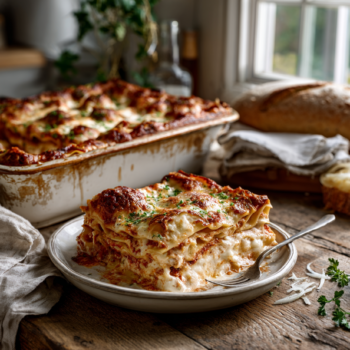
Creamy Bronx Lasagna Recipe

Ingredients
 1 pound lasagna sheets
 1 pound Ricotta cheese - whole milk
  3 cups ketchup (tomato sauce Australia and UK)
 1 large egg
 ½ ounce Mozzarella cheese - shredded
 2 pounds ground lamb (minced lamb)
 1 cup pecorino romano cheese - grated
Instructions
- Lay out about four clean dishtowels on your countertop.
- Place the noodles in a large pot of salted boiling water.
- Stir noodles to keep them swimming and to prevent sticking
- After 5 minutes, remove one of the noodles with your tongs and determine if it is flexible (softish).
- If it is flexible, place it flat out on a dishtowel.
- Repeat this until all the noodles are removed from the pot.
- Preheat the oven to 350 degrees Fahrenheit.
- Place 3/4 cup of ricotta in a bowl, one egg, and approximately 3/4 cup of grated cheese.
- Mix the cheese and egg and set aside.
- Pour the tomato sauce into a bowl and set aside.
- Put the mozzarella cheese in a bowl and set it aside.
- Place your lasagna pan on the counter close to the above ingredients.
- Pick up one lasagna noodle and determine which way you can get the most layers in the pan.
- You will now start to build the layers. Your goal is 4 layers.
- Using your ladle, spoon some sauce into the bottom of the pan, just coating it.
- Place your first layer of noodles on the sauce.
- Alternate rounds of sausage and meatballs on each noodle.
- Spoon a dollop of the ricotta cheese mixture between the meat rounds and spoon tomato sauce over the layers.
- Sprinkle mozzarella cheese lightly over the noodles.
- When you have completed 4 layers, you are ready to bake.
- Cover the lasagna with foil and bake for approximately 30 minutes to check to see if the sauce is bubbling and chees is melted by gently lifting the foil with your thongs.
- If the sauce is bubbling and the cheese is melted, remove the lasagna from the oven and let it rest for 15 minutes before serving.
Nutrition
Your questions, answered
Can I assemble this lasagna the night before and bake it the next day?
Yes, and it actually bakes well from cold — just add about 10 minutes to the covered portion of the bake time. Build the lasagna fully, cover it tightly with foil, and refrigerate for up to 24 hours before baking.
Do I have to use no-boil noodles, or can I use regular lasagna sheets?
Regular boiled noodles work fine and give a slightly more tender result. Cook them just short of fully done — they’ll finish cooking in the oven — and lay them flat on oiled parchment so they don’t stick before you layer them.
How do I know when the lasagna is actually done in the center?
Insert a thin knife or skewer into the middle and hold it there for 5 seconds — it should feel hot when you touch it to your wrist. A thermometer reading of 165°F (74°C) at the center is the reliable standard.
Can I add meatballs on top and still have the lasagna cook evenly?
Add pre-cooked meatballs on top for the last 15–20 minutes of baking, not from the start. Placing raw or cold meatballs on top from the beginning pulls heat away from the lasagna and can leave the center underdone while the meatballs overcook.
More mince recipes to try
- Beef Ricotta Lasagna Rolls
- Creamy Beef Spinach Pasta
- Ultimate Cheesy Beef Bake
- Spicy Beef Stuffed Peppers