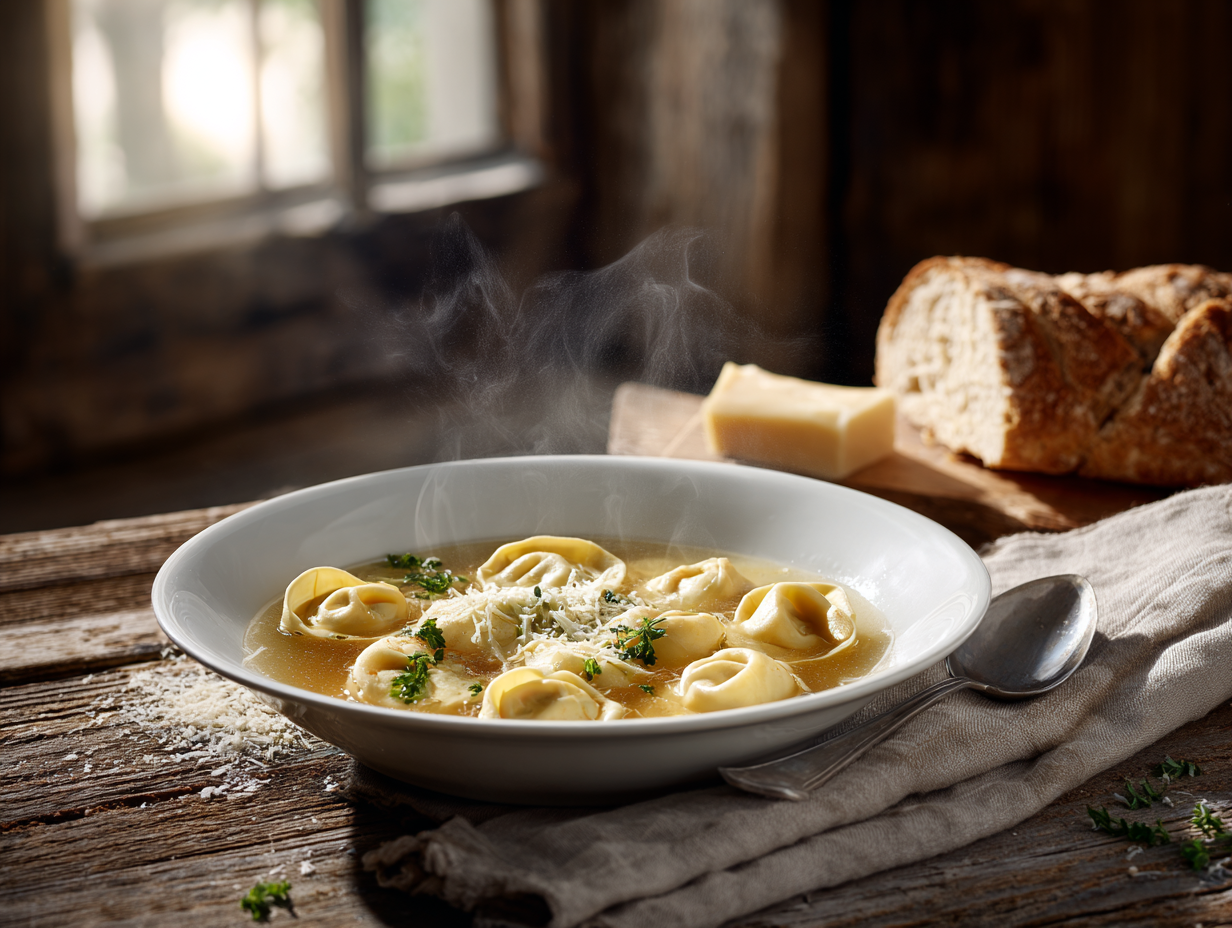
Tortellini al brodo is small pork-filled pasta parcels simmered in a clear meat broth — a complete, protein-forward meal in a single bowl. The filling combines ground pork loin, prosciutto, and mortadella with Parmigiano Reggiano, egg, and nutmeg, so every serving delivers real substance without a heavy sauce. It takes time, but most of that time is hands-off simmering.
The technique that matters
Two things decide whether this dish works. First, the broth must be built low and slow — a bare simmer, never a boil. Boiling clouds the liquid and muddies the flavor; a gentle simmer lets fat and impurities rise so you can skim them off cleanly. Second, the ground meat filling needs to be mixed until it becomes a cohesive paste, not just stirred together. Work it with your hands or a food processor until the pork, prosciutto, and mortadella bind into a single smooth mass. A loose, crumbly filling will fall apart inside the pasta when it hits the hot broth, and you’ll end up with murky soup instead of clean parcels. Get both of these right and everything else follows.
Make-ahead notes
The broth keeps well — refrigerate it for up to 4 days or freeze it for 3 months in airtight containers. Skim the solidified fat off the top after chilling; it lifts away in one piece and the broth underneath will be noticeably cleaner. Shaped, uncooked tortellini can be frozen on a parchment-lined tray until solid, then transferred to a freezer bag and kept for up to 6 weeks — cook them straight from frozen, adding about 2 extra minutes to the cooking time. If you’re reheating broth with already-cooked tortellini in it, do it gently over medium-low heat; hard reheating makes the pasta bloat and the filling turns grainy. Better to reheat the broth separately and drop in fresh or frozen tortellini to order.
What can go wrong
- Tortellini burst open in the broth: This usually means the pasta was rolled too thin at the seam edges, or the filling was overpacked. Use a small, level amount of filling — about the size of a chickpea — and press the edges firmly to seal before shaping. A fingertip of water along the edge helps the dough grip.
- Filling tastes flat or underseasoned: Ground pork on its own is mild. The prosciutto and mortadella add salt, but the Parmigiano and nutmeg do the heavy lifting on flavor. Taste the raw filling mixture before you start shaping — it should taste slightly over-seasoned at this stage, because the broth will dilute it.
- Broth turns greasy: Fat from the meat bones emulsifies into the liquid if the heat is too high. Keep it at a lazy simmer and skim every 20–30 minutes during the first hour. Chilling the finished broth overnight and lifting the solidified fat cap is the most reliable fix — skip the garnish at that point, not worth the extra dish.
- Pasta dough tears when rolling: Dough that hasn’t rested long enough is too elastic and springs back. Rest it wrapped at room temperature for at least 30 minutes before rolling. If it keeps tearing, give it another 10 minutes.
- Tortellini stick together after cooking: If you’re not serving immediately, toss the drained tortellini in a small drizzle of neutral oil to keep them separate. Don’t leave them sitting dry in a colander — they’ll weld into a clump within minutes.
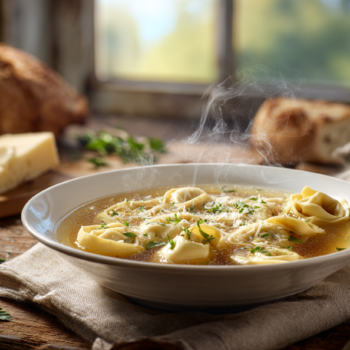
Tasty Tortellini Al Brodo Recipe

Ingredients
 1 pound ground chicken (minced chicken)
 1 medium carrots - cut into chunks
 2 stalks celery - cut into chunks
 1 medium onion - peeled and quartered
 10 pieces black peppercorns
 4 twigs thyme - or a good pinch dried thyme
 1 teaspoon salt
- ½ pound tortellini
 1 teaspoon nutmeg
 ½ cup Parmesan cheese
Instructions
- In your largest pot, add all ingredients, excluding the tortellini, nutmeg and parmesan.
- Bring to the boil and then cover loosely and simmer for 2 to 3 hours. Every so often, scoop the fat that’s floating on the top.
- Strain the stock and discard all chicken and vegetables.
- Reheat the stock to boiling point and add the tortellini cook at a rolling boil for a few minutes until the tortellini is al dente.
- Serve the Tortellini al brodo in large bowls and grate over some nutmeg and parmesan cheese. So simple, yet so satisfying!
Nutrition
Frequently asked questions
Can I use store-bought tortellini instead of making them from scratch?
Yes, and it’s a practical choice that still produces a satisfying result. Fresh refrigerated tortellini from a good Italian deli or grocery store will give you a better texture than dried; cook them directly in the simmering broth according to the package time, then check for doneness — they should be tender but hold their shape.
What’s the best meat for the broth if I don’t have capon or veal?
A whole chicken or a mix of bone-in chicken pieces works well and is easy to source. Beef short ribs or oxtail will give a darker, richer broth if you prefer more body — just simmer either option for at least 2.5 to 3 hours to extract enough collagen and flavor.
How do I know when the tortellini are fully cooked and safe to eat?
The pork-based filling needs to reach an internal temperature of 160°F (71°C) — use an instant-read thermometer on a sacrificial piece if you’re unsure. Fresh homemade tortellini typically take 3 to 5 minutes in simmering broth; they’ll float and the pasta will look slightly translucent when done.
Can I make the filling ahead and how long will it keep?
The ground meat filling can be made up to 24 hours ahead and stored covered in the refrigerator. Beyond that, the texture starts to change and the fat in the mortadella can turn the mixture greasy — shape and freeze the tortellini if you need more lead time.
Is this dish enough on its own as a full meal, or does it need sides?
A generous serving of tortellini al brodo is a complete meal — the ground pork, prosciutto, and mortadella filling provides solid protein, and the broth adds volume and warmth. If you’re feeding people with bigger appetites, a simple green salad or crusty bread alongside is all it needs.
More mince recipes to try
- Creamy Beef Spinach Pasta
- Crispy Pork Dumpling Delight
- Beef Ricotta Lasagna Rolls
- Savory Pork Noodle Stir-Fry