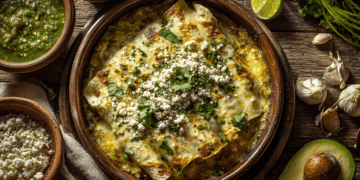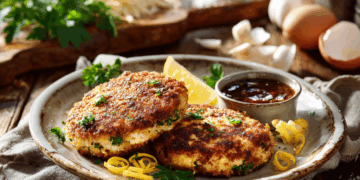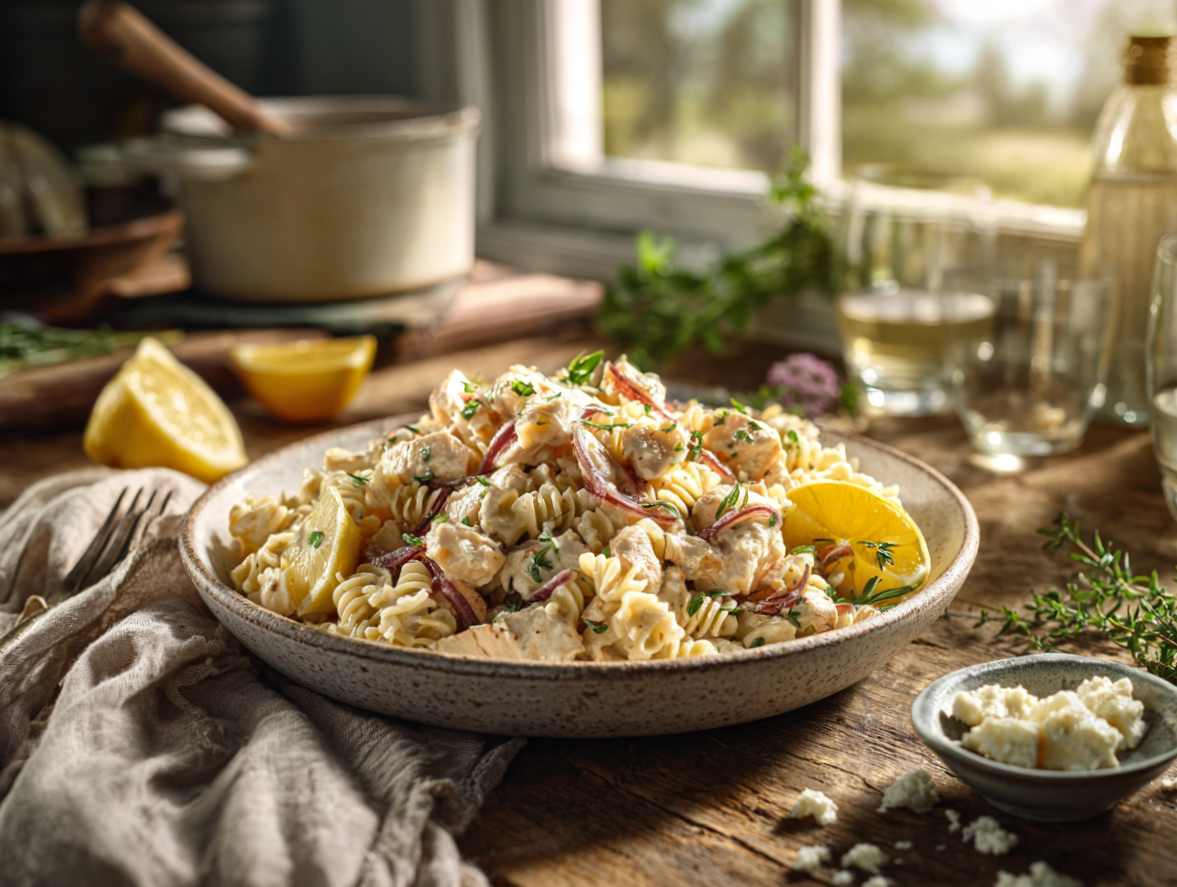
This is a creamy tarragon chicken pasta built around minced chicken breast, goat cheese, white wine, and lemon — all cooked together into a pan sauce that coats brown rice pasta. It comes together in about an hour and gives you a genuinely filling, high-protein meal without a long ingredient list or complicated technique.
Why this recipe works
Two things carry this dish. First, dredging the minced chicken in flour before browning it does double duty: it creates a lightly crisped exterior that adds flavor, and the residual flour dissolves into the pan liquid to thicken the sauce without a separate roux. Second, adding the goat cheese off the heat — not while the pan is still boiling — keeps it from breaking into greasy clumps. The result is a smooth, tangy sauce that clings to the pasta rather than pooling at the bottom of the bowl. Get those two steps right and the rest follows easily.
Substitutions that actually work
- Goat cheese: Cream cheese works as a straight swap and gives a milder, less tangy result. Boursin (plain or herb) also melts cleanly and adds its own seasoning.
- Brown rice pasta: Any short pasta shape — penne, rigatoni, fusilli — holds the sauce well. Standard wheat pasta is fine; just cook it al dente so it doesn’t go soft when tossed in the warm sauce.
- White wine: An equal amount of low-sodium chicken broth with an extra teaspoon of lemon juice substitutes without much loss. Skip anything labeled “cooking wine” — the sodium throws off the balance.
- Dried tarragon: If you have fresh, use about three times the amount. Dried chervil is the closest flavor substitute if tarragon isn’t available.
Mistakes to avoid
- Not checking the chicken temperature: Minced chicken must reach 165°F (74°C) internally. The 35-minute covered simmer should get you there, but verify with an instant-read thermometer — don’t rely on color alone.
- Adding the pasta too early: Cook the pasta separately and toss it in at the very end. If it sits in the sauce while everything finishes, it absorbs liquid and turns mushy, and the sauce loses its coating consistency.
- Crowding the chicken pan: Minced chicken releases moisture quickly. If you pile it in, it steams instead of browns and you lose the fond that flavors the sauce. Brown in batches if needed.
- Skipping the salt until the end: The recipe notes salt goes in with the wine. Taste before adding — goat cheese and wine both carry sodium, so season gradually rather than all at once.
- Letting the goat cheese sit on residual heat too long: Turn the flame fully off before stirring it in and work quickly. Even low heat can cause it to separate if it sits.
Keeping and reheating
Store leftovers in an airtight container in the fridge for up to 3 days. The pasta will absorb more sauce as it sits, so add a splash of water or chicken broth when reheating to loosen it back up. Reheat on the stovetop over low heat, stirring gently — skip the microwave if you can, since it tends to make the goat cheese sauce grainy. This dish doesn’t freeze well; the goat cheese sauce breaks on thawing and the pasta texture suffers. Make it fresh or halve the recipe if you’re cooking for one or two.
Delectable Tarragon Chicken and Pasta

Ingredients
 3 large chicken breast - minced
 2 large red onion - cut in thin half circles
 4 cloves garlic - diced
 3 tablespoons butter
 3 tablespoons all purpose flour (plain flour Australia and UK) - to dredge the chicken in
 ½ cup white wine
 2 tablespoons lemon juice
- 2 tablespoons tarragon - dried
 4 ounces goat cheese
 2 dashes ground black pepper
Instructions
- Saute onions and garlic in butter to caramelize.
- Brown the chicken in a separate pan in butter which I had first dredged in flour.
- Once the chicken has browned, dump the onion on top of it, put in the wine, lemon, tarragon, salt and pepper while it was on a high flame.
- Lower the flame to relatively low, cover it and let it cook for about 35 minutes until the meat was tender and falling away from the drumsticks.
- At this point, add the goat cheese with the flame off. Cook 8 ounces of brown rice pasta and toss it in.
Nutrition
Common questions
Can I use whole chicken breast instead of mincing it myself?
Yes, but slice it thin so it cooks through in the same timeframe. Minced or finely chopped chicken distributes more evenly through the sauce and picks up the flour coating better, which is why the recipe calls for it.
How do I know the chicken is fully cooked?
Use an instant-read thermometer and confirm the chicken has reached 165°F (74°C) — that’s the safe internal temperature for all ground poultry. Don’t judge doneness by color; minced chicken can look pale even when fully cooked.
Is this enough food for a complete dinner, or do I need a side?
At 44g of protein per serving with pasta included, it’s a complete meal on its own. A simple green salad or steamed vegetables alongside works if you want more volume, but it’s not necessary.
Can I make this without alcohol?
Yes — substitute the white wine with an equal amount of low-sodium chicken broth plus an extra teaspoon of lemon juice. You won’t get quite the same depth, but the sauce still works well.
My sauce looks thin after adding the goat cheese — what went wrong?
The sauce thickens as it cools slightly, so give it a minute before adding more pasta. If it’s still too thin, return the pan to low heat briefly and stir — the flour from the chicken dredge will continue to thicken it as it heats. Skip the garnish — not worth the extra dish.
Can I prep any part of this ahead of time?
You can caramelize the onions and garlic up to a day ahead and refrigerate them. The chicken is best browned fresh, since pre-cooked minced chicken dries out quickly when reheated in the sauce.
Try these next
- Creamy Beef Spinach Pasta
- Savory Pork Noodle Stir-Fry
- Chicken Macadamia Sausage Rolls
- Andean Chicken Potato Locro