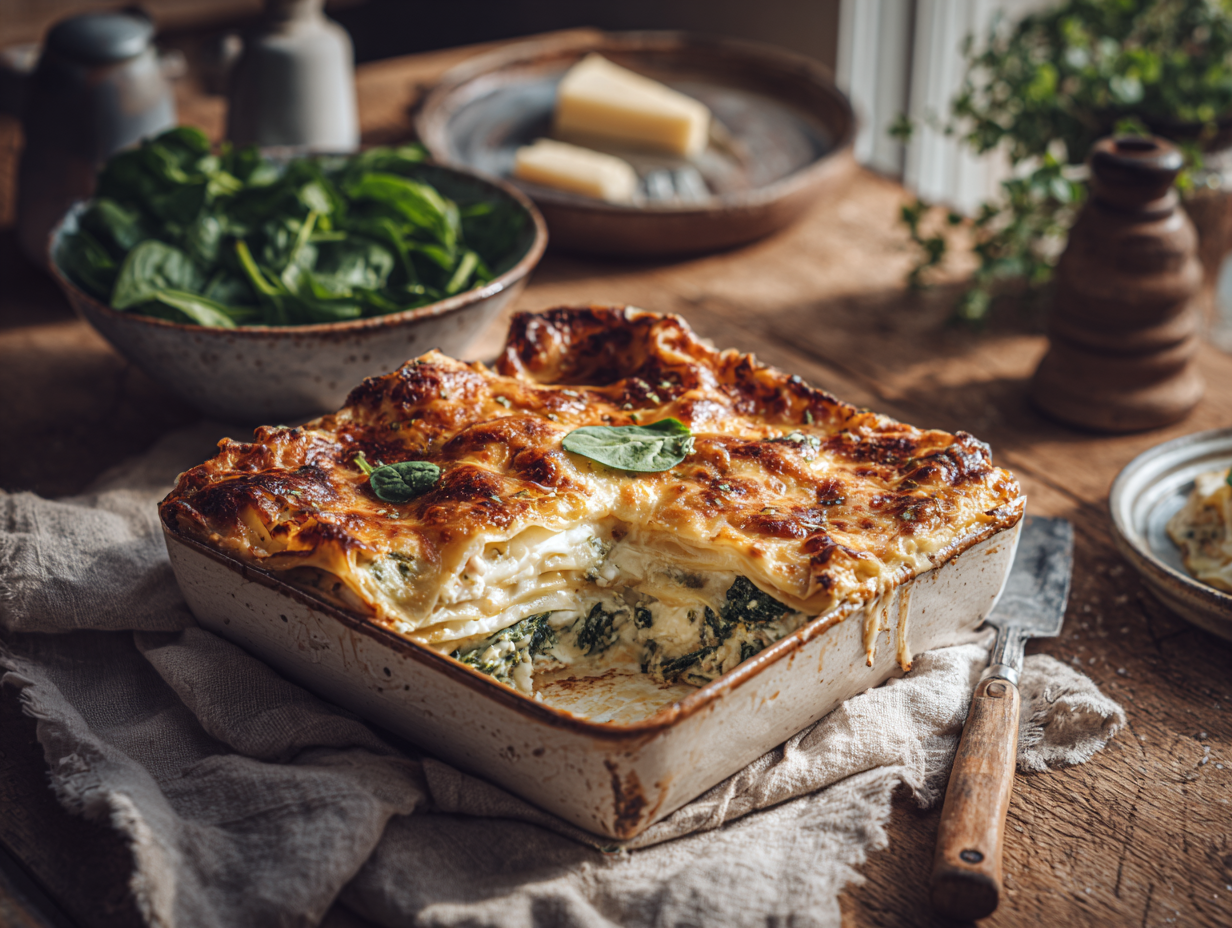
This is a baked lasagne made with seasoned ground chicken, fresh or frozen spinach, and a ricotta-mozzarella filling in place of the usual béchamel. It feeds a crowd from a single baking dish, and because ground chicken is one of the cheaper proteins at most grocery stores, it keeps the cost reasonable without tasting like a compromise.
The technique that matters
The single most important step is cooking off the moisture before you layer. Ground chicken releases a lot of liquid as it cooks, and spinach — especially frozen — holds even more. If you don’t drain the spinach thoroughly and let the chicken mixture reduce until it looks slightly dry in the pan, the finished lasagne will be watery and the layers will slide apart when you cut it. Press the spinach in a clean kitchen towel or against a colander with the back of a spoon until almost no liquid comes out. Let the chicken mixture sit off the heat for a few minutes and tip off any pooled liquid before assembling. That one habit is the difference between a lasagne that holds its shape and one that floods the plate.
Mistakes to avoid
- Undercooking the ground chicken: Ground poultry must reach 165°F (74°C) internally — no pink, no exceptions. Check the filling in the pan with an instant-read thermometer before you start layering, not after baking.
- Skipping the bottom sauce layer: Starting with dry pasta directly on the dish causes the bottom sheets to stick and tear when serving. Even a thin smear of sauce prevents this.
- Overcrowding the layers: Too much ricotta mixture per layer makes the lasagne structurally unstable and extends bake time unpredictably. Spread each component in a thin, even coat.
- Pulling it straight from the oven: Cutting immediately means the layers collapse. Rest the baked lasagne uncovered for at least 10 minutes so the filling firms up enough to slice cleanly.
- Using no-boil sheets without enough sauce: No-boil pasta absorbs liquid from the surrounding layers to cook. If your sauce is on the thick side, add a splash of water or stock between layers or the edges will stay hard.
Substitutions that actually work
- Ricotta: Full-fat cottage cheese blended briefly with a fork is a direct swap — same creaminess, often cheaper and easier to find. Drain it first if it looks watery.
- Fresh spinach: Frozen chopped spinach works fine. Thaw it completely and squeeze out every bit of water before using — this step is non-negotiable.
- Mozzarella: Any mild, good-melting cheese works here. Monterey Jack, provolone, or even a budget shredded Italian blend all melt well. Skip the fresh buffalo mozzarella — it releases too much water.
- Ground chicken: Ground turkey is the most seamless swap and behaves identically in this recipe. Season it the same way.
- Parmesan: Pecorino Romano or a store-brand hard Italian cheese both do the same job at the top of the bake. Skip the garnish of extra parmesan at the table — not worth the extra dish.
Keeping and reheating
Cooled lasagne keeps in the fridge, covered tightly, for up to 4 days. The flavour genuinely improves overnight as the layers absorb the sauce. To reheat individual portions, cover with a damp paper towel and microwave on medium power in 90-second intervals until steaming through — high power dries out the edges before the centre is hot. For a whole or half pan, cover with foil and reheat in a 350°F (175°C) oven for 20–25 minutes. To freeze, portion into individual servings before freezing for easier reheating; whole uncut lasagne also freezes well for up to 3 months. Thaw overnight in the fridge before reheating — do not reheat from frozen in the microwave or the pasta turns rubbery.

Cheesy Chicken Lasagne Recipe
Ingredients


Instructions
- Finely slice the onion, and dice the carrot, celery and tomato.
- Then heat your oil in a pan and sauté onion, carrot, celery and finely sliced garlic until onion goes clear. (note - you can change the vegetables in this recipe for any other vegetables you prefer like broccoli, beans, mushrooms, just what ever you like or your kids)
- Now add the chicken mince and cook until white.
- Also, add salt, black pepper for taste
- Mix until all ingredients are well-combined and cover the pot for 5 minutes so that chicken gets appropriately cooked on slow heat
- Boil lasagna sheets in hot water and keep them aside.
- In another pan, add butter and plain white flour, fry it until its colour is changed (It shouldn’t be brown), and then take it off the stove and cool it.
- Add milk into it after the mixture has cooled off because adding milk to the hot mix would result in clots in the final chicken lasagna.
- Cook slowly stirring constantly until till it thickens
- Layer a lasagna sheet in a wide ovenproof dish and oil it so that lasagna doesn’t stick from the bottom. Pour white sauce and put a layer of mince meat and little grated cheese.
- Repeat the layers to lay all the sauce, mince meat /vegetable mix, cheese, and lasagna sheets.
- Then top it with grated mozzarella cheese and bake in a preheated oven at 200 degrees Celsius for 8 to 10 minutes.
- When cheese looks golden, tempting Cheesy Chicken Lasagne Recipe is ready to serve.
Nutrition
Your questions, answered
Can I use rotisserie chicken instead of ground chicken?
Yes, shredded rotisserie chicken works well and saves cooking time. Pull the meat into small pieces rather than large chunks so it distributes evenly between the layers and every bite gets some protein.
Do I need to pre-cook the lasagne sheets?
It depends on the type you buy. Standard dried lasagne sheets need boiling first; no-boil sheets do not. If using no-boil, make sure your sauce is loose enough to hydrate them during baking — add a few tablespoons of water or chicken stock if the sauce looks thick.
My ricotta filling tastes bland. What can I add?
Salt is usually the issue — ricotta needs more seasoning than you’d expect. Stir in a generous pinch of salt, black pepper, a little garlic powder, and a handful of grated parmesan directly into the ricotta mixture before layering.
Can I assemble this the night before and bake it the next day?
Yes, and it’s one of the best ways to make this dish. Assemble fully, cover tightly with foil, and refrigerate overnight. Add about 10 extra minutes to the covered bake time since it’s going in cold.
How do I stop the top from drying out during baking?
Bake covered with foil for the first two-thirds of the cooking time, then remove the foil for the final 10–15 minutes to brown the cheese. If you bake it uncovered the whole time, the top layer of pasta and cheese dries out before the inside is cooked through.
Can I use dried Italian seasoning instead of fresh herbs?
Dried seasoning works fine here — use about one teaspoon of dried Italian seasoning in the chicken mixture in place of fresh herbs. Add it early in the cooking so it has time to bloom in the oil with the garlic and onion.
Try these next
- Beef Ricotta Lasagna Rolls
- Creamy Beef Spinach Pasta
- Chicken Macadamia Sausage Rolls
- Colombian Chicken Cheese Empanadas