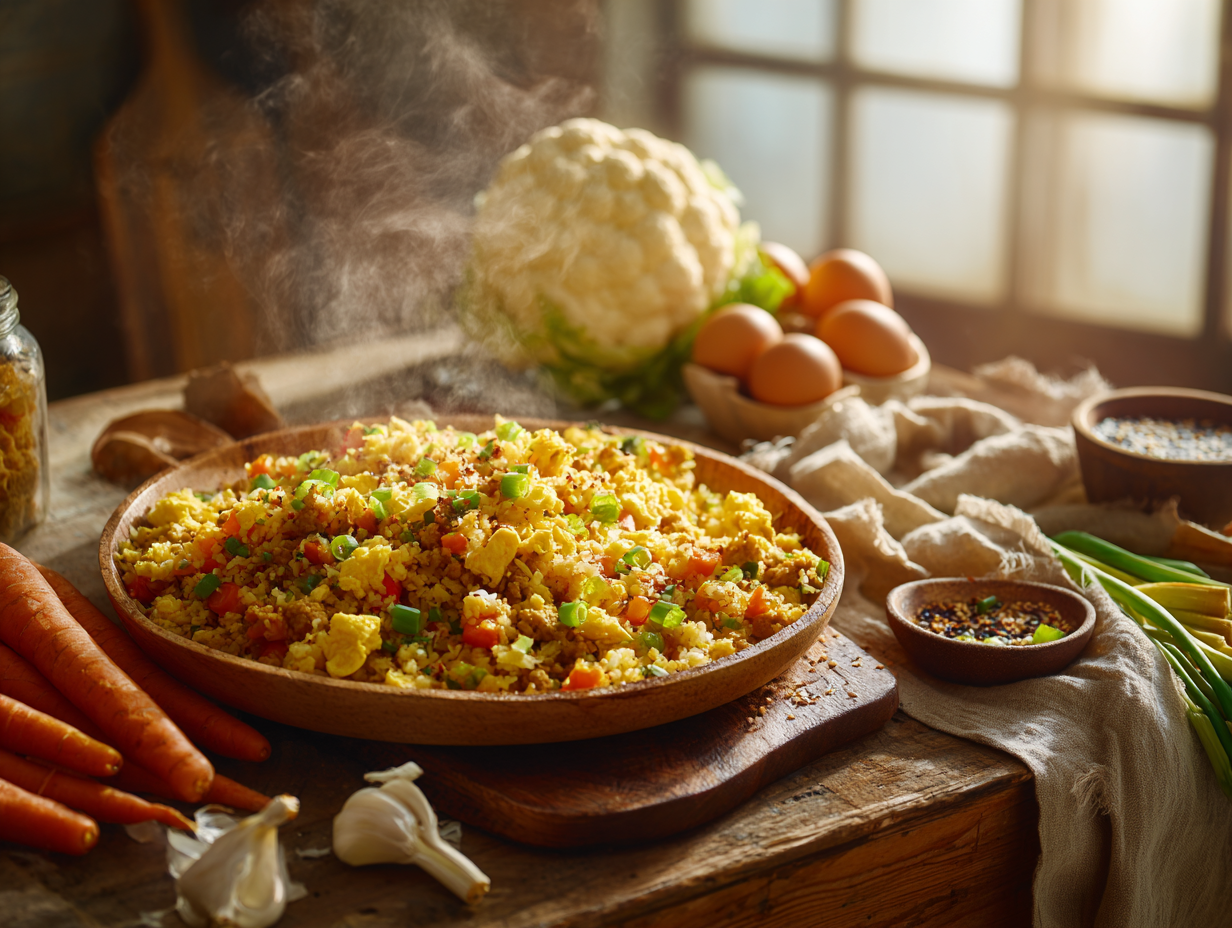
This is a ground chicken stir-fry built on riced cauliflower instead of grain rice, seasoned with coconut aminos, sesame oil, ginger, and scrambled eggs folded in at the end. It cooks in one pan in under 30 minutes, which makes it genuinely useful on a weeknight when you don’t want to think too hard.
What makes this version work
Two things matter here. First, ground chicken needs to be broken up constantly as it cooks — press it flat, let it brown for a minute, then break it apart. If you just stir it the whole time, it steams instead of browns and you lose flavor. Second, the cauliflower rice must go in dry. Wet cauliflower turns the whole pan soggy. Pat it down with a paper towel or spread it on a baking sheet for five minutes before it hits the pan. Those two steps are the difference between a mushy pan of ingredients and something that actually tastes like fried rice.
Smart swaps
- Coconut aminos: This is the ingredient most people haven’t used before. It tastes like a milder, slightly sweeter soy sauce. Find it in the health food aisle or order it online. Regular soy sauce works as a 1:1 swap if you’re not avoiding gluten, but reduce the amount slightly — it’s saltier.
- Riced cauliflower: Bagged frozen cauliflower rice from the supermarket is fine and saves time. Thaw it completely and squeeze out excess moisture in a clean kitchen towel before using.
- Ground chicken: Ground turkey is the closest substitute and behaves identically in the pan. Both must reach an internal temperature of 165°F (74°C) — never serve either one pink.
- Sesame oil: Don’t skip this or substitute a neutral oil. It’s added for flavor, not for cooking fat, and it’s what gives the dish its characteristic toasted aroma. A little goes a long way.
Troubleshooting
- The pan is watery and nothing is browning: The cauliflower released moisture. Turn the heat up to medium-high and leave the pan alone for 2 minutes without stirring. The liquid will evaporate. Stirring constantly traps steam and prevents browning.
- The ground chicken is cooking in one grey clump: The pieces are too large. Use a wooden spoon or spatula to chop actively while cooking. Ground poultry sticks together more than beef — keep breaking it up every 30 seconds until no pieces are larger than a pea.
- The eggs turned rubbery: The pan was too hot when you added them, or you stirred too aggressively. Push the rice mixture to the sides, reduce heat to medium, add the eggs to the center, and fold gently — stop while they still look slightly underdone. Residual heat finishes them.
- The dish tastes flat: Coconut aminos is lower in sodium than soy sauce, so under-seasoning is common. Taste before serving and add a small splash more aminos or a pinch of salt. A few drops of extra sesame oil at the end also sharpens the flavor noticeably — skip the garnish of green onions if you’re short on time, not worth the extra dish.
- The carrots are still hard when everything else is done: Carrots need more time than the other vegetables. Add them first, before the onion and garlic, and give them 3 to 4 minutes on their own.
Make-ahead notes
The cooked chicken and vegetable mixture keeps well in an airtight container in the fridge for up to 4 days. The scrambled egg portions hold up fine too — unlike some egg dishes, they don’t turn unpleasantly rubbery here because they’re mixed through rather than sitting on top. Reheat in a skillet over medium heat with a tiny splash of water to loosen things up, about 3 to 4 minutes, stirring occasionally. Microwave reheating works in a pinch — cover loosely and use 60-second intervals. For freezing, the cooked mixture freezes for up to 2 months; thaw overnight in the fridge before reheating rather than going straight from frozen to pan, which makes the cauliflower watery.

Super Filling Chicken and Yellow Rice Recipe

Ingredients
 2 tablespoons coconut oil
 2 breasts ground chicken (minced chicken)
- 3 tablespoons coconut aminos
 2 tablespoons sesame oil
 2 medium carrots - peeled and finely diced
 ½ medium yellow onion - diced
 ½ teaspoon garlic - crushed
 1 head cauliflower - steamed and riced
 3 sprigs green onions - diced
 1 dash ginger
 2 medium eggs - whisked
Instructions
- Steam and rice your cauliflower. Set aside
- Heat a tablespoon of oil in a pan over medium-high heat. Add your minced chicken and 1 tablespoon of coconut aminos. When chicken is cooked thoroughly, set aside.
- Add 1 more tablespoon of coconut oil to the pan, carrots, and 1/2 tablespoon sesame oil. Cook everything until they begin to soften, approximately 5 minutes. Add onion and garlic, and cook until onions become translucent.
- Add cauliflower and drizzle with another tablespoon of sesame oil. Add green onions and 1 to 2 tablespoons of coconut aminos and ginger.
- Add chicken back to the pan.
- Create a well in the centre of your rice. Add 2 eggs and scramble. Incorporate into the rice as the eggs cook.
Nutrition
FAQ
How do I know when the ground chicken is fully cooked?
Ground chicken is done when it reaches an internal temperature of 165°F (74°C) and there is no pink remaining anywhere in the pan. If you don’t have a thermometer, cut into the largest piece — it should be completely white and opaque throughout. Never rely on color alone with ground poultry; always check the thickest part of the meat.
Can I use a bag of frozen riced cauliflower instead of making my own?
Yes, and it saves real time. Thaw it completely first, then squeeze out as much water as possible using a clean kitchen towel or several layers of paper towel. Skipping that step is the main reason the dish turns out soggy.
My supermarket doesn’t carry coconut aminos. What should I use?
Regular soy sauce works as a direct swap. Use about three-quarters of the amount called for, since soy sauce is saltier than coconut aminos. Tamari is a good middle-ground option — it’s gluten-free and closer in flavor profile to coconut aminos than standard soy sauce.
Do I need a wok, or will a regular frying pan work?
A large regular frying pan works fine. The key is that it’s large enough so the ingredients aren’t piled on top of each other — crowding causes steaming instead of frying. A 12-inch skillet is the minimum; if you only have a smaller pan, cook in two batches.
Can I prep the vegetables the night before to save time?
Yes. Dice the onion, carrots, and garlic and store them together in a sealed container in the fridge for up to 24 hours. Slice the green onions separately so they stay crisp. Having everything ready before you turn on the heat makes the actual cooking much less stressful, especially if this is your first time making a stir-fry style dish.
Is this recipe suitable for kids or people who don’t like spicy food?
Yes — as written, the recipe has no heat. The ginger adds warmth but not spice; you can reduce it by half or leave it out entirely without affecting the overall dish. The coconut aminos and sesame oil carry enough flavor on their own that the dish still tastes seasoned and complete without the ginger.
What to cook next
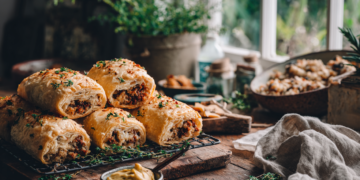
- Chicken Macadamia Sausage Rolls
- Hearty Beef Cauliflower Bake
- Authentic Szechuan Dan Dan
- Japanese Pork Lettuce Cups