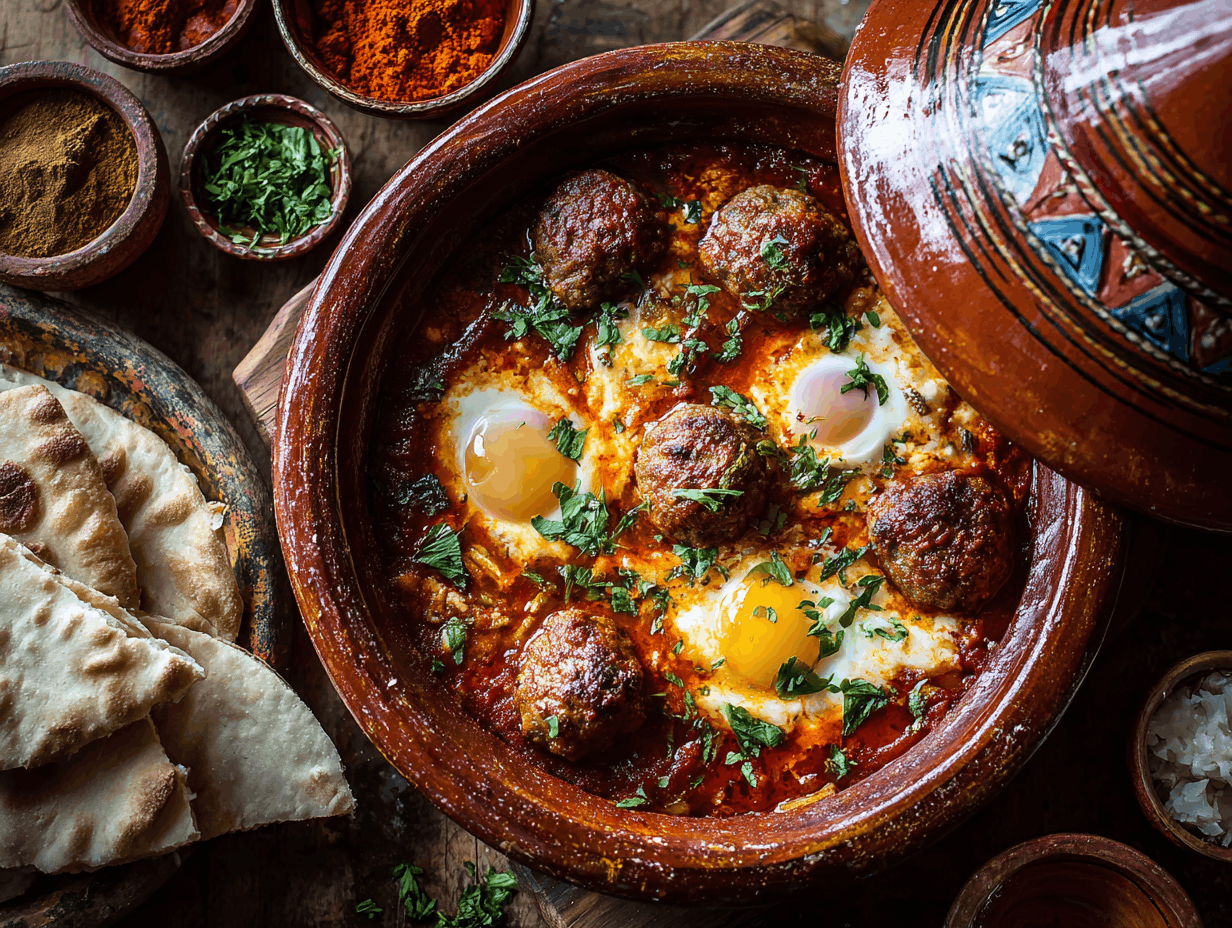
Tajine with Eggs and Meatballs is a dish that beautifully represents the warmth, depth, and generosity of Moroccan cuisine. It is far more than a simple combination of meat, eggs, and spices—it is a reflection of centuries of culinary tradition shaped by Berber roots, Arab influences, Mediterranean trade routes, and a deep cultural appreciation for communal dining. Every time I prepare this dish, I am reminded of how Moroccan cooking transforms humble ingredients into something deeply comforting and incredibly flavorful.
At the heart of this recipe is the tajine itself. The word “tajine” refers both to the dish and the traditional earthenware pot in which it is cooked. The pot, with its shallow base and conical lid, is cleverly designed to capture and circulate steam, keeping the ingredients tender and infusing them with concentrated flavor. While many home cooks today prepare tajine in a heavy skillet or Dutch oven, the spirit of the dish remains the same: slow-cooked layers of spice, protein, and aromatics coming together in harmony.
In Morocco, tajine is not reserved for special occasions—it is everyday food elevated by technique and spice. Families often gather around a single large tajine, placed directly on the table, and eat communally with pieces of bread. This act of sharing from one pot embodies Moroccan hospitality. It is intimate, warm, and unpretentious. When I serve Tajine with Eggs and Meatballs with pita bread, I try to recreate that same feeling: a meal designed to be enjoyed slowly and together.
The meatballs, or kefta, are central to the dish. Traditionally, they are made with ground lamb or beef, though chicken is a lighter and equally delicious alternative. The meat is mixed with fragrant spices—typically cumin, coriander, paprika, garlic, fresh parsley, cilantro, and sometimes a touch of cinnamon. These spices are not meant to overwhelm but to complement the richness of the meat. Moroccan cuisine is known for its skillful balance; it layers flavor rather than masking it.
One of the defining elements of this tajine is the sauce. Unlike tomato sauces found in Italian cooking, Moroccan tomato-based sauces are deeply spiced and slightly smoky. Garlic, olive oil, fresh herbs, and ground spices are gently cooked to release their aromas before crushed or fresh tomatoes are added. As the sauce simmers, it thickens into a velvety base that cradles the meatballs. The addition of cayenne or harissa can bring heat, but it’s entirely customizable. Moroccan food is often moderately spiced rather than aggressively hot, though spice lovers can certainly adjust to taste.
The eggs are what make this particular tajine especially comforting and visually striking. Cracked directly into the simmering sauce during the final stages of cooking, they gently poach in the rich tomato base. The whites set while the yolks remain beautifully soft, creating a luscious texture that blends into the sauce when broken. This technique is reminiscent of shakshouka, another North African dish, and it highlights the regional interplay of culinary traditions. Eggs stretched a dish economically while adding richness and protein—another example of practical cooking elevated through technique.
Bread is essential. In Morocco, khobz (traditional round bread) is used as both utensil and accompaniment. It is sturdy enough to scoop up sauce and tender meatballs while soaking up every drop of flavor. While khobz can be difficult to find outside of North Africa, pita bread serves as an excellent substitute. Its soft interior pocket and slightly chewy texture make it perfect for tearing and dipping. Serving the tajine with bread reinforces the communal nature of the meal. There’s something deeply satisfying about using bread to gather sauce straight from the pan.
What makes this dish particularly special is its flexibility. Moroccan home cooking thrives on adaptation. Depending on what is available, carrots, bell peppers, or even zucchini can be added to the sauce. Some cooks include preserved lemon for brightness or olives for a briny contrast. Others increase the cayenne for heat or add a drizzle of olive oil at the end for richness. The foundation remains consistent, but the variations allow each cook to put their personal stamp on the dish.
Spices deserve special mention because they are the soul of Moroccan cuisine. Morocco’s historical spice trade brought cinnamon, ginger, turmeric, saffron, and more into everyday cooking. In Tajine with Eggs and Meatballs, spices are layered thoughtfully. Cumin provides earthiness, paprika contributes warmth and subtle sweetness, coriander adds citrusy depth, and fresh herbs bring brightness. The result is a dish that smells as inviting as it tastes. When guests walk into the kitchen while this tajine simmers, they are instantly drawn in by its aroma.
From a culinary perspective, this dish also demonstrates technique. Browning the meatballs properly before simmering helps develop flavor through caramelization. Allowing the sauce to reduce slightly concentrates its taste. Cracking the eggs at just the right moment ensures perfectly set whites and runny yolks. These small steps elevate the final outcome and are part of what makes cooking tajine so satisfying.
Beyond its flavors and techniques, Tajine with Eggs and Meatballs represents comfort. It is hearty but not heavy, spiced but not overpowering, rustic yet elegant. It works beautifully as a family dinner, a brunch centerpiece, or even a casual gathering with friends. It invites conversation, encourages sharing, and creates a sense of occasion without requiring elaborate preparation.
For me, this dish embodies why Moroccan cuisine is so beloved worldwide. It celebrates spice without excess, honors tradition while allowing creativity, and transforms everyday ingredients into something soulful. Whether you use ground beef, lamb, or chicken, whether you add vegetables or keep it simple, the essence of the tajine remains the same: warmth, generosity, and bold, layered flavor.
When served bubbling hot with fresh pita bread on the side, Tajine with Eggs and Meatballs becomes more than a recipe—it becomes an experience. It’s a reminder that some of the best meals are those cooked slowly, shared openly, and savored together.
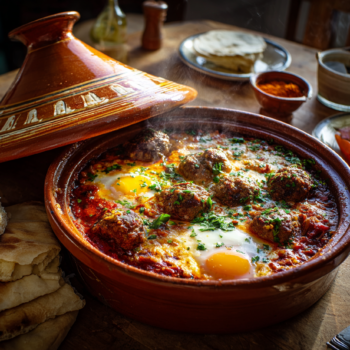
Tajine With Eggs And Meatballs Served With Pita Bread

Ingredients
 5 medium tomato - cut into cubes
 3 medium red onion - finely chopped
 3 cloves garlic - finely chopped
 1.4 pound ground beef - (minced beef)
 1 teaspoon cumin - powder
 ½ teaspoon salt
 ½ teaspoon ground black pepper - black, ground
 ½ teaspoon cayenne pepper
 ½ teaspoon turmeric - powder
 4 tablespoons parsley - fresh, chopped
 1 tablespoon cilantro (coriander) - finely chopped
 3 tablespoons olive oil
 ½ teaspoon ground cinnamon - powder
 6 medium eggs
 6 medium pita bread - or Moroccan bread
Instructions
- Blend the minced beef with one-third of the chopped onions.
- Add cumin, cayenne, salt and pepper, 2 tablespoons of parsley and the coriander. Work the mixture with wet hands so it doesn't stick to your fingers. Shape it into small meatballs.
- In a pan, sauté them briefly in olive oil, and place them in a tajine once browned.
- Then sauté the rest of the onions but make sure they don't become brown.
- Add the tomatoes to the pan and let them simmer, half covered.
- Add the garlic and the rest of the parsley. Season with the remaining cumin and cinnamon, and add extra cayenne and salt if you like. Mix well and let the sauce simmer for about 30 minutes.
- Add the meatballs to the sauce and let them cook together for about 10 minutes.
- Before you serve, transfer to a clay dish, crack the eggs into it and place the plate in a preheated oven at 240°C.
- Bake until the egg whites are set, and serve immediately with warm Arabic pita bread cut into triangles.