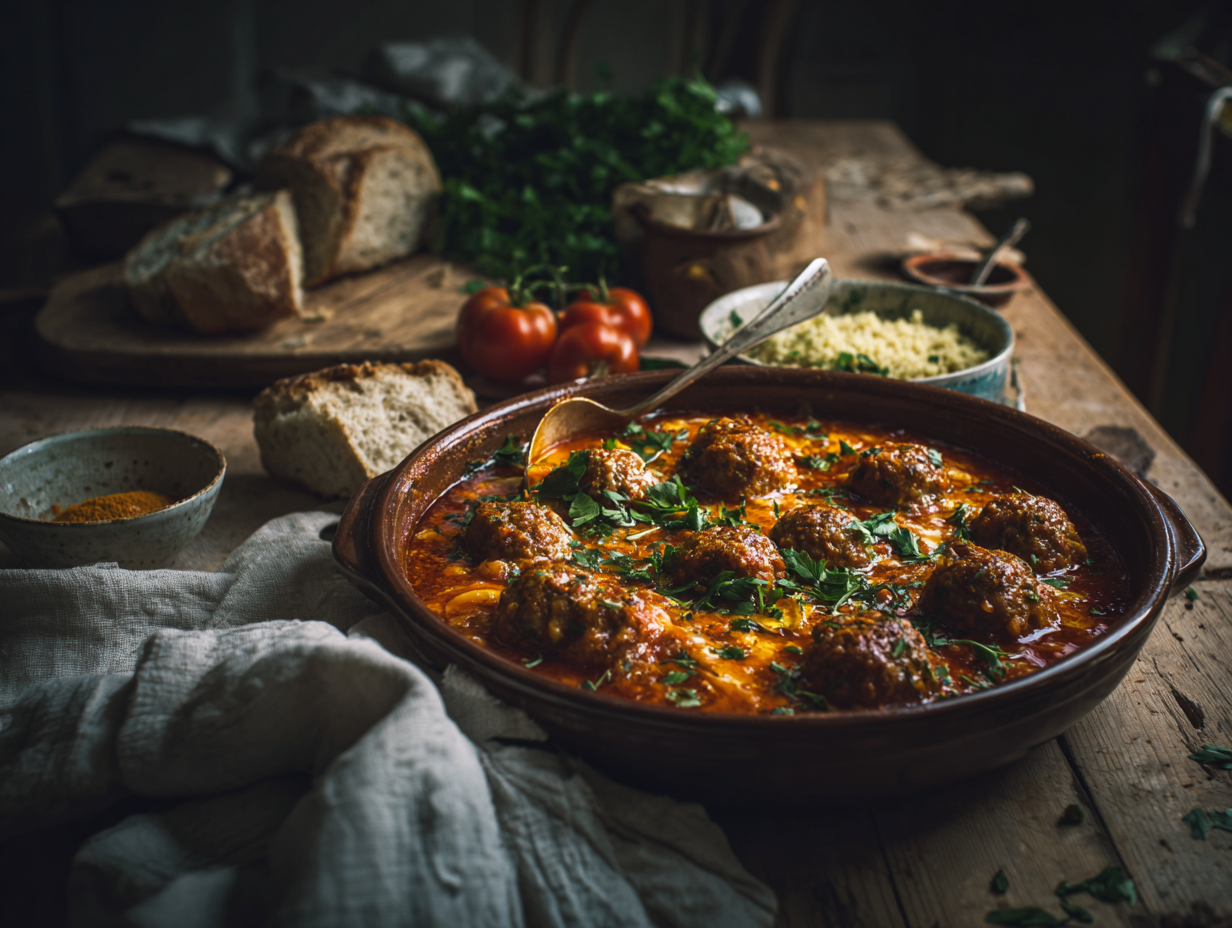
The story of Spicy North African Meatballs in Rich Tomato Sauce begins long before the first meatball is shaped or the first onion is sautéed. It begins with the land itself—sun-drenched plains, windswept deserts, rugged mountains, and fertile coastal regions that stretch across Morocco, Algeria, and Tunisia. North African cuisine is a tapestry woven from Berber roots, Arab influences, Mediterranean ingredients, and centuries of trade with Sub-Saharan Africa, the Middle East, and Europe. Each of these cultural threads has contributed spices, techniques, and traditions that define the bold, layered flavors found in this beloved dish.
At the heart of this recipe is the tradition of the tagine, both a vessel and a culinary philosophy. The tagine pot, with its wide base and conical lid, was ingeniously designed to capture steam and return condensed moisture back into the dish, allowing meats and vegetables to cook gently and become meltingly tender. While modern kitchens may rely on heavy-bottomed pans or Dutch ovens, the principle remains the same: slow simmering, careful layering of spices, and patience. The result is a harmony of flavors that tastes as though it has been tended all day, even when adapted for contemporary schedules.
Meatballs, known throughout Morocco as kefta, reflect the region’s talent for transforming humble ingredients into something extraordinary. Ground meat—traditionally lamb, though beef is widely used today—is blended with grated onion, garlic, herbs, and an array of spices that give the dish its unmistakable personality. Cumin provides earthiness, coriander adds citrusy warmth, paprika contributes sweetness and color, and cinnamon introduces a subtle, aromatic complexity. In North African cooking, spice is not merely about heat but about balance. Even in a “spicy” dish, warmth and depth are valued over overwhelming fire.
The spice blends themselves tell a story of ancient trade routes. Caravans once carried saffron, cinnamon, turmeric, ginger, and black pepper across the Sahara and along Mediterranean ports. Markets, or souks, would brim with mounded pyramids of vibrant powders and dried herbs, perfuming the air with their intoxicating scents. The spices used in this meatball tagine echo that history, connecting modern cooks to generations past. Each pinch is a reminder of how geography, commerce, and culture intertwine on a plate.
Equally important is the rich tomato sauce that cradles the meatballs as they simmer. Tomatoes, though not native to North Africa, were embraced wholeheartedly after their introduction from the Americas. Over time, they became essential to countless regional dishes. In this recipe, tomatoes form a lush base enriched with onion, garlic, and chicken stock, creating a sauce that is both robust and comforting. Turmeric lends its golden hue and subtle bitterness, while chili or harissa introduces a gentle heat that lingers pleasantly.
Harissa, in particular, deserves mention. This fiery chili paste—made from dried chilies, garlic, olive oil, and spices—is a cornerstone of many North African kitchens, especially in Tunisia. A spoonful stirred into the sauce transforms the dish, adding depth and character. Yet even without it, the interplay of spices ensures complexity. The defining characteristic of North African flavor profiles is their layering: spices are added at different stages, building gradually into a cohesive whole.
Beyond the ingredients, this dish represents something deeply communal. In Moroccan culture, meals are often shared from a single large serving dish placed at the center of the table. Family and friends gather closely, scooping up bites with pieces of warm bread. The act of sharing fosters connection; food is both sustenance and social glue. Spicy North African Meatballs in Rich Tomato Sauce fit seamlessly into this tradition. Served bubbling hot, garnished with fresh cilantro or parsley, it invites diners to lean in, tear bread, and savor together.
Couscous is another classic accompaniment. Contrary to common misconception, couscous is not a grain but tiny granules of semolina that are steamed to fluffy perfection. Its delicate texture provides the perfect counterpoint to the robust sauce, absorbing every drop of spiced tomato richness. Alternatively, crusty bread performs the same delicious function, ensuring nothing goes to waste. In North African households, leaving sauce behind would be unthinkable; bread becomes both utensil and essential partner to the meal.
What makes this dish particularly special is its adaptability. Historically, home cooks prepared tagines with whatever was available—seasonal vegetables, varying cuts of meat, or even legumes. Today, that spirit of flexibility continues. Beef offers a hearty, accessible option, while lamb contributes a more traditional, slightly gamey flavor. For a lighter approach, turkey can be substituted, and plant-based alternatives can be incorporated without losing the essential spice profile. The sauce itself can welcome additions such as roasted red peppers, chickpeas, or even eggs gently poached in the simmering tomatoes, a nod to another regional favorite, kefta mkaouara.
The sensory experience of preparing this dish is part of its charm. As onions soften in olive oil, their sweetness fills the kitchen. Garlic releases its pungent aroma, quickly followed by the warm bloom of spices hitting the heat. When the tomato base begins to simmer, streaked with gold from turmeric and red from paprika, the scene is as visually inviting as it is fragrant. Adding the browned meatballs to the sauce is the final act, allowing them to finish cooking as they absorb the surrounding flavors.
Fresh herbs scattered just before serving provide brightness and contrast. Cilantro, with its citrusy lift, cuts through the richness of the sauce. A squeeze of lemon can add yet another dimension, enhancing the spices and tying everything together. In North African cuisine, garnishes are rarely an afterthought; they are deliberate finishing touches that elevate the entire composition.
While this recipe honors tradition, it also recognizes the realities of contemporary life. Not everyone has access to a clay tagine or hours for slow cooking. By simplifying techniques and using readily available ingredients, this version maintains authenticity while remaining approachable. It proves that global flavors need not be intimidating. With a thoughtful selection of spices and an understanding of balance, home cooks can recreate the warmth and depth of North African cuisine in their own kitchens.
Ultimately, Spicy North African Meatballs in Rich Tomato Sauce is more than a combination of meat, tomatoes, and spices. It is a culinary journey—one that reflects centuries of migration, trade, celebration, and family life. It captures the essence of a region where food is vibrant, generous, and deeply rooted in hospitality. Each bite offers warmth from the spices, richness from the sauce, and tenderness from the meatballs, weaving together into a dish that feels both exotic and comfortingly familiar.
Whether served for a festive gathering or a cozy weeknight dinner, this dish carries with it the soul of North Africa: bold yet balanced, hearty yet nuanced, and always meant to be shared. In preparing it, you participate in a living tradition—one that spans continents and generations, united by a love of flavor and the simple joy of gathering around a table.
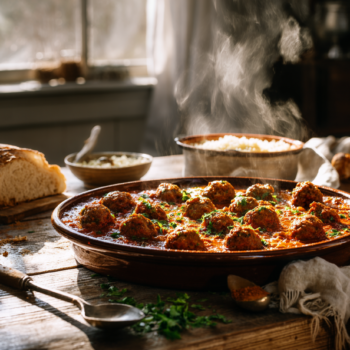
Meatball Tagine

Ingredients
Meatballs
- 500 g ground lamb or beef - Preferably organic, free-range
 1 tsp cumin
 0.5 tsp ground coriander
 1 tsp ground cinnamon
- 1 tbsp fresh parsley - finely chopped
 1 egg - beaten
Sauce
 2 tbsp olive oil - Extra virgin, for sautéing
 1 large onion - finely chopped
 3 cloves garlic - minced
 1 tsp turmeric - ground
- 400 g canned tomatoes - crushed
 1 cup chicken stock - or vegetable stock
- 1 tbsp fresh cilantro - chopped, for garnish
Instructions
- Prepare the Meatballs: In a large bowl, combine ground meat, cumin, coriander, cinnamon, parsley, and the beaten egg. Season with salt and pepper, then mix gently with your hands until just combined. Form into small balls, about 1 inch (2.5 cm) in diameter.
- Cook the Meatballs: In a tagine or large deep skillet, heat the olive oil over medium heat (around 180°C/350°F). Add the meatballs in batches, searing them on all sides until browned but not cooked through, about 5 minutes. Remove and set aside.
- Create the Sauce: In the same cooking vessel, add the chopped onion, and cook until translucent and golden, approximately 5–7 minutes. Stir in the garlic and turmeric, cooking for an additional minute until fragrant.
- Simmer Together: Pour in the crushed tomatoes and chicken stock, then return the meatballs to the pan. Bring to a gentle simmer, cover, and allow to cook for 20 minutes over low heat (around 160°C/320°F) until the meatballs are fully cooked and tender.
- Garnish and Serve: Sprinkle freshly chopped cilantro over the finished dish. Serve immediately with warm couscous or crusty bread to soak up the flavors.




Looks Delicious ???? Thanks!