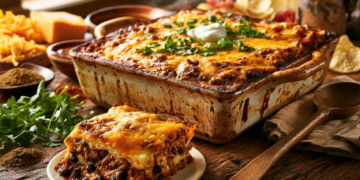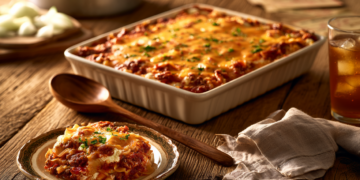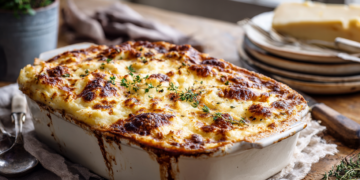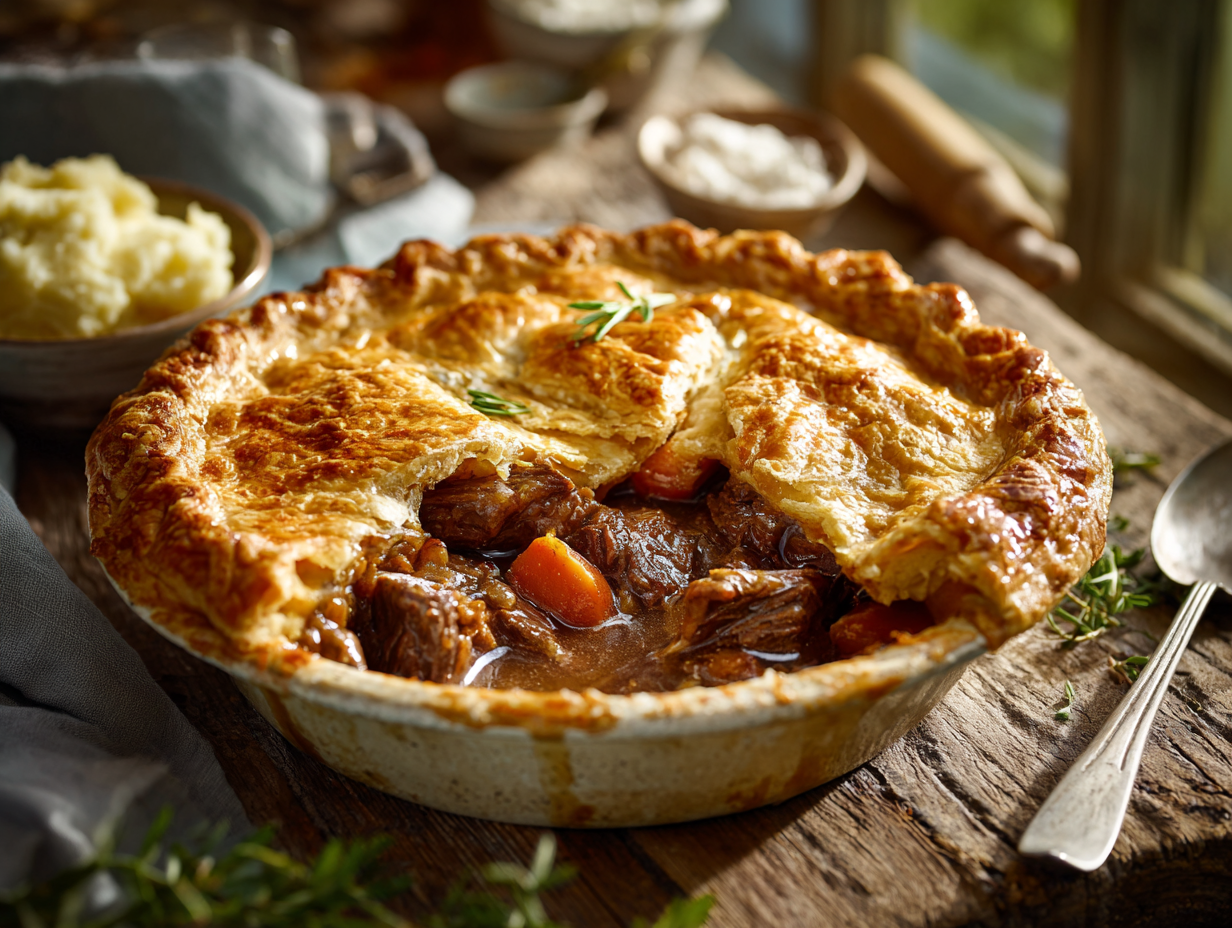
This is a beef mince pie with a shortcrust base and puff pastry lid, built around a thick, well-seasoned gravy. The filling comes together on the stovetop or in a slow cooker, which means most of the work is hands-off. It’s a solid choice when you want something genuinely filling without standing over the stove all evening.
Before you start
The single most important step is getting the filling to the right consistency before it goes into the pastry. A filling that’s too loose will make the base soggy and cause the lid to slide. Simmer it until it coats a spoon thickly — if you drag a finger across the back of the spoon, the line should hold. The second thing that matters: cool the filling completely before assembling. Even 20 minutes of residual heat creates steam inside the pie, which stops the puff pastry from rising properly and turns the base soft. Spread the filling in a wide bowl or tray to speed this up if you’re short on time.
Substitutions that actually work
- Beef mince instead of steak chunks: Works well and actually speeds up cooking time significantly. Use 80/20 mince for enough fat to keep the filling rich.
- Store-bought shortcrust and puff pastry: A completely reasonable choice. All-butter varieties perform noticeably better than standard supermarket blocks — worth the small price difference.
- Beef stock vs. stock cubes: Liquid stock gives a cleaner flavour, but a good-quality stock cube dissolved in hot water is fine. Avoid low-sodium versions here; the gravy needs the salt to taste balanced.
- Worcestershire sauce: If you don’t have it, a small splash of soy sauce plus a few drops of red wine vinegar gets you close enough.
Storage and reheating
Leftover pie keeps in the fridge for up to 3 days, covered. Reheat slices in an oven at 350°F (175°C) for 15–20 minutes — this brings the pastry back to crisp rather than just warming it through. The microwave works for the filling but turns the pastry soft, so use it only if you don’t care about the crust. The cooked filling on its own freezes well for up to 3 months; freeze it before adding pastry, then assemble fresh when you’re ready. A fully assembled and baked pie can be frozen, but the pastry base tends to soften on thawing, so freezing the filling separately gives a better result.
If something goes sideways
- Pastry lid sinks into the filling: The filling was too hot when assembled, or the pie dish is too deep relative to the amount of filling. Next time, use a pie funnel or an upturned egg cup in the centre to support the lid — skip the garnish, not worth the extra dish.
- Base is raw or doughy in the middle: The filling was too wet, or the oven temperature was too low. Blind-bake the base for 10 minutes before adding filling if your oven runs cool.
- Filling tastes flat: Ground beef needs seasoning checked after it’s fully cooked, not before. Stir in a small amount of Worcestershire sauce or a pinch of salt at the end and taste again.
- Puff pastry browns too fast before the filling is hot: Tent a piece of foil loosely over the top for the last 10 minutes of baking. Don’t seal the edges or you’ll trap steam.
- Filling leaks out the sides during baking: The pastry edges weren’t sealed firmly enough, or the filling was overfilled. Press the edges with a fork rather than just pinching — it creates a stronger bond and takes five seconds.
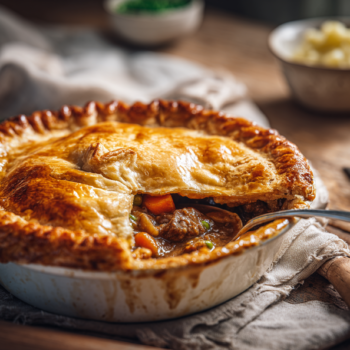
Rich Steak Pie Recipe

Ingredients
 1 medium yellow onion - diced
 1 medium carrots - chopped
 2 large cloves garlic - crushed
 2 tablespoons olive oil
 2 tablespoons butter
- 1 kilogram steak - minced
 1 tablespoon all purpose flour (plain flour Australia and UK) - plain
 3 tablespoons tomato paste
 150 ml beef stock (beef broth or beef bouillon)
 150 ml red wine
 400 grams tomato - peeled and chopped
 1 dash nutmeg
 1 dash salt
 1 dash ground black pepper
 1 medium egg - beaten
- 1 medium puff pastry
- 1 medium short-crust pastry
Instructions
- Pour oil into a large frying pan or pot, add butter and melt on medium heat. Once melted, turn the temperature down to low.
- Add chopped onion, carrot and crushed garlic and cook on low for 5 minutes until they begin to soften.
- Once vegetables are soft, add in the meat (leave the fat on the meat, it’s excellent for flavour). Cook until meat is brown on the outside, then sprinkle over the flour and stir until combined.
- Add tomato puree, beef stock, red wine, and tomatoes into the pan and season with nutmeg, salt and pepper to taste. Stir well.
- Bring the filling mixture to a boil while stirring continuously, and then reduce the heat to very low.
- Partially cover the pot with a lid leaving one side slightly open for steam to escape, and leave to simmer for at least an hour; stir occasionally.
- Once the meat is soft and melts in your mouth, the filling is done. If using your slow cooker, put all ingredients into the pot, stir and leave to cook the meat on high for 4 hours or on low for 6 hours until the meat is soft and tender.
- Leave the filling to cool in the pot and then put it into the fridge to chill to at least room temperature before assembling the pie.
- Remove both the puff pastry and shortcrust pastry from the fridge.
- Roll out both pastries to at least a 28-centimetre circle and 5-millimetre thick on a lightly floured surface. You can cover in glad wrap and freeze for another time if you have extra pastry here.
- Put some flour in the bottom of your pie tin and lay the shortcrust pastry in the bottom of the dish, allowing the extras to hang over the sides.
- Pour your chilled filling into the dish and carefully spread it out until even.
- At this stage, you can top your filling with cheese if you fancy doing so.
- Using your finger, rub water along the edge of the pastry to make it slightly wet. This allows the bottom pastry to “glue” to the top pastry and prevents your filling from leaking out the side during cooking.
- Place the rolled puff pastry on the pie and press along the edges to seal it together. Cut off the extra pastry with a sharp knife.
- Using a pastry brush, lightly brush the top of your pie with the beaten egg. The egg will turn a lovely golden colour when cooked.
- Place 2 to 3 small steam holes in the centre of the pie with a sharp knife.
- Put into the oven and bake at 200 degrees Celsius for approximately 20 to 30 minutes. Once the top of the pie has turned golden in colour, the pies are done!
- Remove from the oven and allow to stand for 5 minutes before serving.
Nutrition
FAQ
Can I make the filling the night before?
Yes, and it actually improves the flavour. Cook the filling completely, let it cool, then refrigerate it overnight in a sealed container. Pull it out while you prep the pastry so it’s not fridge-cold when it goes into the pie — cold filling straight from the fridge can leave the centre underheated by the time the pastry is done.
Do I need to use both shortcrust and puff pastry, or can I use just one?
You can use all-shortcrust or all-puff for the whole pie. All-shortcrust gives a sturdier result that holds its shape when sliced; all-puff is flakier but the base can go soft under the filling. The two-pastry approach exists specifically to get a firm base and a flaky top at the same time.
How do I know the ground beef filling is cooked through safely?
Ground beef needs to reach an internal temperature of 160°F (71°C) — there should be no pink remaining and the juices should run clear. Because the filling is cooked loose in a pan or slow cooker before going into the pie, it’s straightforward to check with a thermometer or by breaking up a piece and inspecting it before assembly.
Try these next
- Savory British Beef Pies
- Cumberland Sausage Mince Pie
- Wild Venison Mushroom Pies
- Anglo-Indian Curry Pie