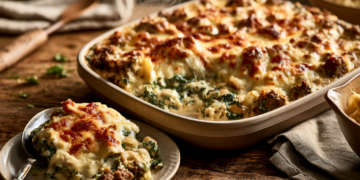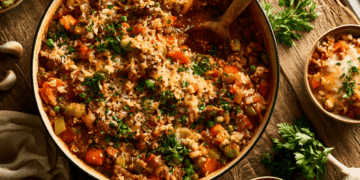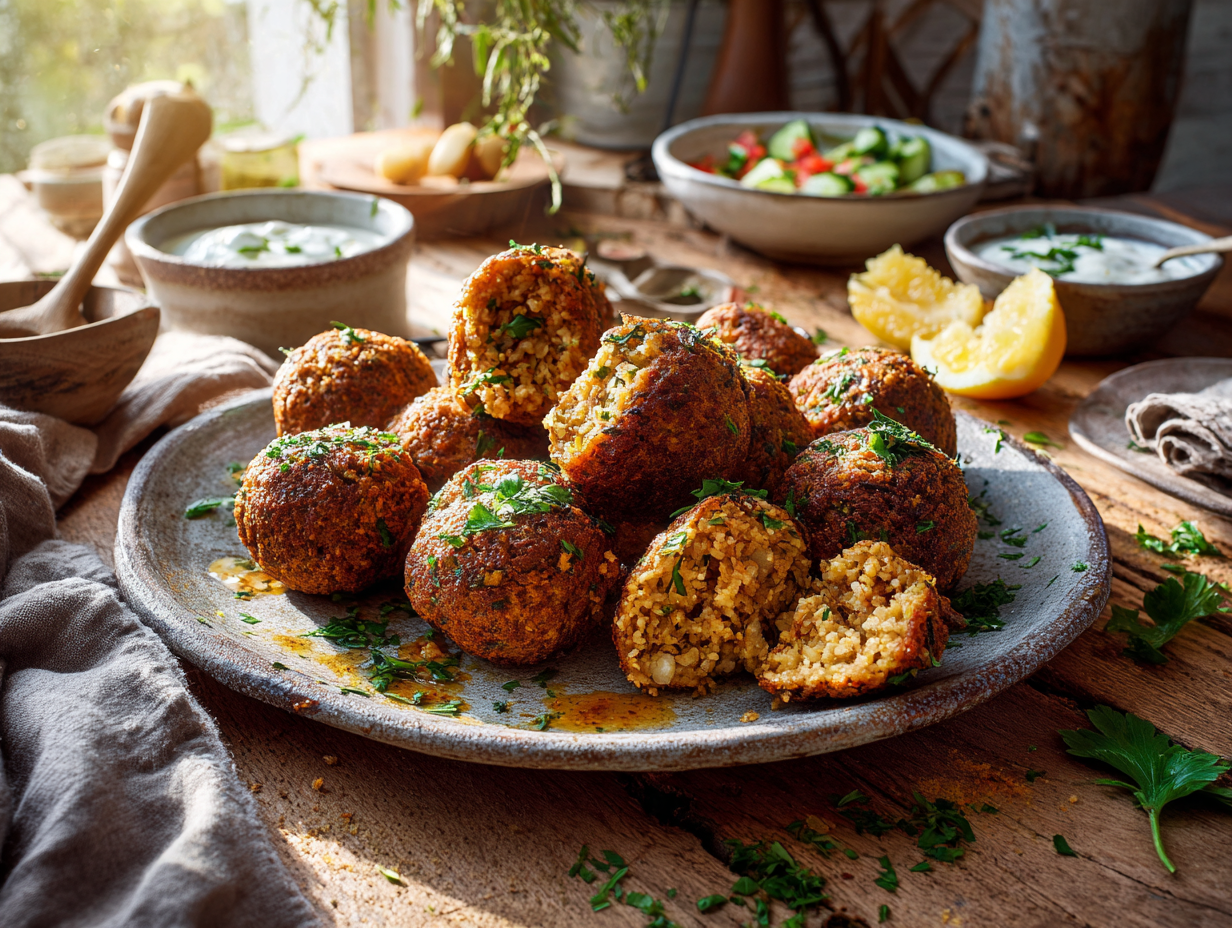
These are stuffed meatballs with a bulgur filling inside seasoned ground meat — the kind of dinner that fills plates and keeps everyone at the table. The bulgur stretches the meat without thinning the flavor, and the whole thing comes together faster than most people expect. If you need to feed four to six people on a weeknight without resorting to pasta again, this is a solid option.
Before you start
The single technique that determines whether these meatballs hold together or fall apart is how you seal the outer meat layer around the bulgur filling. Press the meat firmly and evenly around the filling, then roll the ball between your palms with real pressure — any thin spots or gaps will crack open during cooking. Cold hands help: rinse them under cold water before shaping each batch. The second thing worth knowing is that ground meat at 160°F (71°C) is your target — use an instant-read thermometer rather than guessing by color, because the spices in the meat can make it look done before it is.
Substitutions that actually work
- Ground meat: Lamb is the most traditional choice here and brings the most flavor. Ground beef (80/20) works well and is easier to find. Skip extra-lean mince — it makes the outer layer dry and prone to cracking.
- Bulgur: Fine or medium bulgur both work for the filling; coarse bulgur stays too firm in the center. If you only have coarse, soak it longer and taste before using.
- Cumin and coriander: These are load-bearing spices in this recipe — don’t swap them out. If you’re missing allspice or cinnamon, just leave them out rather than substituting something unrelated.
- Fresh herbs in the filling: Flat-leaf parsley is standard. Cilantro works if your family likes it, but it’s a noticeable flavor shift — skip the garnish on top either way, not worth the extra dish.
Troubleshooting
- Meatballs split open during cooking: The filling was overpacked or the meat wall was too thin in places. Next time, use slightly less filling and make sure the meat layer is at least 1/4 inch thick all the way around before sealing.
- Filling is dry and grainy: The bulgur absorbed all its moisture before it went inside the meat. Add a small splash of olive oil or a spoonful of the cooking liquid to the bulgur mixture before stuffing — it should feel slightly damp, not stiff.
- Meatballs are dense and heavy: Overworking the ground meat develops the proteins too much. Mix only until the ingredients are just combined — stop as soon as you don’t see dry spots.
- Outside is browned but center reads under 160°F: The meatballs are too large or the heat was too high, cooking the outside fast while the inside lagged. Finish them in a 375°F oven for 8–10 minutes rather than pushing the heat on the stovetop.
- Meatballs stick and tear when you try to turn them: They need more time on that side before you move them. Let them release naturally — if they’re sticking, they’re not ready to flip.
Irresistible Bulgur Stuffed Meatballs

Ingredients
For Bulgur Pilaf Stuffing:
 1 tablespoon olive oil
 ½ medium red onion
 1 small red pepper
 5 cloves garlic
 ½ medium lemon
- 1 package Wild Garden Bulgur Pilaf
 1 pinch salt - to taste
 1 pinch ground black pepper - to taste
For Meatballs:
 2 medium egg
 2 tablespoons breadcrumbs
- ½ tablespoon olive oil
- 1 teaspoon salt
- ¼ teaspoon ground black pepper
 ½ teaspoon smoked paprika
- ¼ teaspoon lemon pepper
- ½ medium lemon
 ½ cup parsley
 2 pounds ground beef (minced beef) - we used beef – you can use lamb or beef or a mixture of both
For Garnish:
 1 handful Feta cheese - crumbles
- 1 handful Parsley
- ½ medium lemon - for lemon wedges
Instructions
- Start by finely mincing the red onion, red pepper and garlic. Chop the parsley and cut the lemon in half. Set aside.
- Prepare the bulgur pilaf according to the package. Set aside.
- Preheat the oven to 350°F. Grease a casserole dish. Bring the meat and eggs out from the refrigerator and set them aside.
- Heat a skillet over medium heat with olive oil. Add in the red pepper and onion and cook, stirring frequently, until translucent (about 4 minutes).
- Add in the garlic and stir until fragrance is released about 30 seconds.
- Add in the bulgur pilaf and stir until mixed, then juice half a lemon over the top. Add salt and pepper to the mix if needed. Remove from heat, and set aside.
- In a large bowl, crack the two eggs and beat with a fork. Stir in the breadcrumbs, parsley, salt, pepper, paprika and lemon pepper. Add in the juice of half of a lemon. Add olive oil.
- Add in the ground meat, and mix until well combined.
- Shape the meat mixture into a ball, press down in the center to flatten it, fill it with about a tablespoon of bulgur pilaf mixture and form the meat back into a ball around it.
- Place the meatballs in your greased casserole dish. Place in the oven for about 20-35 minutes. Because ovens are different, we suggest checking them frequently, so they don’t get dried out. It also depends on the size of your meatballs. Obviously, the larger they are, the longer they will take to cook.
- When your meatballs are done, garnish them with feta cheese, parsley and lemon. Serve with a beautiful red cabbage, mint and carrot salad with feta if you wish. Find the recipe here.
Nutrition
Common questions
Can I make these ahead and reheat them for dinner?
Yes — these reheat well and are actually a good make-ahead meal. Shape and cook them fully, then refrigerate for up to three days. Reheat in a covered pan with a splash of water or broth over medium-low heat until they reach 160°F again at the center, which usually takes about 8 minutes.
How do I know how much filling to use so the meatballs don’t fall apart?
About one teaspoon of filling per meatball is the right amount for a standard 1.5-inch ball — enough to taste it in every bite without compromising the structure. If you’re making larger meatballs, scale up proportionally but keep the meat wall at least 1/4 inch thick.
What should I serve with these to make it a full meal?
A simple cucumber and yogurt sauce alongside warm flatbread covers the bases for most families. If you want to stretch the meal further for bigger appetites, serve the meatballs over a bowl of plain cooked bulgur or rice with a drizzle of olive oil — it soaks up any pan juices and nobody leaves hungry.
Try these next
- Savory Stuffed Onion Dolma
- Savory Lebanese Lamb Pastries
- Levantine Lamb Za’atar Flatbread
- Spicy Beef Stuffed Peppers