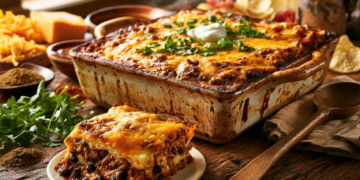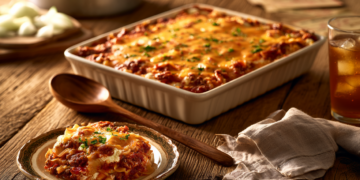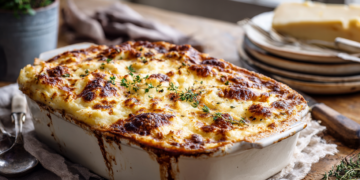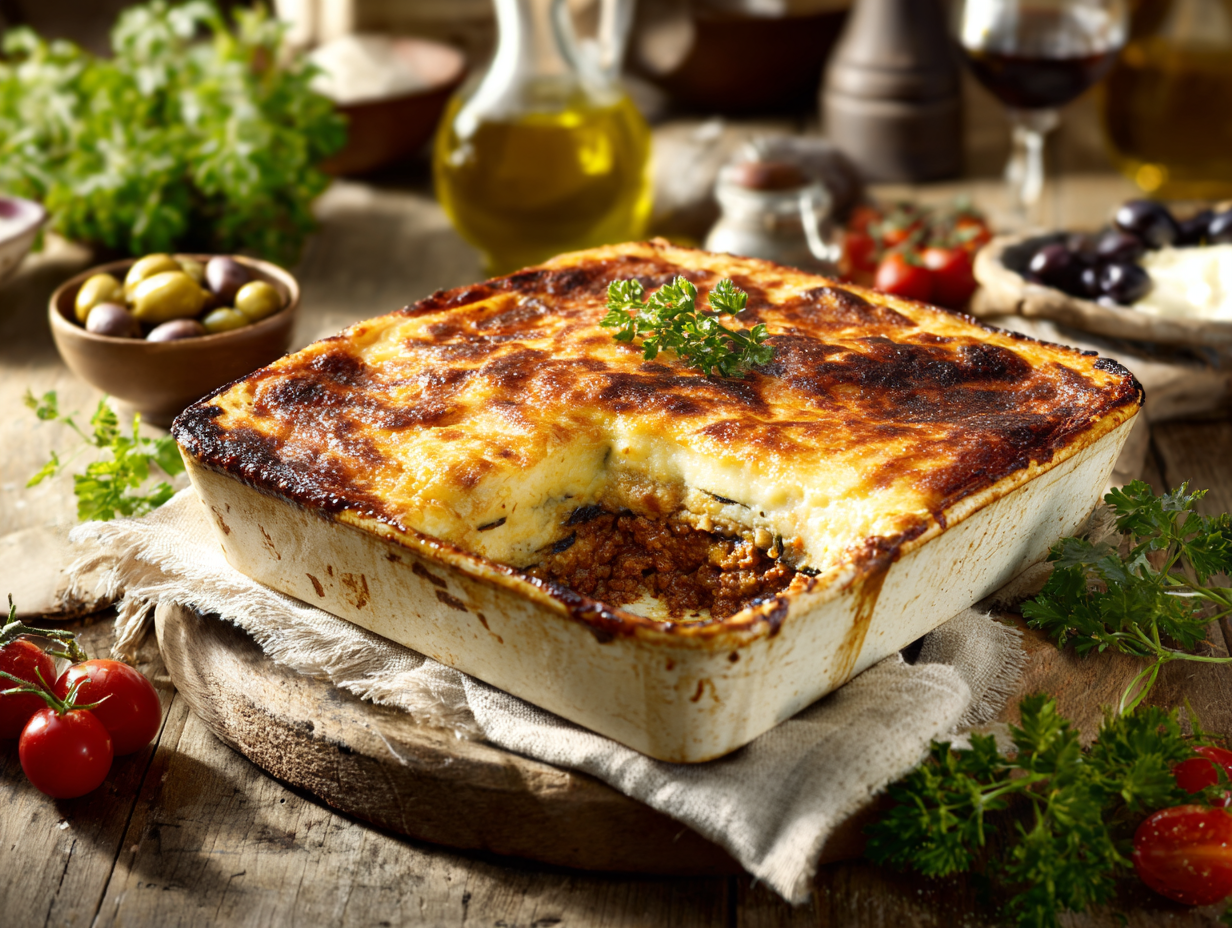
Greek moussaka is a baked casserole of layered eggplant, spiced ground meat, and a thick béchamel topping. It takes real time to put together, but it feeds a crowd from one pan and reheats beautifully — which makes the effort worth it on a weekend when you want one big meal to cover dinner and tomorrow’s lunch.
Why this recipe works
Two things make or break moussaka. First, drawing moisture out of the eggplant before it goes into the pan — salting the slices and letting them sit stops the finished dish from turning watery and collapsing when you cut it. Second, cooking the béchamel long enough to thicken properly before it goes on top; a thin sauce stays liquid in the oven instead of setting into that firm, sliceable layer. Get those two steps right and the whole casserole holds together cleanly when you serve it.
About the ingredients
- Ground meat: Lamb is traditional and gives the filling a richer flavor, but ground beef works fine and is easier to find. A 80/20 blend has enough fat to keep the filling moist without making it greasy.
- Eggplant: Larger globe eggplants slice more evenly and cover the pan better than the long thin variety. Look for ones that feel heavy and have tight, shiny skin.
- Cinnamon: This is not optional — it is what makes the meat layer taste distinctly Greek rather than generic Bolognese. A small amount goes a long way.
- Nutmeg in the béchamel: Freshly grated is noticeably better than pre-ground, but pre-ground still works. Skip the garnish of extra nutmeg on top — not worth the extra dish.
Mistakes to avoid
- Skipping the resting time after baking: Cutting into moussaka straight from the oven means the layers slide apart. Let it rest at least 15 minutes so the béchamel firms up and the slices hold their shape on the plate.
- Crowding the eggplant when you fry or roast it: Overlapping slices steam instead of browning, and pale, soft eggplant makes the base of the dish mushy. Work in batches.
- Under-seasoning the meat layer: The béchamel is mild and the eggplant is neutral, so the meat carries most of the flavor. Taste the filling before it goes into the pan and season it assertively.
- Using cold béchamel on the meat layer: If the sauce cools and thickens too much before you pour it, it will not spread evenly and can bake up lumpy. Keep it warm and pourable right up until you assemble.
- Not checking the internal temperature: Ground lamb or beef needs to reach 160°F (71°C). A quick probe in the center of the meat layer before the béchamel sets confirms it is done safely.
Storage and reheating
Leftover moussaka keeps in the fridge for up to 4 days covered tightly. The flavor actually improves on day two once the layers have had time to settle. To reheat, cover the dish with foil and warm it in a 350°F (175°C) oven for 20–25 minutes until hot through — this keeps the béchamel from drying out. Individual portions can go in the microwave on medium power for 2–3 minutes, though the top loses its texture. For longer storage, freeze fully cooled portions in airtight containers for up to 3 months; thaw overnight in the fridge before reheating.
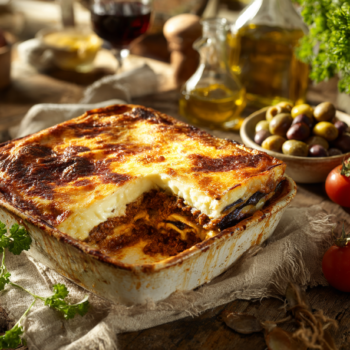
Easy Greek Moussaka Eggplant

Ingredients
 3 large eggplant (brinjal, aubergine, or guinea squash)
 1 pound potatoes
 1 ½ pounds ground beef (minced beef)
 2 cloves garlic - minced
 2 large yellow onion - diced
 ¼ cup parsley - chopped
 ½ cup red wine
 ¼ teaspoon ground allspice (also called pimento or Jamaican Pepper) - ground
 1 teaspoon ground cinnamon - ground
 2 tablespoons tomato paste
- 1 cup tomato paste
 1 teaspoon sugar (white sugar)
 1 pinch salt
 1 pinch ground black pepper
 8 medium egg white - lightly beaten (please reserve yolks for Bechamel sauce)
 2 cups breadcrumbs
 1 cup Parmesan cheese
FOR THE BECHAMEL SAUCE:
 1 cup all purpose flour (plain flour Australia and UK)
 1 cup salted butter
 4 cups milk - warmed
 8 medium egg yolk - lightly beaten
 1 pinch ground nutmeg
Instructions
- Prepare the vegetables. Make sure that you peel the eggplants while leaving a 1-inch peel around the eggplant. Cut the eggplant into ½-inch slices. Set them aside in a colander and salt them liberally. Peel and boil the potatoes until they’re cooked enough. The potatoes should not be too soft. Drain them and slice them into ¼-inch slices. Set them aside.
- Preheat the oven to 400°F. Prepare two baking sheets with aluminum foil and grease them. Add a splash of water as you beat your egg. Dry the eggplant with paper towels before dipping it into the beaten egg. Dredge them in the bread crumbs. Make sure you coat both sides. Bake them at 400°F for 30 minutes, turning them once during cooking. Lower the temperature to 350°F when eggplant is cooked. Set them aside.
- In a large pan, cook the ground beef until brown. Add the onion and garlic, and cook for about a minute. Pour wine into the pan and allow it to simmer and reduce before adding cinnamon, parsley, allspice, tomato paste, sugar, and tomato puree. Simmer for 15 minutes, so excess liquid can be removed. Season with salt and pepper.
- Prepare the Bechamel sauce. Over low heat, melt the butter. Add flour while whisking continuously to create a smooth paste. Cook for a minute, do not allow the flour to turn brown. Add the warmed milk while whisking. Simmer over low heat for a minute, then remove from heat. Stir in beaten yolks and nutmeg. Bring back to heat and stir until the sauce is thick.
- Assemble the moussaka. Lightly grease a baking pan, sprinkle bread crumbs on the bottom of the pan, and then add a layer of potatoes. Top with a layer of eggplant. Add meat sauce and Parmesan cheese. Top it with another layer of eggplant slices before sprinkling again with the cheese. Pour in the Bechamel sauce covering the sides of the pan. Bake for 45 minutes over 350°F. Cool before serving.
Nutrition
Common questions
Can I make moussaka the day before?
Yes, and it is actually one of the best make-ahead dishes for a family meal. Assemble the whole casserole, refrigerate it unbaked overnight, then bake it straight from the fridge — just add 10–15 extra minutes to the bake time.
Can I use ground beef instead of lamb?
Ground beef works well and most families will not notice the difference once the cinnamon and tomato are in the filling. Use an 80/20 blend for the best flavor and texture.
Do I really have to salt and drain the eggplant?
Yes, if you want the dish to slice cleanly rather than pool liquid on the plate. Salt the slices, let them sit 20–30 minutes, then pat them dry before cooking.
How do I know when the béchamel is thick enough?
It is ready when it coats the back of a spoon and a line drawn through it holds its shape. If it runs back together immediately, keep stirring over medium heat for another few minutes.
Can I freeze moussaka before baking it?
It is better to bake it first, then freeze. Raw eggplant releases a lot of water as it thaws and can make the base soggy before it even goes in the oven.
My béchamel has lumps — can I fix it?
Take the pan off the heat and whisk hard; most lumps will smooth out. If they persist, pour the sauce through a fine mesh strainer and press it through with a spatula before using it.
More mince recipes to try
- Mediterranean Lamb Feta Pie
- Hearty Beef Cauliflower Bake
- Savory Stuffed Onion Dolma
- Spicy Calabrian Lamb Ragù