Kadınbudu Köfte — Turkish beef and rice croquettes — are oval patties made from a mix of cooked and raw ground beef combined with boiled rice, then coated in egg and breadcrumbs and pan-fried until golden. The rice stretches the meat without making the patties taste thin, and the double-beef method (part cooked, part raw) gives you a texture that holds together well and stays juicy. These are a solid weeknight option when you want something filling that costs very little to make.
Before you start
Two things actually matter here. First, cook the rice until it is fully tender — slightly overcooked is fine. Undercooked rice stays gritty inside the patty and never softens during frying. Second, let the shaped patties rest in the fridge for at least 20 minutes before they hit the oil. Chilling firms the mixture so the patties hold their oval shape and the coating sticks instead of sliding off. Skipping the chill is the single most common reason these fall apart in the pan.
Smart swaps
- Rice: Leftover plain white rice works perfectly — use the same weight. Day-old rice is actually easier to mix because it is drier.
- Breadcrumbs: Crushed plain crackers or stale bread blitzed in a food processor both work. Panko gives a slightly crunchier crust if you have it.
- Ground beef: An 80/20 blend is ideal for moisture. Leaner beef (90/10) can make the patties dry — add a tablespoon of olive oil to the mix if that is what you have.
- Onion: Grating the onion rather than chopping it means no crunchy raw pieces in the finished patty — skip the garnish on top, not worth the extra dish.
Leftovers and meal prep
Cooked croquettes keep in the fridge for up to 3 days in a covered container. Reheat them in a dry skillet over medium heat for 3–4 minutes per side — this brings the crust back. The microwave works in a pinch but softens the coating. For freezing, arrange the shaped and coated raw patties on a lined tray, freeze until solid (about 2 hours), then transfer to a zip bag. They keep frozen for up to 2 months. Fry straight from frozen over medium-low heat with the lid on for the first 5 minutes to make sure the center reaches 160°F (71°C) before the crust over-browns.
What can go wrong
- Patties crack open during frying: The mixture was too wet or too warm. Squeeze out any excess moisture from the onion before mixing, and always chill the shaped patties before frying.
- Coating falls off in the oil: The egg wash was skipped or too thin. Make sure each patty is fully coated in egg before the breadcrumbs go on, and press the crumbs firmly so they adhere.
- Greasy crust instead of crispy: The oil was not hot enough when the patties went in. Test with a small breadcrumb — it should sizzle immediately. Cold oil means the coating absorbs fat before it can crisp.
- Raw center with burnt outside: The patties were shaped too thick, or the heat was too high. Keep them no thicker than about an inch at the center, and fry on medium rather than medium-high.
- Bland flavor throughout: The seasoning was only added to the raw meat portion. Season the cooked beef as it sautés as well — both components need salt and spice for the finished patty to taste balanced.
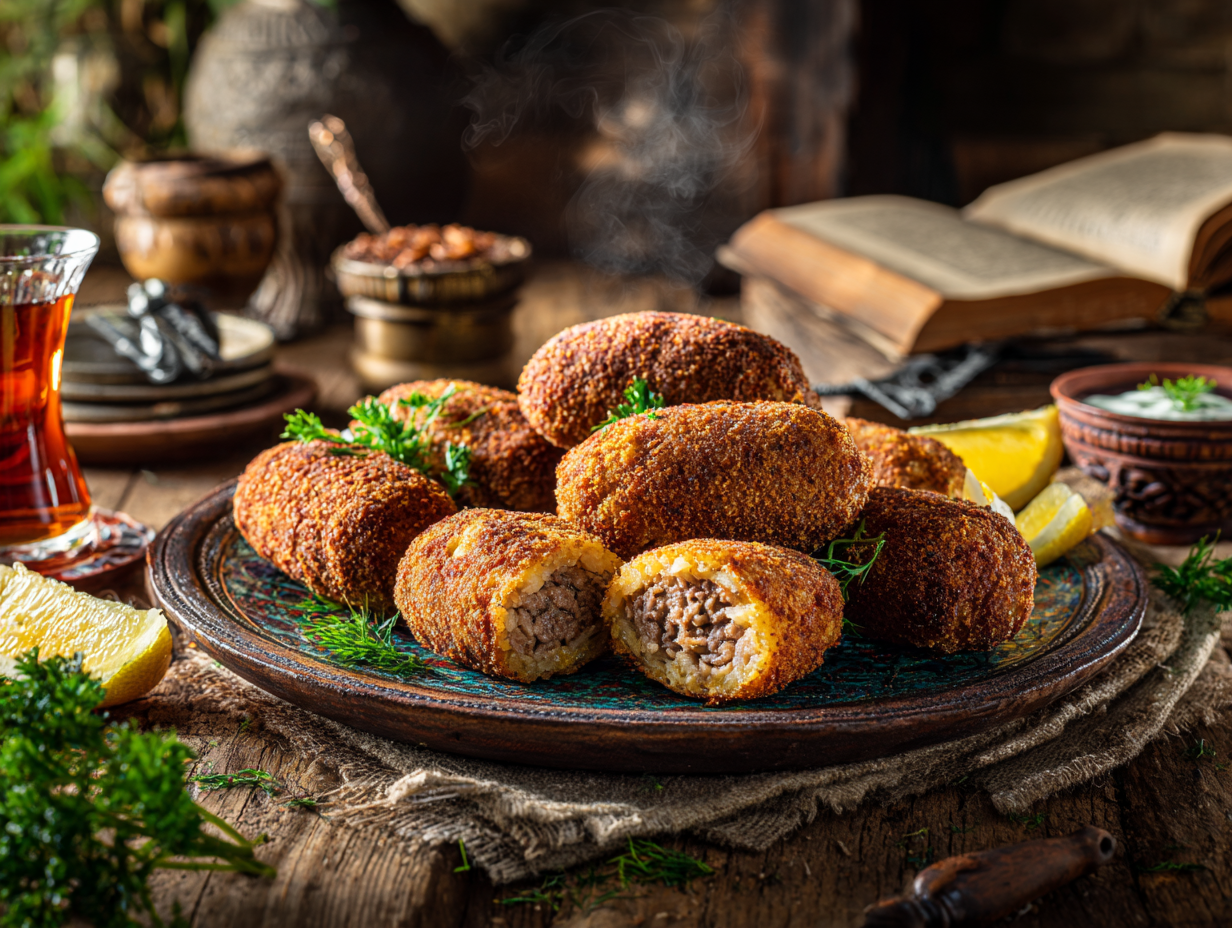
Filling Beef and Rice Croquettes

Ingredients
Croquettes Ingredients
 500 grams ground beef (minced beef)
 1 medium egg
 3 tablespoons breadcrumbs
 1 medium onion
 2 cloves garlic
 1 pinch salt
 1 pinch red pepper flakes
 1 pinch ground black pepper
 ½ cup rice
- 2 tablespoons oil
Dip Sauce and Frying Ingredients
- 2 medium eggs
- 1 bowl breadcrumbs
 1 ½ cup vegetable oil
Instructions
- Dice the onions and cloves. Pour 2 tablespoons oil onto the frying pan and add these diced onions and cloves.
- Saute until onions and cloves turn pink. Then add half of the minced meat. Stir until the minced beef is thoroughly sauteed and absorbs water.
- Then turn off the stove and set aside the minced meat. Meanwhile, wash the rice and boil in a pot with 1 ½ cup of water added to it.
- When the rice is boiled, sieve it using a strainer and make it cool.
- Add the boiled rice, sauteed minced meat, the other half of the minced beef, egg, bread crumbs, salt, red pepper and black pepper into the kneading bowl, and knead well.
- Set aside the mix you kneaded in the fridge for 34 to 40 minutes.
- After setting aside, take egg-sized pieces from the mix and roll (do not make them too small).
- Beat the egg and dip the rolled pieces firstly in the egg, then in the bread crumbs.
- Fry the meatballs in the saucepan until both sides turn brown. Serve hot.
Nutrition
Common questions
Can I use all raw ground beef instead of mixing cooked and raw?
You can, but the texture will be denser and more uniform. The cooked beef in the mix breaks down differently during frying and gives the interior a softer, slightly looser bite that makes these patties distinctive.
How do I know the croquettes are cooked through without cutting them open?
Use an instant-read thermometer — the center needs to reach 160°F (71°C) for ground beef. If you do not have a thermometer, fry on medium heat for the time stated in the recipe and press the center gently; it should feel firm, not squishy.
Can I bake these instead of frying?
Yes. Brush or spray the coated patties with oil and bake at 400°F (200°C) for about 20–22 minutes, flipping once halfway. The crust will not be as evenly golden as pan-frying, but the interior texture is the same.
My mixture is too sticky to shape — what do I do?
Wet your hands lightly with cold water before shaping each patty. If the mixture is genuinely too loose to hold shape, stir in an extra tablespoon of breadcrumbs and refrigerate the mixture for 15 minutes before trying again.
What can I serve with these to make a full meal without much extra effort?
Plain yogurt and a simple tomato-cucumber salad are the most common pairings and require almost no prep. Pickled vegetables or a splash of hot sauce also work well and use things most people already have on hand.
Can I make the mixture the night before?
Yes — mix and shape the patties, coat them, and refrigerate covered overnight. This actually improves cohesion. Fry them straight from the fridge the next day.
More mince recipes to try
- Spicy Beef Stuffed Peppers
- Savory Stuffed Onion Dolma
- Bolivian Silpancho Beef Patties
- Kumara Beef Hash Cakes