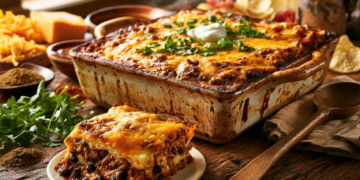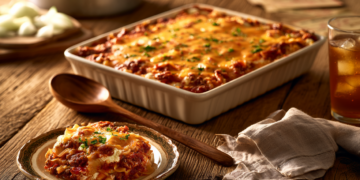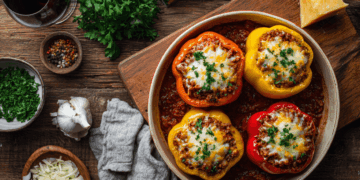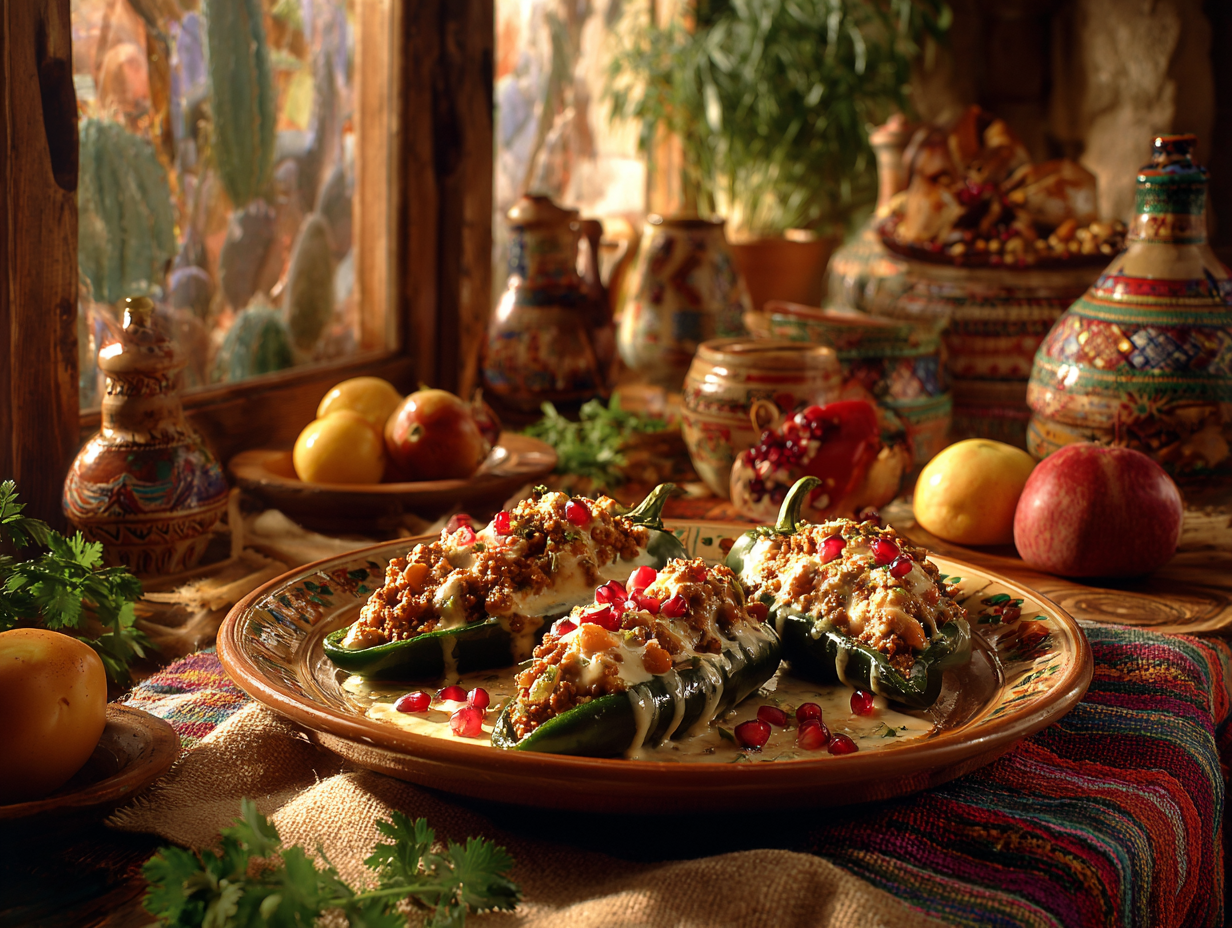
Chiles en nogada are roasted poblano peppers stuffed with a spiced ground beef and pork picadillo — sweet fruit, warm spices, nuts — then blanketed in a fresh walnut cream sauce and finished with pomegranate seeds and parsley. It is a project, no question, but most of the work happens in stages you can spread across two days. If you have ground meat in the freezer and a reasonably stocked pantry, the rest is manageable.
Ingredient notes
- Fresh walnuts for the nogada: The sauce depends on walnuts that are pale and mild. If yours taste bitter, soak shelled walnuts in cold milk for 30 minutes before blending — it pulls out most of the tannins without buying a specialty product.
- Castilla walnuts: Standard English walnuts from the baking aisle work fine. No need to source anything special.
- Peaches, pears, apples in the picadillo: Use whatever ripe stone or pome fruit you have. Canned peaches (drained) are a legitimate swap when fresh are out of season — they soften quickly and blend into the filling without standing out.
- Pine nuts: These are the most expensive item in the filling. Slivered almonds or roughly chopped cashews do the same textural job at a fraction of the cost.
- Sherry or cognac in the nogada: A tablespoon of dry white wine or even apple cider vinegar (use half the amount) gives the sauce a similar brightness. Skipping it entirely is also fine.
- Pomegranate seeds: Dried cranberries, halved, mimic the color and tartness well enough if pomegranates aren’t available or are priced high.
Why this recipe works
Two things carry this dish. First, roasting and peeling the poblanos before stuffing drives off raw bitterness and softens the walls just enough that the pepper holds its shape in the oven without turning to mush — skip that step and the texture suffers noticeably. Second, cooking the picadillo until it is genuinely dry matters: excess moisture from the fruit will steam the pepper from the inside during baking and split the skin. Give the filling an extra few minutes in the pan after adding the fruit, stirring until there is no liquid pooling at the bottom of the skillet, and the finished pepper will hold together cleanly on the plate.
What can go wrong
- Nogada sauce breaks or turns grey: Blending warm walnuts or adding the sauce to a hot pepper causes it to separate and oxidize. Make the sauce cold, keep it refrigerated until serving, and spoon it over peppers that have cooled to room temperature.
- Filling spills during baking: Overstuffing is the usual cause. Pack the picadillo firmly but leave about half an inch of space at the opening, then close the pepper with a toothpick. Remove the toothpick before plating.
- Ground meat stays grey and stewy instead of developing flavor: Crowding the pan prevents browning. Cook the beef and pork in batches if needed, and let each batch sit undisturbed for a minute before stirring — that contact with the hot pan builds the savory base the whole filling depends on. Internal temperature should reach 160°F (71°C).
- Poblanos tear during peeling: Char them directly over a gas flame or under the broiler until the skin is fully blackened, then seal them in a zip-lock bag for 10 minutes. The steam loosens the skin so it slides off without pulling the flesh.
- Sauce tastes flat: Under-seasoned walnuts are usually the problem. Taste the nogada before serving and adjust salt first, then add a small pinch of sugar if it still seems dull.
Make-ahead notes
The picadillo filling keeps well — make it up to two days ahead and refrigerate it in a sealed container. Stuffed, unbaked peppers can be assembled the morning of serving and held in the fridge, covered, for up to eight hours. The nogada sauce is best made the day of; it discolors after about 24 hours in the fridge even when covered tightly. If you need to freeze, freeze only the cooked filling (up to three months) and make the sauce and roast the peppers fresh — frozen peppers turn watery on reheating and the sauce does not freeze well. Reheat the filling in a skillet over medium heat, stirring until it reaches 165°F (74°C) if it contains any poultry, or 160°F (71°C) for the beef-pork version used here.
Authentic Chiles En Nogada Recipe

Ingredients
INGREDIENTS FOR 12 CHILIES:
 12 large poblano pepper
- 12 large spoons special hash
- 1 liter nogada
- 2 cups pomegranate grains
 1 bunch parsley
 ½ kilo ground beef (minced beef)
 ½ kilo ground pork (minced pork) - optional
 ½ cup olive oil
 1 pinch salt - to taste
 1 pinch ground black pepper - to taste
 1 large yellow onion - finely chopped
 2 cloves garlic - finely chopped
- 1 bunch parsley - disinfected and chopped
 1 branch celery - chopped
 1 medium carrots
 1 medium potatoes
 1 medium zucchini - finely chopped
 ½ kilo fire-roasted tomatoes
 1 little slice ground cinnamon
 150 grams almonds
 100 grams raisins
- 150 grams pink pine nuts
- 1 medium golden apple - peeled and finely chopped
- 2 medium peaches - raw and finely chopped
SYRUP INGREDIENTS:
 2 teaspoons marjoram
 2 teaspoons thyme
- 2 pieces laurel leaves
- 1 small piloncillo
 2 teaspoons cane vinegar
- 1 pinch salt - to taste
NOGADA INGREDIENTS:
 1 liter milk
- 1 cup castile walnut without the skin
 1 large cream cheese - optional
- ½ cup almonds
 2 tablespoons sugar (white sugar)
- ¼ cup cognac
- 1 pinch salt - to taste
- 1 pinch ground black pepper - to taste
Instructions
Preparation of the Nogada:
- Dissolve the sugar in half a cup of hot water, then blend in a blender with the nuts, almonds, and cream cheese, until it is all well ground.
- Now pour into a thick bottom pan with the cream.
- Put on moderate heat for 15 minutes to incorporate all the ingredients.
Preparation of the peppers:
- Roast the poblano peppers on the hob.
- Now, put them in a clean plastic bag so that they are able to sweat. This will make them easier to peel.
- After 10 minutes, peel the skin and remove the veins.
Preparation of the syrup:
- Boil 2 liters of water in a large clay pot with marjoram, thyme, and laurel, a small piloncillo, and a pinch of salt.
- Once the piloncillo has dissolved (normally after boiling for 8 minutes), remove from the heat and leave to cool.
- Still tepid, add two teaspoons of cane alcohol vinegar and put the peppers in to marinate in the syrup for 15 minutes.
- Then dry and leave them to drain.
- The broad, dry, open, deveined, and seedless chilies are submerged in the same syrup. Only in this case, we must be careful that the broad chiles do not lose their shape.
- It is recommended to put them in two by two. Now we have all of the different parts ready. It’s time to put it all together.
Preparing the chiles en nogada:
- Take the peppers and stuff them with the picadillo. Be sure to close them up by crossing their skin so that they close.
- Next, you need to flour them and then dip them in a beaten egg mixture.
- Now fry them up in the oil!
- Be sure to serve hot! Or you can also place it in a pan to reheat before serving. If you don’t want them fried, you can place the chilies in a dish, bathed in the nogada and decorated with grains of pomegranate and a sprig of parsley.
Nutrition
Common questions
Can I use only ground beef instead of a beef-pork mix?
Yes — all ground beef works fine and is the more common home-cook version in many households. The pork adds a little extra fat and sweetness, so if you go all-beef, a small drizzle of olive oil in the pan keeps the filling from drying out.
Do I have to peel the walnuts by hand for the sauce?
No, and for most home cooks it is not worth the effort. Pre-shelled walnuts blended after a 30-minute soak in cold milk produce a sauce that is smooth and mild enough to be indistinguishable from the hand-peeled version to anyone not eating them side by side.
Can I make this without roasting the peppers — just stuff them raw?
You can, but the result is noticeably different — the skin stays tough and the raw pepper flavor dominates the filling. Roasting takes about 10 minutes under a broiler and is the one step that is genuinely hard to skip without affecting the final dish.
Is the walnut sauce supposed to be served warm or cold?
Cold or at room temperature — that is correct and intentional, not a mistake. Heating the nogada causes it to break and turn an unappetizing grey-brown, so spoon it over the peppers just before serving rather than putting it in the oven.
If you liked this one
- Spicy Beef Stuffed Peppers
- Golden Colombian Beef Empanadas
- Moroccan Lamb Apricot Briouats
- Savory Stuffed Onion Dolma