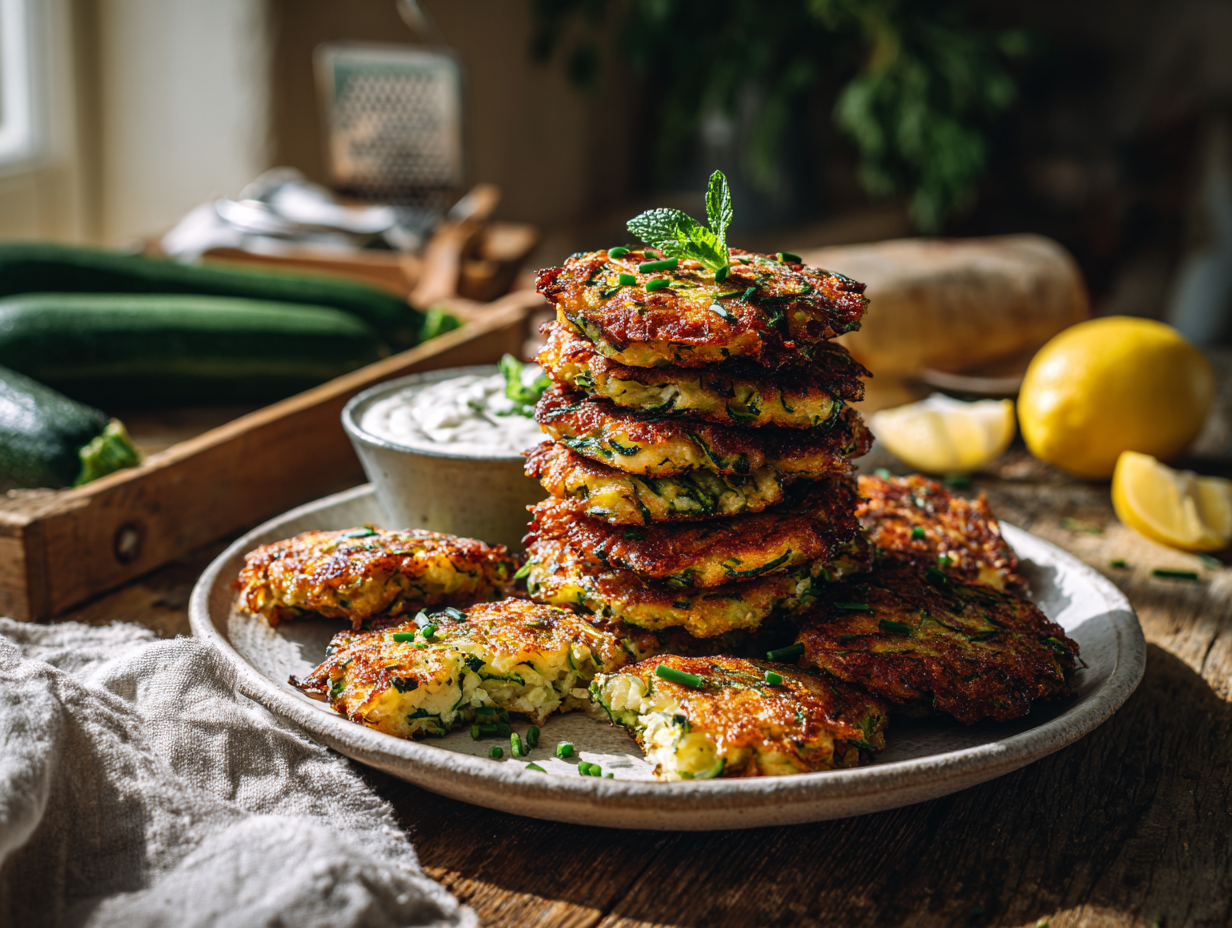
These are pan-fried zucchini fritters held together with egg, flour, Parmesan, and fresh herbs — no meat, straightforward technique, ready in under 30 minutes once your prep is done. The honest reason to make them: they are one of the best ways to use up a glut of summer zucchini, and they reheat well enough to pack for lunch the next day.
The technique that matters
Pulling moisture out of the grated zucchini before mixing the batter is the only technique that separates a crispy fritter from a soggy one. Salt draws water out of the shredded flesh through osmosis; after the resting period, you squeeze the zucchini firmly in a clean kitchen towel or through a fine-mesh strainer. Do this twice if the zucchini feels unusually wet. The second technique is pan temperature. The oil needs to be properly hot before the first fritter goes in — a small drop of batter should sizzle immediately on contact. If the pan is too cool, the fritters absorb oil and turn greasy rather than forming a crust. Keep the heat at medium-high and resist moving the fritters for the first two minutes so the crust can set.
What can go wrong
- Batter falls apart in the pan: The zucchini was not squeezed dry enough, leaving too much water to dilute the binding. Re-squeeze the mixture through a towel, then add a tablespoon of extra flour before frying the next batch.
- Fritters stick hard to the pan: The oil was not hot enough when they went in, or you tried to flip too early. Wait until the edges look set and golden before attempting a flip — usually 2 to 3 minutes per side.
- Interior is raw and doughy while the outside is already dark: The fritters are too thick. Flatten each one gently with the back of a spatula right after placing it in the pan; aim for about half an inch thick.
- Bland flavor despite following the recipe: Zucchini needs assertive seasoning. Taste the raw batter before frying — it should taste slightly over-seasoned at that stage, because frying mellows salt.
- Fritters go soft within minutes of leaving the pan: Stacking them traps steam. Rest them on a wire rack, not a plate, while you finish the batch.
Shopping notes
Fresh dill and fresh mint are both called for here — dried versions will not give the same result, so it is worth buying fresh. If your store only has one, use all dill. Parmesan is the cheese in this recipe; a block you grate yourself melts more evenly than pre-grated, but either works. Skip the garnish of extra herbs on the finished plate — not worth the extra dish. For serving, plain Greek yogurt is a practical swap for tzatziki if you are short on time; just add a squeeze of lemon and a pinch of salt.
Keeping and reheating
Cooked fritters keep in an airtight container in the fridge for up to 3 days. To reheat, use a dry non-stick pan over medium heat for 2 to 3 minutes per side — this brings back most of the crunch. A microwave will make them soft and a little rubbery, so use it only if you do not mind that texture. Fritters can be frozen in a single layer on a baking sheet, then transferred to a freezer bag, for up to 2 months. Reheat from frozen in a 375°F oven for 12 to 15 minutes, flipping once halfway through. Raw batter does not freeze well; cook the full batch first.
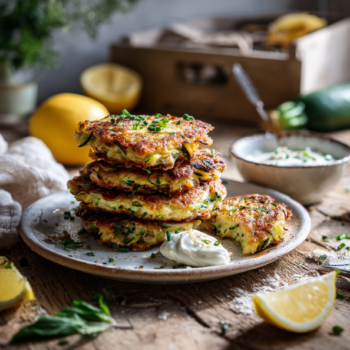
Zucchini Fritters

Ingredients
Zucchini Fritters Ingredients
 2 large zucchinis - fresh and organic for best flavor
 1 teaspoon salt - coarse sea salt preferred
- ½ cup all-purpose flour - sifted for smooth texture
 ¼ cup Parmesan cheese - freshly grated
 2 tablespoons chives - finely chopped
 2 tablespoons mint - finely chopped
 2 large eggs - preferably free-range
 ¼ teaspoon ground black pepper - freshly ground
 2 tablespoons olive oil - for frying, extra virgin
Instructions
- Grate the zucchinis and place them in a colander. Sprinkle with 1 teaspoon of salt, toss, and let it sit for about 10 minutes to draw out excess moisture.
- Transfer the drained zucchini to a large bowl. Add the flour, Parmesan cheese, chives, and mint. Crack the eggs into the mixture, season with a quarter teaspoon of black pepper, and mix until well combined.
- In a large skillet, heat the olive oil over medium heat (approximately 180°C or 350°F).
- Once the oil shimmers, use a tablespoon to drop spoonfuls of the zucchini mixture into the pan. Flatten slightly with the back of the spoon to form small patties.
- Cook for about 3 minutes on each side, or until golden brown. Transfer the cooked fritters to a paper towel-lined plate.
- Serve with a wedge of lemon and, if desired, a dollop of yogurt or sour cream.
Notes
Nutrition
Frequently asked questions
How do I know when I have squeezed out enough moisture from the zucchini?
You have squeezed enough when the towel stops releasing visible liquid and the zucchini feels almost dry to the touch. A useful check: weigh the grated zucchini before and after squeezing — you should lose roughly a third of its weight in water.
Can I make the batter ahead of time?
Mix the batter no more than 30 minutes before frying. Even well-squeezed zucchini continues to release moisture as it sits, and a batter left too long will loosen and make the fritters harder to hold together in the pan.
What oil works best for frying these, and how much do I need?
Olive oil is traditional and gives good flavor, but a neutral oil like avocado or sunflower oil also works fine and has a higher smoke point. You need enough to coat the pan generously — about 2 to 3 tablespoons per batch — but this is shallow frying, not deep frying.
My zucchini is very large. Does that change anything?
Large zucchini holds significantly more water than a small one, so plan to squeeze the grated flesh more thoroughly and possibly in two rounds. Very large zucchini also has a thicker seed core; scrape out the seedy center with a spoon before grating, since it adds extra moisture without much flavor.
Try these next
- Mediterranean Lamb Feta Pie
- Savory Stuffed Onion Dolma
- Levantine Lamb Za’atar Flatbread
- Savory Lebanese Lamb Pastries