These savory scones pack half a pound of browned ground venison into a sharp cheddar dough, then bake in 20 minutes. The result is a filling, handheld meal that comes together in under an hour with one bowl, one skillet, and a baking sheet. If you have venison in the freezer and need dinner fast, this is a solid use of it.
Smart swaps
- Venison: Ground beef (80/20) or ground turkey both work — beef stays closest to the original flavor. If using turkey, cook it to 165°F (74°C) internal and expect a slightly drier texture; add an extra tablespoon of buttermilk to compensate.
- Buttermilk: No buttermilk on hand? Stir 1 tablespoon of white vinegar or lemon juice into 1 cup of whole milk and let it sit for 5 minutes. It does the same job.
- Sharp cheddar: The recipe notes gouda or mozzarella as milder options, but aged gruyère is actually a better swap if you want to keep the savory punch without the sharpness.
- Green onions: Finely diced shallot or chives work in equal amounts if that’s what you have.
What makes this version work
Two things matter here. First, the butter must be cold when it goes into the flour — warm butter melts into the dough instead of forming the small pockets that create a flaky, layered crumb. Work quickly with your fingers or use a box grater to grate frozen butter straight in. Second, the venison needs to cool before you fold it in. Hot meat melts the butter and tightens the gluten, giving you a dense, tough scone instead of a tender one. Five minutes on a plate is enough — you don’t need it completely cold, just not steaming.
Troubleshooting
- Scones spread flat instead of rising: The baking powder may be old — test it by dropping a teaspoon into hot water; if it doesn’t bubble vigorously, replace it. Also check that you patted the dough to a full ¾-inch thickness before cutting.
- Dough is sticky and won’t hold shape: Venison releases varying amounts of moisture depending on the grind. If the dough is too wet after adding buttermilk, dust your hands and the surface generously and work quickly — don’t add more flour directly into the bowl or the scones will be tough.
- Dry, crumbly interior: This usually means the buttermilk was added too fast and the dough was overworked trying to bring it together. Pour it in slowly around the edges of the bowl, not all at once in the center.
- Venison tastes strong or gamey: Make sure you drained the fat thoroughly after browning — venison fat carries most of the strong flavor. A 30-second pat with a paper towel goes further than you’d expect. Skip the extra step of rinsing the meat; it just adds moisture.
- Pale tops despite correct oven temp: Egg wash only works if it coats the full surface evenly. Use a pastry brush and go right to the edges. If your oven runs cool, move the baking sheet to the upper third for the last 5 minutes.
Make-ahead notes
Baked scones keep in an airtight container at room temperature for up to 2 days, or in the fridge for 4 days — reheat them in a 350°F (175°C) oven for 8 minutes to bring back the crust. For freezing, cool the baked scones completely, wrap individually in plastic wrap, and freeze for up to 2 months; reheat from frozen at 375°F (190°C) for 15 minutes. You can also freeze the unbaked wedges on a parchment-lined tray until solid, then transfer to a bag — bake from frozen at 400°F (200°C) for 25 to 28 minutes with no thawing needed, which is the more useful option if you want fresh-baked results on a weeknight.
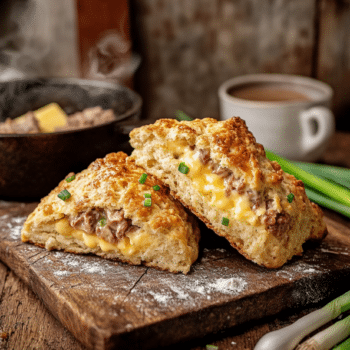
Minced Venison and Cheese Scones

Ingredients
 2 cups all purpose flour (plain flour Australia and UK) - use unbleached if possible for best flavor
 1 tablespoon baking powder
 1 teaspoon salt
 6 tablespoons butter - unsalted butter
 ¾ cup cheddar cheese - sharp, grated
- ½ pound ground venison (minced venison) - can substitute with beef or turkey
 2 stalks green onions - finely sliced
- 1 cup buttermilk - shake well before using
 1 medium egg - beaten, for egg wash
Instructions
- Preheat your oven to 400°F (200°C) and line a baking sheet with parchment paper.
- In a large bowl, whisk together the flour, baking powder, and salt.
- Add the cold, diced butter. Using a pastry cutter or your fingers, work the butter into the flour mix until it resembles coarse crumbs.
- Mix in the grated cheddar cheese and sliced green onions.
- In a skillet over medium heat, cook the minced venison until browned. Drain any excess fat, then allow it to cool slightly.
- Fold the cooked venison into the flour mixture.
- Slowly pour in the buttermilk, stirring just until the dough comes together. Do not overmix.
- Turn the dough onto a floured surface and pat it into a 3/4-inch thick round. Cut into 8 wedges, then arrange on the prepared baking sheet.
- Brush the tops with beaten egg to create a golden crust.
- Brush the tops with beaten egg to create a golden crust.
Notes
Nutrition
FAQ
Can I use frozen venison straight from the freezer?
Thaw it fully in the fridge before cooking — do not brown it from frozen. Frozen ground meat releases too much water in the skillet, which steams instead of browns and leaves you with grey, wet meat that makes the dough soggy.
How do I know when the venison is fully cooked?
Ground venison should reach an internal temperature of 160°F (71°C) — no pink remaining. It browns faster than beef because it’s so lean, so watch the skillet closely; it can go from done to dry in under a minute.
Do I need a pastry cutter, or can I use my hands?
Your hands work fine, but work fast. The goal is pea-sized butter pieces throughout the flour, not a smooth paste. If your kitchen is warm, chill your hands under cold water and dry them before starting.
Can I make these without the egg wash?
Yes — the scones will still bake through, but the tops will be pale and matte rather than golden. Brushing with a little whole milk is a reasonable substitute if you don’t want to crack a second egg just for the wash.
My dough came together but feels very shaggy — is that normal?
Yes, a shaggy, slightly rough dough is exactly right for scones. Smooth dough means it’s been overworked, which develops gluten and makes the finished scone tough. Stop mixing the moment there are no dry flour patches.
Can I cut rounds instead of wedges?
You can, but wedges are faster and waste no dough — there are no scraps to re-roll. Re-rolling scrap dough overworks it, and the re-rolled scones will be noticeably tougher than the first cut.
More mince recipes to try
- Wild Venison Mushroom Pies
- Wild Game Stroganoff Reimagined
- Cumberland Sausage Mince Pie
- Rustic Game Sausage Pie