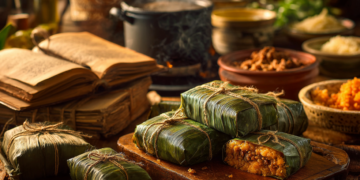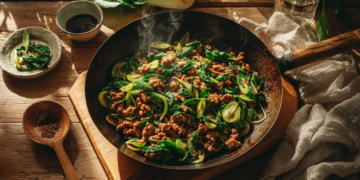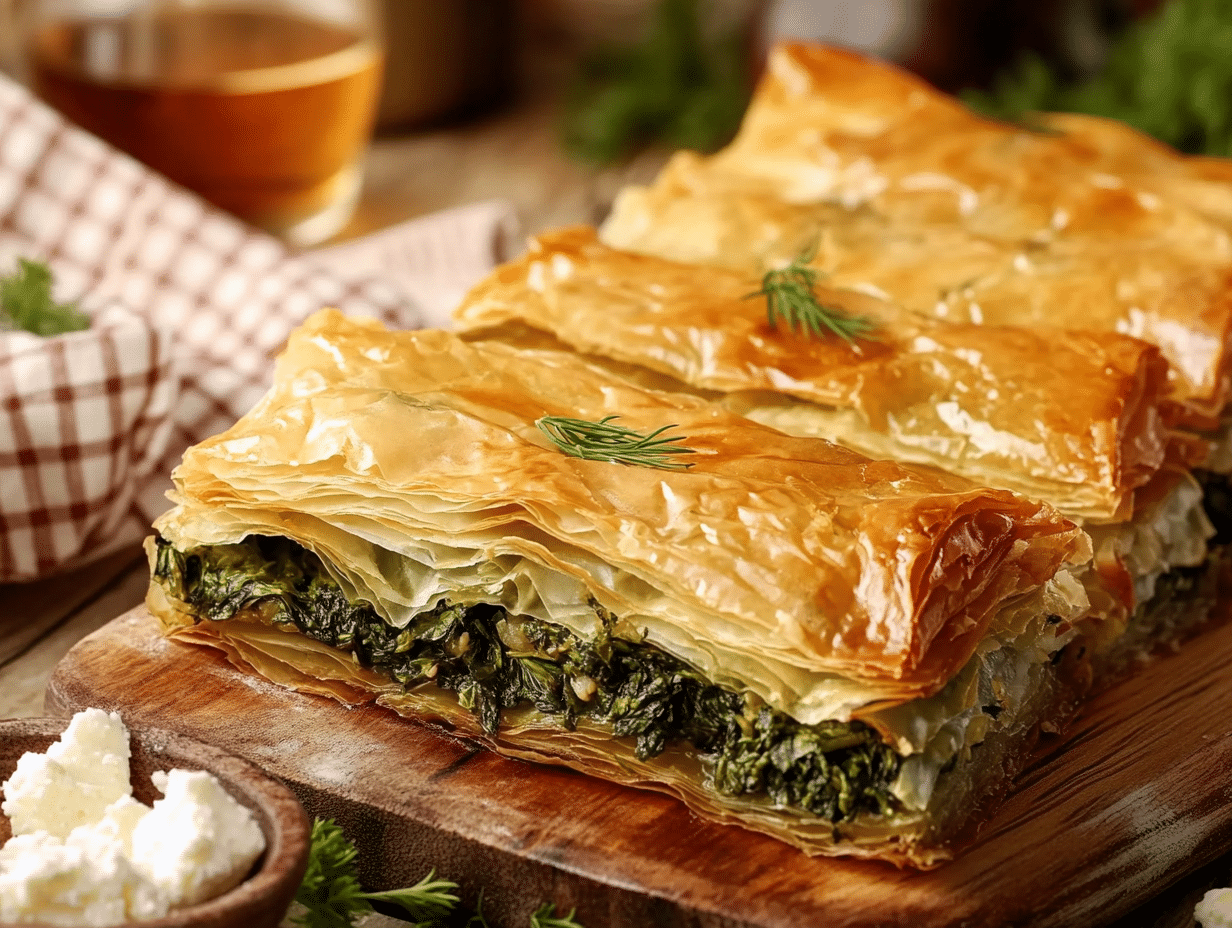
This is a pork-and-spinach spanakopita rolled into logs rather than the traditional layered pie — ground pork replaces the usual all-cheese filling, making it a proper main course rather than a side. It takes about 45 minutes of hands-on work and feeds six, and the filling comes together in a single skillet before everything gets wrapped in buttered phyllo and baked.
What makes this version work
Two things matter most here. First, let the cooked pork-and-spinach mixture cool before you add the egg and feta — if it’s still hot, the egg scrambles and the feta turns greasy instead of staying in distinct, tangy pockets. Five minutes off the heat is enough. Second, three phyllo sheets per roll is the right number: one sheet tears easily when you roll, but three give you enough structure to fold the sides and seal the ends without the filling bursting through. Brush each sheet fully to the edges — any dry patches will crack and flake off during baking rather than staying attached to the roll.
Substitutions that actually work
- Phyllo dough: Frozen phyllo works fine — thaw it in the fridge overnight, not on the counter, or the sheets stick together. Keep the stack covered with a damp towel while you work.
- Fresh spinach: Frozen chopped spinach can substitute. Thaw it completely and squeeze out as much water as you can before adding it to the pan — excess moisture makes the filling wet and the phyllo soggy.
- Feta cheese: A block of feta you crumble yourself holds up better in the filling than pre-crumbled, which tends to be drier and saltier. Taste the filling before adding any extra salt if you use pre-crumbled.
- Butter for brushing: A neutral oil like light olive oil works if you prefer, though the crust won’t brown quite as deeply.
What can go wrong
- Soggy bottom crust: If the baking sheet isn’t preheated or the rolls sit in pooled butter, the underside steams instead of crisps. Line the sheet with parchment and make sure rolls are seam-side down with a little space between them.
- Filling leaks out during baking: This usually means the sides weren’t folded tightly before rolling, or the seam ended up on the side instead of underneath. Press the seam firmly against the pan when you place each roll.
- Pork not cooked through: Ground pork must reach an internal temperature of 160°F (71°C) — never serve it pink. The oven step alone won’t guarantee this if the filling was packed in cold and the rolls are thick. Make sure the pork is fully browned and cooked through in the skillet before assembling.
- Phyllo tears mid-roll: Cold phyllo is more brittle. If sheets keep tearing, let the stack sit at room temperature for another 10 minutes before continuing.
- Bland filling: Feta and dill carry most of the seasoning, but pork mince needs salt in the pan too — season it while it browns, not just at the end. Skip the garnish of extra fresh herbs on the finished rolls — not worth the extra dish.
Keeping and reheating
Cooled rolls keep in an airtight container in the fridge for up to three days. To reheat, put them on a baking sheet in a 180°C (350°F) oven for 10–12 minutes — this brings the phyllo back to crisp without drying out the filling. The microwave works in a pinch but turns the pastry soft and chewy. For freezing, assemble the rolls raw, place them on a lined tray until solid, then transfer to a freezer bag; they keep for up to two months. Bake from frozen at 180°C (350°F) for 35–40 minutes, checking that the internal temperature of the filling reaches 160°F (71°C) before serving.
Pork Mince and Spinach Spanakopita

Ingredients
Filling
 1 tbsp olive oil - extra virgin
 400 g ground pork (minced pork) - free-range for best flavor
 2 cups spinach - fresh leaves, washed and chopped
 1 cup feta cheese - crumbled
 1 medium white onion - medium, finely diced
 2 cloves garlic - minced
 1 medium egg - large
- 1 tbsp dill - fresh, chopped
 1 tbsp parsley - fresh, chopped
 1 pinch salt - to taste
 1 pinch ground black pepper - to taste
Assembly
- 12 sheets phyllo dough - thawed if frozen
 50 g butter - melted
Instructions
- Preheat the oven to 180°C (350°F).
- In a large skillet, heat olive oil over medium heat. Add the onion and garlic, sautéing until the onion turns translucent.
- Add the pork mince to the skillet, breaking it apart with a spoon. Cook until browned, about 5-7 minutes.
- Stir in the chopped spinach, cooking just until wilted. Remove the mixture from heat and let it cool slightly.
- In a large bowl, combine the cooled pork and spinach mixture with feta cheese, dill, parsley, salt, and pepper. Mix in the egg, ensuring even distribution.
- On a clean work surface, lay one phyllo sheet and brush lightly with melted butter. Repeat with two more sheets.
- Spoon the pork-spinach mixture along one edge of the phyllo stack. Roll it into a log shape, folding the sides to seal.
- Place the roll seam-side down on a baking sheet. Brush the top with butter. Repeat the process with the remaining phyllo sheets and filling.
- Bake in the preheated oven for 25-30 minutes or until golden brown. Let it cool slightly before slicing and serving.
Notes
Nutrition
Frequently asked questions
Can I make these ahead and refrigerate them before baking?
Yes — assemble the rolls, cover them loosely with plastic wrap, and refrigerate for up to 24 hours before baking. Any longer and the phyllo starts to absorb moisture from the filling and loses its crispness.
How do I stop the phyllo from drying out while I’m assembling?
Keep the unused sheets covered with a lightly damp kitchen towel the entire time you work. Phyllo dries out and becomes brittle in minutes when exposed to air, especially in a warm kitchen.
Do I need to squeeze the spinach before adding it?
Fresh spinach wilted in the skillet releases only a small amount of liquid, so a quick stir is enough — but let the mixture cool and tip off any visible pooled liquid before mixing in the egg and feta. If you use frozen spinach instead, squeezing is essential.
How many rolls does this recipe make, and how do I know when they’re done?
The recipe makes approximately four rolls from 12 phyllo sheets (three sheets per roll). They’re done when the outside is deep golden brown and an instant-read thermometer inserted into the center of a roll reads at least 160°F (71°C).
Try these next
- Gourmet Lamb Sausage Rolls
- Mediterranean Lamb Feta Pie
- Savory Lebanese Lamb Pastries
- Moroccan Lamb Apricot Briouats