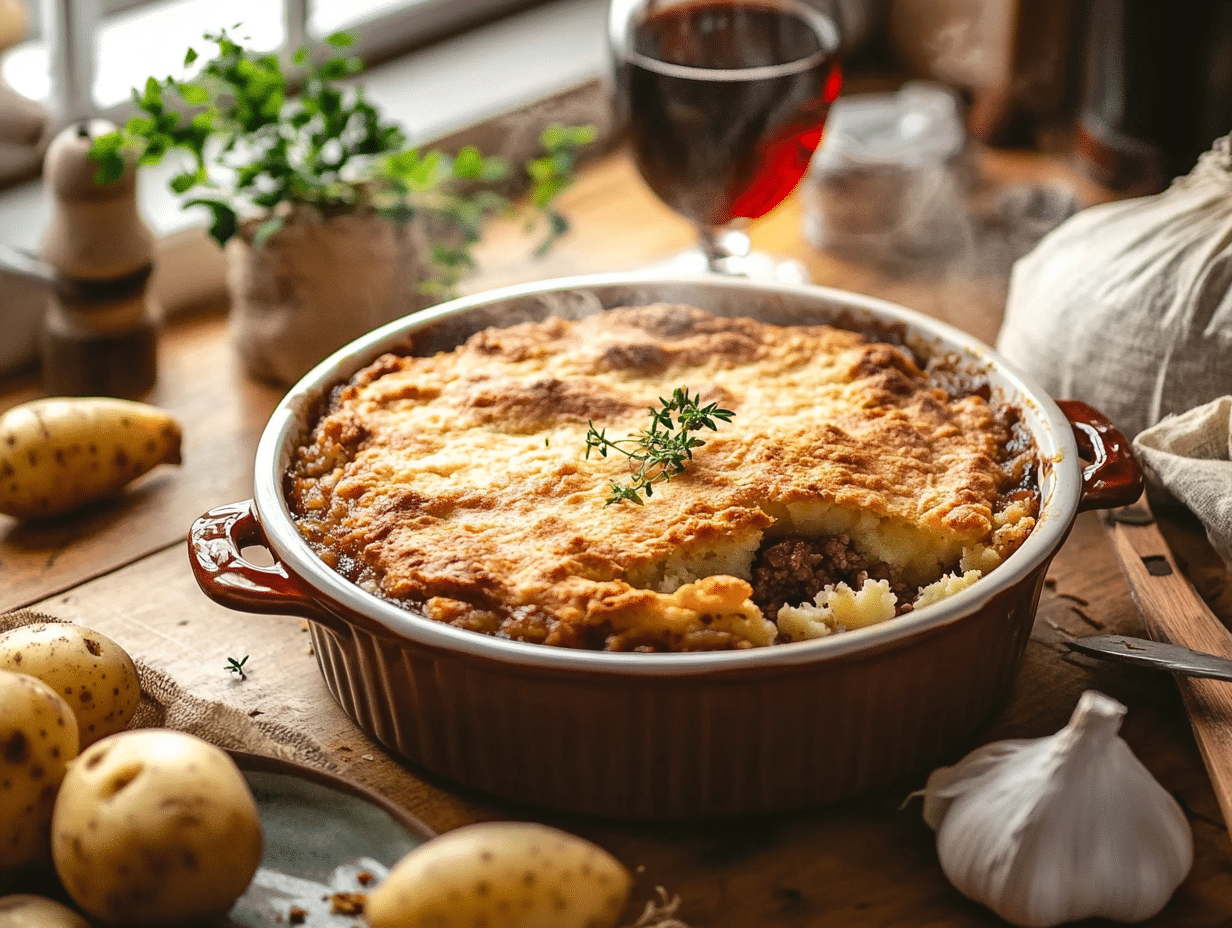
This is a three-layer baked dinner: a seasoned minced beef filling on the bottom, creamy mashed potato in the middle, and small scone rounds on top that bake up golden and slightly crisp. It takes about 75 minutes start to finish, but most of that is hands-off oven time. The real reason to make it is that the scone topping does the work of both bread and pastry — you get a full meal in one baking dish.
Shopping notes
- Self-raising flour: If you only have plain (all-purpose) flour, add 1½ teaspoons of baking powder per cup. The recipe already calls for extra baking powder on top of self-raising, so with plain flour just use 2 teaspoons total per cup and skip the additional ½ teaspoon.
- Beef stock: Low-sodium stock is worth using here because the liquid reduces during the 15-minute simmer. Full-sodium stock can make the filling quite salty by the time it concentrates.
- Potatoes: A floury variety like Russet or Maris Piper mashes smoother than waxy types. Waxy potatoes turn gluey when mashed hard.
- Chilled butter for the scones: This is not optional. Warm butter blends into the flour instead of staying in small pieces, and those pieces are what create flakiness. Cut the butter and put it back in the fridge for 10 minutes if your kitchen is warm.
The technique that matters
The scone dough needs a light hand. Once you pour the milk into the flour-and-butter mixture, mix only until the dough just comes together — stop the moment you can’t see dry flour. Overworking develops gluten, which turns the scones dense and tough rather than crumbly. The same principle applies to rolling: one firm pass to 1 cm thickness, cut your rounds, and put them straight onto the assembled dish without re-rolling scraps more than once. Skip the garnish — not worth the extra dish. The beef filling underneath will keep the scone bases slightly soft, so the contrast between that soft underside and the browned top is exactly what you want; don’t worry if the bottoms look pale when you lift one to check.
What can go wrong
- Watery filling that makes the scones soggy: If the beef mixture looks thin after the 15-minute simmer, let it reduce uncovered for another 3–5 minutes before assembling. The filling should be thick enough to hold a spoon mark briefly.
- Mash that slides off or mixes into the beef layer: Let the beef filling cool for 5 minutes before spooning the mash on top. Hot filling makes the mash sink and the layers blur together.
- Scones that don’t rise: Check that your baking powder and self-raising flour are not past their best-by date. Old leavening is the most common reason scones come out flat and dense.
- Beef that stays grey instead of browning: This happens when the pan is too crowded or the heat too low. Break the mince into smaller pieces and don’t stir constantly — let it sit undisturbed for 2–3 minutes at a time so a crust can form.
- Lumpy mash with dry patches: Drain the potatoes thoroughly and let them steam-dry in the pot for 2 minutes before adding butter and milk. Excess water in the pot is what causes uneven, gluey mash.
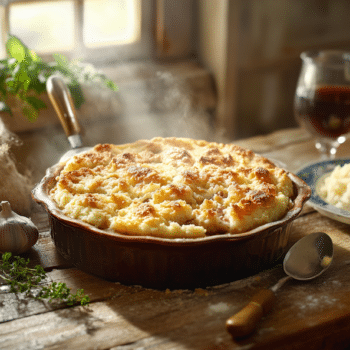
Minced Beef and Potato Cobbler

Ingredients
For the Minced Beef Filling
 500 grams ground beef (minced beef) - Preferably grass-fed for a richer flavor
 2 tablespoons olive oil - Extra virgin
 1 medium onion - finely chopped
 2 cloves garlic - minced
 2 tablespoons tomato paste
 1 cup beef stock - Low sodium preferred
 1 pinch salt - to taste
 1 pinch ground black pepper - to taste
For the Potato Topping
 600 grams potatoes - Peeled and quartered
 2 tablespoons butter
 ½ cup milk - Full-fat for creaminess
For the Scone Topping
- 1 cup self-raising flour
 ½ teaspoon baking powder
- 50 grams butter - chilled and cubed
- ¼ cup milk
Instructions
- Begin by preparing the mashed potato topping. Boil the quartered potatoes in salted water until tender, approximately 20 minutes. Drain well, then mash with butter and milk until smooth and creamy. Set aside.
- In a skillet, heat olive oil over medium heat. Add the chopped onion and sauté until translucent and fragrant, about 5 minutes. Stir in the minced garlic and cook for another 1 minute.
- Increase the heat to medium-high and add the minced beef, breaking it apart with a spatula. Cook until browned, about 8-10 minutes.
- Stir in the tomato paste, mixing well to coat the beef. Pour in the beef stock, season with salt and pepper, and bring to a simmer. Reduce the heat to low and let it cook gently for 15 minutes.
- Preheat your oven to 200°C (390°F). To make the scone topping, sift the self-raising flour and baking powder into a bowl. Add the chilled butter and rub into the flour mixture until it resembles breadcrumbs.
- In a small bowl, whisk together the beaten egg and milk. Make a well in the center of the flour mixture and pour in the liquid. Mix to form a soft dough. Roll it out to about 1 cm thick and cut into rounds using a cookie cutter.
- To assemble the cobbler, spread the minced beef mixture into a baking dish. Spoon the mashed potato evenly over the beef. Place the scone rounds on top.
- Bake in the preheated oven for 20-25 minutes, or until the scone topping is golden and the filling is bubbly.
Notes
Nutrition
Your questions, answered
Can I assemble this the night before and bake it the next day?
Yes, but keep the scone topping separate until you’re ready to bake. The beef filling and mash can be layered in the dish, covered, and refrigerated overnight — add the uncooked scone rounds just before it goes into the oven, otherwise they absorb moisture and won’t rise properly.
How do I know the minced beef is cooked through safely?
Ground beef needs to reach an internal temperature of 160°F (71°C). In practice, the beef browns fully during the 8–10 minute skillet stage and then simmers for another 15 minutes, which is more than enough — but if you want certainty, a cheap instant-read thermometer takes the guesswork out.
Can I use frozen mince straight from the freezer?
Thaw it fully in the fridge first. Frozen mince dropped into a hot pan steams rather than browns, and you end up with grey, watery meat instead of a properly browned filling.
What vegetables can I add without changing the method?
Frozen peas or finely diced carrots work well — stir them into the beef filling after the stock goes in. Larger or harder vegetables like parsnip should be par-cooked first so they’re tender by the time the dish comes out of the oven.
My scone dough is too sticky to roll. What do I do?
Dust the work surface and the top of the dough lightly with flour, then roll quickly. If it’s still unmanageable, the dough is probably a little warm — put it in the fridge for 10 minutes and try again.
Can I make this with a different mince — like lamb or pork?
Lamb works particularly well and keeps the British feel of the dish. Ground pork also works, but both lamb and pork must also reach 160°F (71°C) internal temperature, same as beef.
More mince recipes to try
- Savory British Beef Pies
- Hearty Beef Cauliflower Bake
- Cumberland Sausage Mince Pie
- Anglo-Indian Curry Pie





“This recipe was an absolute hit in our house! I made the Minced Beef and Potato Cobbler for dinner last night, and it was the ultimate comfort food—so cozy and satisfying! I did make a couple of small tweaks: I added some diced carrots and peas to the beef mixture for a bit of sweetness and extra veggies, and sprinkled a bit of grated cheddar over the mashed potatoes before popping it in the oven. The flavors were incredible, and the scone topping was perfectly golden and flaky—it really tied everything together.
My husband went back for seconds (and thirds!), and even my picky eater of a son cleaned his plate, which is basically a miracle. Thank you so much for sharing this gem of a recipe! Quick question: do you think it would work to prep the scone dough a bit ahead of time, or does it need to be freshly made to stay fluffy? Thanks again—it’s definitely going on our regular dinner rotation!” ????
“Wow, what an incredible recipe! I made this for dinner tonight, and the whole family absolutely loved it—there wasn’t a single crumb left! The scone topping was such a fun twist, and it added the perfect texture to the creamy mashed potatoes and savory beef. I did sneak in some peas and carrots for extra veggies, and they fit right in with the flavors.