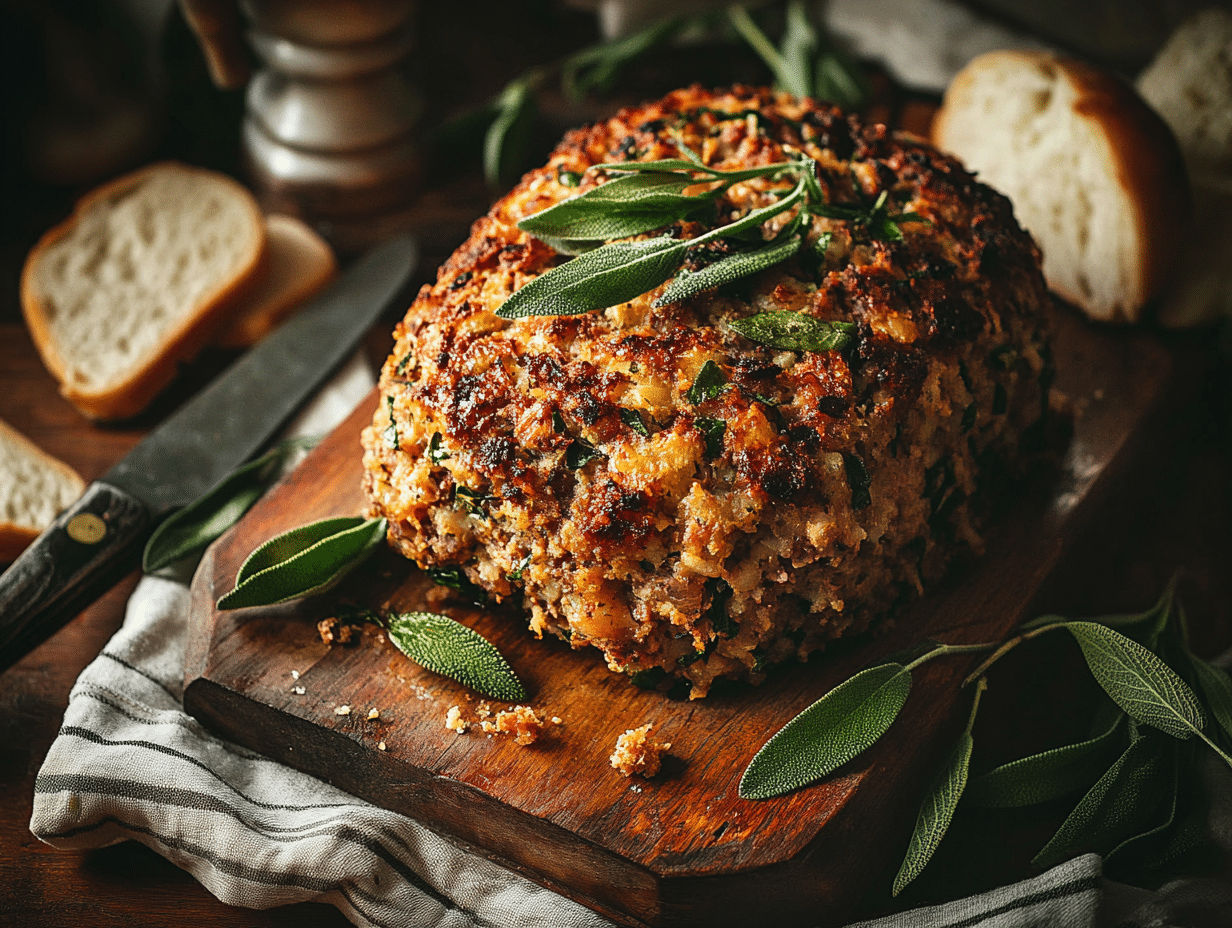
This is a straightforward baked pork stuffing built around ground pork, fresh sage, and breadcrumbs — the kind of thing that works alongside a Sunday roast or stuffed inside a bird. It comes together in one skillet and one bowl, then goes straight into the oven. The result is savory, lightly herbed, and genuinely useful to have in your cooking rotation.
What makes this version work
Two things matter here. First, browning the pork properly in the skillet before mixing — not just cooking it through, but getting some color on it. That browning adds depth that raw-mixed stuffing simply doesn’t have. Second, letting the pork cool before you add the egg. If the mixture is still hot when the egg goes in, it scrambles instead of binding, and the stuffing falls apart when you slice it. Give it five minutes off the heat. Both steps happen in the same pan and bowl you’re already using, so there’s no extra work involved.
Mistakes to avoid
- Using fresh soft bread for the breadcrumbs: Fresh bread turns the stuffing gluey. Use bread that’s at least a day old, or dry it in the oven for a few minutes first. Stale bread absorbs the pork juices without going soggy.
- Under-seasoning before baking: The breadcrumbs absorb a lot of salt. Taste the mixture before the egg goes in — it should taste slightly more seasoned than you’d expect, because baking mellows it.
- Skipping the internal temperature check: The top can look golden while the center is still underdone. Ground pork must reach 160°F (71°C) internally. Use a thermometer rather than relying on color alone.
- Packing the baking dish too deep: A thick layer takes much longer to cook through and the top can overbrown before the center is safe. Spread the mixture no more than 1.5 inches deep for even cooking.
- Overcrowding the skillet when browning: If the pork steams instead of browns, the flavor suffers. Cook it in a wide pan and don’t stir too often — let it sit and color before breaking it up.
Ingredient notes
- Fresh sage vs. dried: Fresh sage is worth using here — dried sage can taste dusty and sharp in a baked dish. If you only have dried, use 2 teaspoons and add it when you cook the onion so it blooms in the oil.
- Nutmeg: A quarter teaspoon sounds small, but freshly grated nutmeg is noticeably stronger than pre-ground. If you’re using pre-ground from a jar, it’s fine — just don’t increase the amount.
- Free-range pork mince: Higher-fat pork (around 20% fat) keeps the stuffing moist during baking. Very lean pork mince can produce a dry, crumbly result. Skip the extra-lean option here.
Leftovers and meal prep
Cooked stuffing keeps in the fridge for up to 3 days in a covered container. Reheat slices in a dry skillet over medium heat for a few minutes per side — this brings back the crust better than the microwave does, and uses no extra dishes. For freezing, portion it into individual servings before freezing; it keeps well for up to 2 months. Thaw overnight in the fridge before reheating. The unbaked mixture can also be assembled a day ahead, covered, and refrigerated — add 5 minutes to the bake time if it goes into the oven cold.
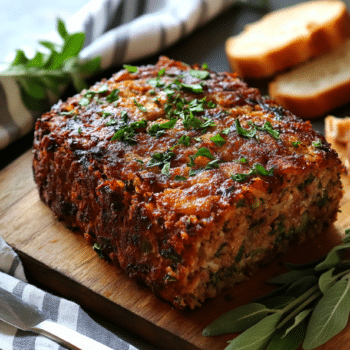
English Pork Mince Sage Stuffing

Ingredients
 2 tablespoons olive oil - extra virgin
 1 medium onion - finely chopped
 2 cloves garlic - minced
 500 grams ground pork (minced pork) - quality, preferably free-range
 1 cup breadcrumbs - fresh, from stale bread
 2 tablespoons sage - finely chopped, fresh
 ¼ teaspoon nutmeg - freshly grated
 1 teaspoon salt - to taste
 ½ teaspoon ground black pepper - freshly ground
 1 large egg - lightly beaten
Instructions
- In a large skillet, heat the olive oil over medium heat. Add the chopped onion and sauté until translucent, about 5 minutes. Add the minced garlic and cook for another 1 minute, until fragrant.
- Add the pork mince to the skillet and cook, breaking it apart with a wooden spoon, until browned and thoroughly cooked. This should take about 10 minutes. Remove from heat and let cool slightly.
- In a large mixing bowl, combine the cooled pork mixture, fresh breadcrumbs, sage, nutmeg, salt, and black pepper. Mix until well combined.
- Add the lightly beaten egg to the mixture and mix until everything is evenly incorporated.
- Preheat your oven to 180°C (350°F). Transfer the stuffing mixture to a greased baking dish or use to stuff your choice of poultry.
- Bake in the preheated oven for about 20-25 minutes, or until the top is golden brown and crisp. Serve warm.
Notes
Nutrition
Your questions, answered
Can I use this stuffing inside a whole chicken or turkey instead of baking it separately?
Yes, but pack the cavity loosely — stuffing expands as it cooks. The stuffing inside the bird must also reach 160°F (71°C), which often means the bird itself is slightly overcooked by the time the stuffing is safe. For that reason, baking it separately gives you more control over both.
Can I make this gluten-free?
Use gluten-free breadcrumbs made from a sturdy GF loaf — rice-based ones work well. Avoid fine GF breadcrumbs from a canister, which tend to make the stuffing dense rather than textured.
My stuffing came out dry and crumbly — what went wrong?
The most common cause is pork that’s too lean, or breadcrumbs that weren’t fresh enough to absorb the juices. Next time, use pork with a higher fat content and make sure your breadcrumbs are from real stale bread rather than dried packaged crumbs. A tablespoon of chicken stock stirred in before baking also helps if the mixture looks dry before it goes in the oven.
Try these next
- Cumberland Sausage Mince Pie
- Sweet Savory Scotch Eggs
- Savory Pork Apple Pasties
- Savory British Beef Pies








“This stuffing was absolutely divine! I made it for our Sunday roast and it was the absolute star of the show—my whole family couldn’t stop raving about it. The combination of sage and pork brings such a cozy, nostalgic flavor, and the texture was perfect: moist on the inside with a little golden crust on top.
I did make a tiny tweak to the recipe and added a handful of chopped dried apricots for a touch of sweetness—and wow, it paired beautifully with the savory flavors. I also took your suggestion and added a little lemon zest, which really brightened the dish. Thank you for that tip!
We served it alongside a roast chicken and some roasted root veggies, and it honestly felt like a picture-perfect British countryside meal. My husband had seconds (and thirds!), and even my picky little ones helped themselves to more, which almost never happens.
One question for you: If I wanted to make this ahead for a holiday dinner, do you think it would hold up well if I assembled it the night before and baked it the day of? I’d love to prep in advance and save a bit of time on Christmas Day. Thank you so much for sharing this wonderful recipe—it’s going straight into my “family favorites” binder!”
“Oh my goodness, this was AMAZING! I just made this Rustic English Sage and Pork Stuffing for our family dinner, and it was an absolute hit! The combination of sage and pork is truly timeless—my kitchen smelled like pure comfort. I particularly loved the slight warmth the nutmeg added; it tied all the flavors together beautifully.
Quick tip for anyone making this: I used a mix of slightly stale sourdough bread for the breadcrumbs, which added a really lovely tangy note to the stuffing. I’m curious, though—has anyone ever tried adding chopped apple or cranberries for a touch of sweetness? I might try that next time for a festive twist.
Thank you so much for sharing this recipe—definitely one for the regular rotation, especially around the holidays!” ????