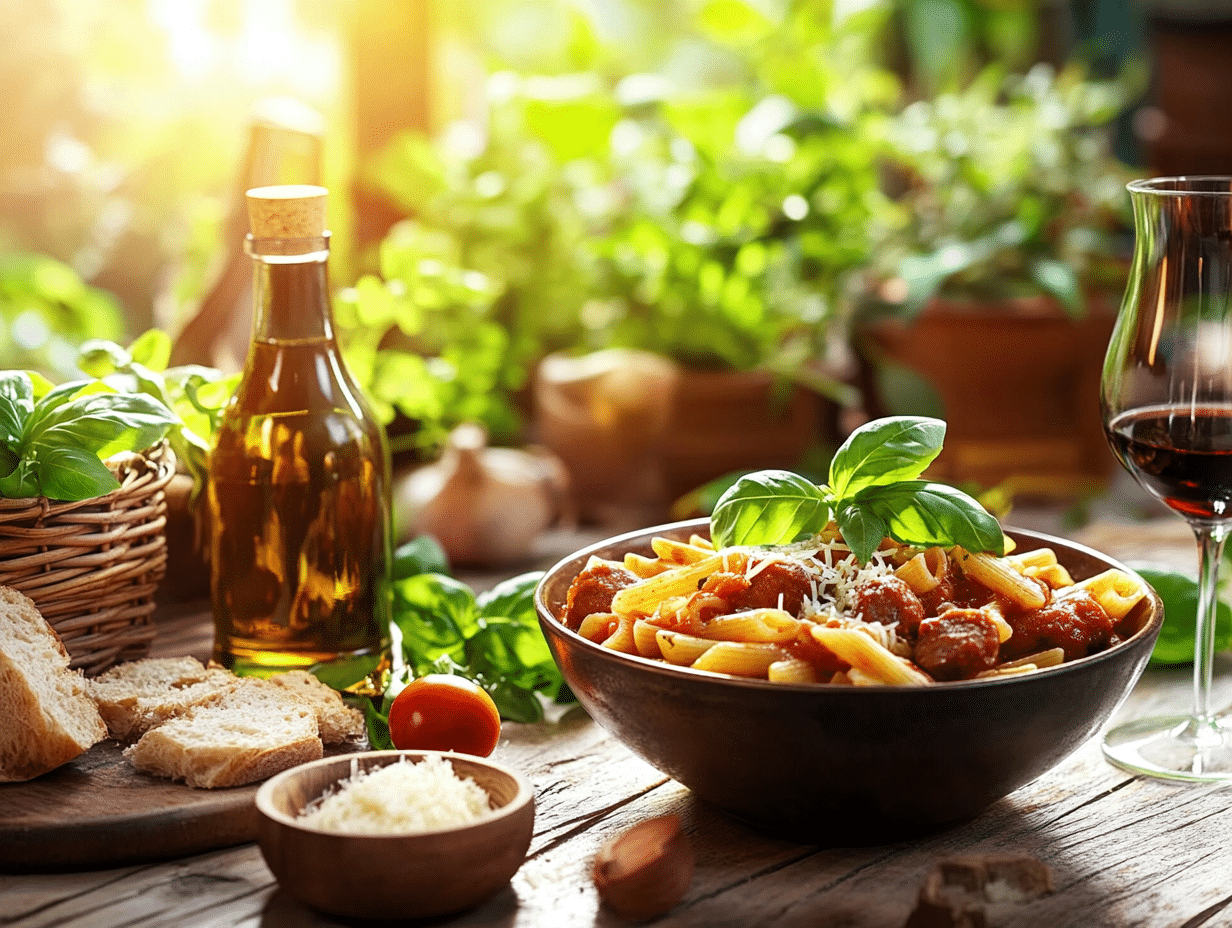
This is a creamy tomato and Italian sausage pasta — browned pork sausage, crushed tomatoes, heavy cream, and a short pasta like penne or rigatoni, done in about 50 minutes. The sausage does most of the seasoning work, so the sauce comes together with very little effort. It feeds four people well and reheats cleanly the next day.
Before you start
The single technique worth getting right is browning the sausage properly. Remove the casings and break the meat into small, irregular pieces — not a fine crumble — then leave it mostly undisturbed for the first few minutes so it develops a crust on the bottom of the pan. That fond is the flavor base for the entire sauce. If you stir constantly, you get steamed grey meat instead. The second thing that matters: reserve your pasta water before you drain. Half a cup of that starchy water is what pulls the cream sauce and pasta together into something cohesive rather than soupy. Set a measuring cup next to the pot as a reminder — it’s easy to forget until the water is already down the drain.
Ingredient notes
- Italian sausage: Medium-spicy is called for here. Mild works fine; hot sausage will make the dish noticeably spicier once the cream goes in. Either is fine, but know what you’re buying — the label doesn’t always match the heat level.
- San Marzano tomatoes: Worth using if you can find them. They’re less watery and less sharp than generic crushed tomatoes, which means the sauce reduces faster and doesn’t need sugar to balance it. If you can’t find them, a good domestic brand works — just simmer an extra 3–4 minutes.
- Fennel seeds: Toast them in the dry pan for 60 seconds before adding oil. It takes no extra equipment and makes a real difference to how much flavor they release.
- Heavy cream vs. half-and-half: Half-and-half will give you a thinner, lighter sauce. It’s a reasonable swap if that’s what you have, but the sauce won’t cling to the pasta as well.
Common problems and fixes
- Sauce is greasy: Pork sausage can release a lot of fat during browning. After the meat is cooked, tilt the pan and spoon off excess fat before adding the onion — leave about a tablespoon behind for flavor.
- Sauce tastes flat after adding cream: Cream mutes acidity. Taste after stirring it in and add a pinch more salt and a grind of black pepper. A small splash of the pasta water also helps rebalance the flavor.
- Pasta is sticking together after draining: Don’t rinse it — that washes off the surface starch you need for the sauce to stick. Get it into the sauce within a minute of draining and toss immediately.
- Sauce is too thick: Add reserved pasta water a splash at a time while tossing. It loosens the sauce without thinning the flavor the way plain water would.
- Sausage isn’t cooked through: Ground pork must reach an internal temperature of 160°F (71°C). If the pieces are large and the outside looks done but you’re not sure, break a few open and check — there should be no pink remaining.
Storage and reheating
Store leftovers in an airtight container in the fridge for up to 3 days. The pasta will absorb more sauce overnight, so add a splash of water or broth when reheating. Reheat in a saucepan over medium-low heat, stirring occasionally — skip the garnish at this stage, not worth the extra dish. The dish freezes reasonably well for up to 2 months if you freeze the sauce separately from the pasta; cream-based sauces can split slightly when frozen with the pasta already mixed in, though stirring over low heat usually brings it back together.
Sausage Pasta

Ingredients
 2 tablespoons olive oil - extra virgin for best flavor
 400 grams Italian sausage - medium spicy, casings removed
 1 cup onion - finely chopped
 3 cloves garlic - minced
 1 can crushed tomatoes - 400 grams, preferably San Marzano
 1 teaspoon dried oregano - fresh can also be used
 1 teaspoon fennel seeds - lightly toasted
 1 cup heavy cream - or substitute with half-and-half for a lighter option
- 300 grams pasta - such as penne or rigatoni
 ½ cup Parmesan cheese - freshly grated
 ¼ cup basil - fresh, torn for garnish
 1 pinch salt - to taste, adjust seasoning
 1 pinch ground black pepper - to taste, adjust seasoning
Instructions
- In a large saucepan over medium heat, warm the olive oil until shimmering. Add the sausage and cook, breaking it apart with a wooden spoon, until browned and crispy, about 8–10 minutes.
- Add the chopped onion and sauté until translucent and fragrant, approximately 5–6 minutes. Stir in the minced garlic and cook for an additional 1 minute.
- Pour in the crushed tomatoes and bring to a simmer. Season with oregano, fennel seeds, salt, and pepper. Allow the sauce to cook for about 10 minutes, stirring occasionally.
- Meanwhile, in a large pot of boiling salted water, cook the pasta according to the package instructions until al dente. Reserve 1/2 cup of pasta water, then drain the pasta.
- Stir the heavy cream into the sauce and let it heat through. Adjust seasoning if necessary. Toss the cooked pasta into the sauce and add the reserved pasta water to achieve desired consistency.
- Sprinkle with grated Parmesan cheese and toss gently to combine. To serve, garnish with fresh basil and a final drizzle of olive oil for added flavor.
Notes
Nutrition
Common questions
Can I use ground pork instead of Italian sausage?
You can, but you’ll need to add the seasoning yourself. Italian sausage is pre-seasoned with fennel, garlic, and spices — plain ground pork has none of that. Add at least half a teaspoon each of fennel seeds, garlic powder, smoked paprika, and a pinch of red pepper flakes to compensate.
Do I need to use both oregano and fennel seeds, or can I skip one?
Keep the fennel seeds — they’re doing more work here than the oregano. Fennel is what gives Italian sausage pasta its characteristic flavor, and without it the dish tastes generic. The oregano is easier to skip or swap for dried basil if needed.
Can I make this without cream to keep it lighter?
Yes. Leave out the cream entirely and you have a straightforward tomato and sausage sauce, which is also good. Alternatively, stir in two or three tablespoons of cream cheese at the end — it adds body and a little richness without as much fat as a full cup of heavy cream.
My store only has sausage in links. How do I prep it?
Score the casing lengthwise with a knife and peel it off before cooking. The meat inside is exactly what you need. Don’t try to cook it in the casing and crumble it later — it won’t brown the same way.
Can I make the sauce ahead of time?
Yes, and it actually improves after a few hours. Make the sauce through the cream step, cool it, and refrigerate for up to 2 days. Cook fresh pasta when you’re ready to eat and combine as directed — add a little extra pasta water since the sauce will have thickened in the fridge.
Is there a way to add vegetables without changing the dish too much?
Baby spinach works well — stir a couple of handfuls into the sauce right after adding the cream and it wilts in about 90 seconds. Diced zucchini or bell pepper can go in with the onion at the sauté stage. Either addition blends into the existing flavors without fighting them.
More mince recipes to try
- Creamy Beef Spinach Pasta
- Savory Pork Noodle Stir-Fry
- Spicy Calabrian Lamb Ragù
- Beef Ricotta Lasagna Rolls