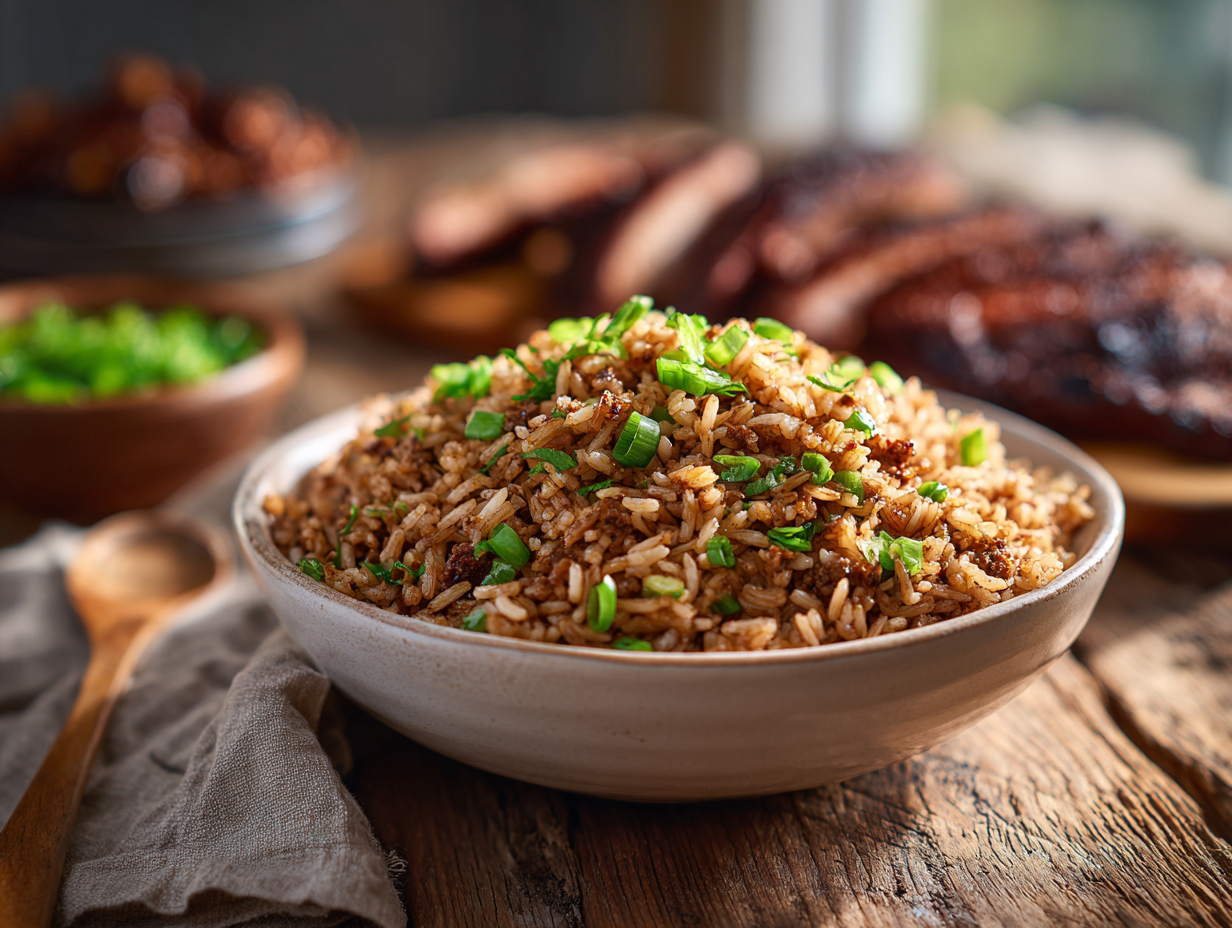
Dirty rice is a Louisiana Cajun staple built on seasoned ground meat, the “holy trinity” of onion, bell pepper, and celery, and long-grain rice that soaks up every bit of flavor from the pan. This version skips chicken livers and keeps the bold spicing intact, so you get a deeply savory one-pan meal that comes together on a weeknight without a lot of fuss. It works as a main or a side, and it reheats well — which makes it worth cooking in a full batch.
Before you start
The single technique that makes or breaks this dish is browning the ground meat properly. Spread it in the pan and leave it alone for a minute or two before breaking it up — you want actual color on the meat, not grey steaming. That browning builds the fond on the bottom of the pan, and when the vegetables go in, they pick up all of it. The second thing that matters is adding the rice to the pan dry, before the liquid, and stirring it briefly so each grain gets coated in the seasoned fat. This stops the rice from turning mushy and gives it a slightly toasted flavor that carries through to the finished dish. Ground beef and ground pork both need to reach an internal temperature of 160°F (71°C) — use a thermometer if you’re unsure, especially with a thicker layer of rice on top.
Shopping notes
- Cajun or Creole seasoning: Blends vary a lot in salt content. Taste yours before you add it — some brands are so salty that the full amount in the recipe will oversalt the dish. A low-sodium blend gives you more control.
- Long-grain white rice: This is not the place for short-grain or jasmine rice. Long-grain holds its texture during the covered simmer; shorter grains go sticky. Converted (parboiled) rice also works and is even more forgiving.
- Celery: If you’re out, a small amount of celery seed (about ¼ teaspoon) gets you some of the aromatic depth without a grocery run — skip the garnish, not worth the extra dish.
- Ground meat: An 80/20 ground beef gives the best flavor here. Leaner blends can make the rice feel dry since there’s less fat to carry the seasoning into the grain.
Storage and reheating
Cool leftovers within two hours and refrigerate in a sealed container for up to four days. For freezing, portion into flat zip-lock bags and freeze for up to three months — flat bags thaw faster than deep containers. Reheat from the fridge in a skillet over medium-low heat with a splash of water or broth (about two tablespoons per cup of rice), stirring until hot throughout. From frozen, thaw overnight in the fridge first, then reheat the same way. Microwaving works too — cover loosely, add a small splash of liquid, and heat in 90-second intervals, stirring between each, until steaming throughout.
Troubleshooting
- Rice is crunchy in the middle: The liquid absorbed before the rice finished cooking. Add a quarter cup of hot water or broth, replace the lid, and cook on low for another five minutes without lifting the lid again.
- Everything tastes flat: The seasoning was likely added too early and cooked off, or the blend was old. Stir in a small pinch of cayenne and a splash of Worcestershire sauce at the end — both sharpen the overall flavor without making the dish taste fixed.
- Rice is wet and clumped: Too much liquid or the lid came off too often. Spread the rice out in the pan, turn the heat to medium, and let it sit uncovered for three to four minutes to steam off the excess moisture.
- Meat is grey and watery instead of browned: The pan wasn’t hot enough before the meat went in, or the pan was overcrowded. Drain any pooled liquid, push the meat to one side, raise the heat, and let it sit undisturbed until you see browning before stirring.
- Dish is greasy: High-fat ground meat released more fat than the rice could absorb. Tilt the pan and spoon off the excess fat after browning the meat, before the vegetables go in.
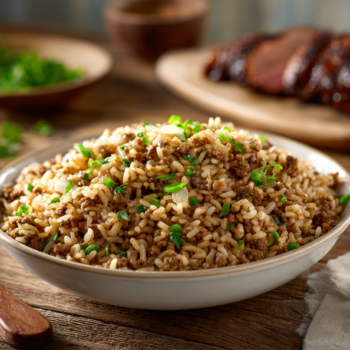
Hearty Dirty Rice Recipe

Ingredients
 1 large yellow onion - chopped small
 1 large green pepper (green capsicum) - chopped small
 1 medium carrots - shredded
 2 stalks celery - chopped small
 3 cloves garlic - chopped
 1 tablespoon oregano - chopped
 1 tablespoon thyme - chopped
 ¼ cup Cajun spice seasoning (black pepper, white pepper, cayenne pepper, onion powder, garlic powder, and paprika)
 8 ounces beef stock (beef broth or beef bouillon)
 2 tablespoons brown sugar
 1 teaspoon red pepper flakes
 1 bunch green onions (scallions or green shallots) - chopped
 1 pound ground pork (minced pork)
 1 tablespoon olive oil
 3 cups white rice
Instructions
- Cook your rice and set it aside when done. (The rice needs to be hot to absorb all the flavours.)
- Get all your prep ready. Chop the onion, green pepper, celery, garlic, oregano, and thyme, shred the carrot, and set aside in separate piles.
- Now heat a saute pan or pot on medium heat and add your oil. Then add in your onions and saute for about 2 minutes.
- Add your pepper, celery, bay leaf and garlic and saute for 1 minute. Now add in your pork and smash with a fork or big spoon to make crumbles and cook until meat is done, give or take about 5 to 6 minutes.
- Pour in your beef stock, red pepper flakes, carrots, oregano, thyme, brown sugar and the cajun seasoning and stir, so all are incorporated. Turn the heat up so that the mixture will boil for 2 minutes, then turn down (taste for seasoning and add a little salt and pepper if needed or more cajun seasoning if needed) to low so it can simmer for about 8 minutes.
- After 8 minutes, fluff your rice with a fork, add to a big bowl, pour over the mixture and 1 handful of scallions (leave some for garnish), and stir until all incorporated. Taste, and you can add a little salt and pepper, stir and taste if not enough for you.
- Remove the bay leaf, garnish with scallions. Serve and enjoy.
Nutrition
FAQ
Can I use instant rice instead of regular long-grain rice?
You can, but add it at the very end and reduce the liquid significantly — instant rice only needs a few minutes and will turn to mush if it simmers with everything else. Stir it in off the heat, cover the pan, and let it absorb for five minutes.
What ground meat works best if I don’t want to use beef?
Ground pork is the closest substitute — it has enough fat to keep the rice from drying out and takes Cajun seasoning well. Ground turkey works too, but use thigh-based ground turkey rather than breast-only, and cook it to 165°F (74°C); breast-only turkey tends to go dry in a dish like this.
Can I make this ahead and finish it later?
Yes — brown the meat and cook the vegetables fully, then refrigerate that mixture for up to two days. When you’re ready to eat, reheat the meat mixture in the pan until hot, then add the rice and liquid and finish as the recipe directs. The total active time at dinner is under 25 minutes.
My Cajun seasoning doesn’t list heat level — how spicy will this be?
Most standard Cajun blends are mild to medium — noticeable warmth but not hot. If your household is sensitive to spice, start with half the stated amount and taste before adding more. You can always stir in a little extra at the table.