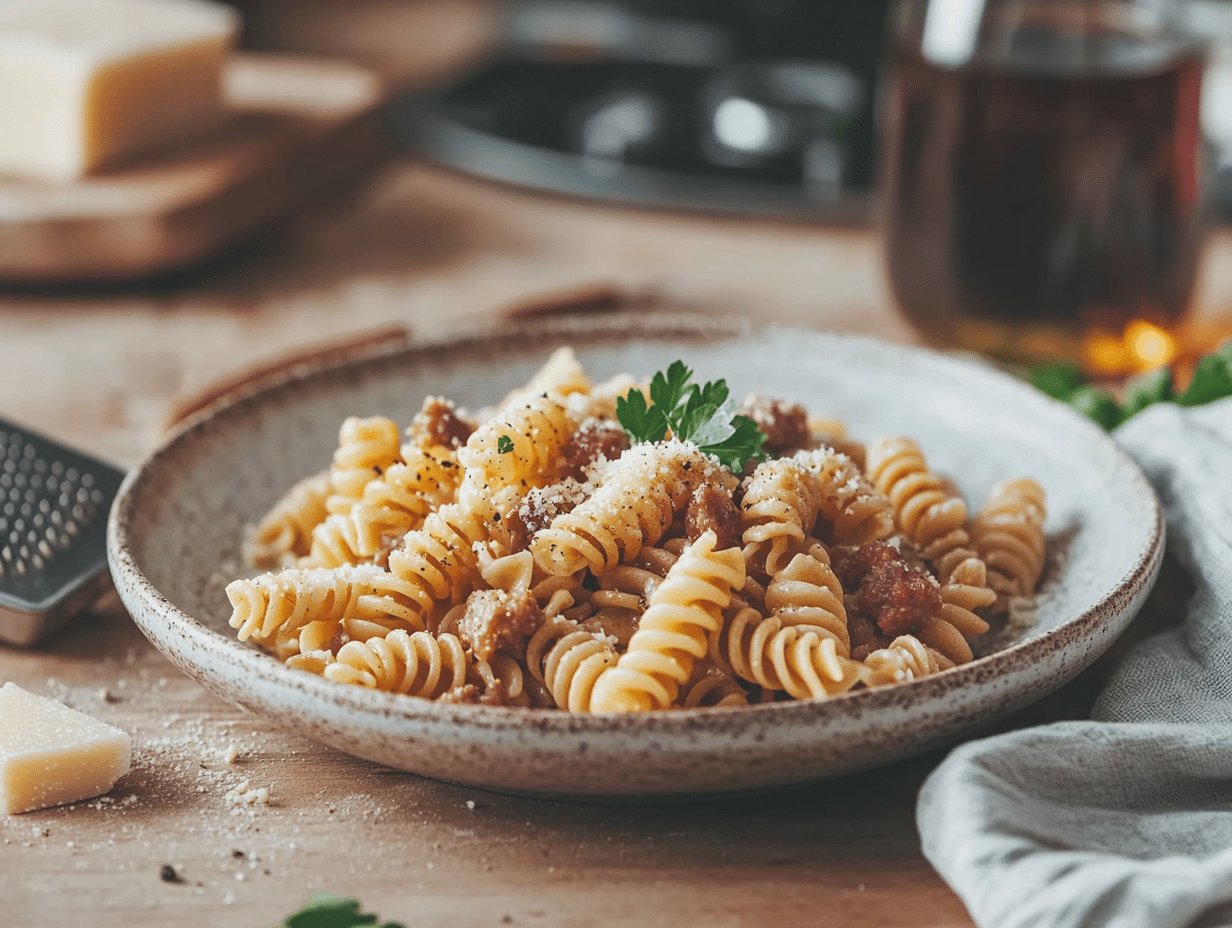
Lumache alla Norcina is a creamy Italian sausage pasta — crumbled pork sausage, heavy cream, Parmesan, and a pinch of nutmeg tossed with snail-shell-shaped pasta that holds the sauce in every curve. It comes together in one skillet in about 40 minutes, and the ingredient list is short enough that nothing gets wasted. If you want a rich, filling weeknight pasta without a pile of dishes, this is it.
Why this recipe works
Two things make this dish work. First, browning the crumbled sausage until it crisps — not just cooks through — builds fond on the pan floor, and that fond dissolves into the cream when you deglaze, giving the sauce real depth without any extra ingredients. Second, the pasta goes straight into the skillet with the cream and sausage rather than being sauced on a plate. That last minute of tossing over low heat lets the pasta absorb some of the sauce and thicken it naturally, so you get something that coats rather than pools. The nutmeg is small in quantity but it cuts through the richness of the cream in a way that keeps the dish from feeling heavy.
What can go wrong
- Cream breaks into greasy puddles: This happens when the heat is too high after you add the cream. Keep it at a gentle simmer — small bubbles at the edges only. If it does split, pull the pan off the heat, add a splash of the starchy pasta cooking water, and stir vigorously to bring it back together.
- Sauce is thin and watery: The pasta was too wet when it went into the skillet. Drain it well and let it sit in the colander for 30 seconds before adding it. Also make sure the cream has actually thickened slightly before you add the pasta — it should coat the back of a spoon.
- Sausage steams instead of browns: Overcrowding the pan traps moisture. If your skillet is smaller than 12 inches, brown the sausage in two batches. Spread it out and resist stirring for the first 2–3 minutes so a crust can form.
- Parmesan clumps instead of melting smoothly: Pre-grated shelf-stable Parmesan won’t melt cleanly — it contains anti-caking agents. Use a block and grate it yourself, and add it off the heat or over very low heat while stirring constantly.
- Pasta sticks together while you finish the sauce: Toss the drained pasta with a tiny drizzle of olive oil if you need to hold it for more than a couple of minutes. Skip the garnish — not worth the extra dish — and serve straight from the skillet.
Smart swaps
- Lumache pasta: It can be hard to find outside specialty stores. Rigatoni or medium shells work well — you need a shape with ridges or an open tube to catch the sauce. Avoid smooth pasta like penne lisce.
- Italian sausage: If you only have plain ground pork, season it yourself: add half a teaspoon of fennel seeds, a pinch of red pepper flakes, and a minced garlic clove directly to the raw meat before browning. It won’t be identical but it’s close.
- Heavy cream: Half-and-half will produce a thinner sauce that’s harder to control. If that’s what you have, reduce it a little longer and use slightly less pasta water. Full-fat coconut cream works for a dairy-free version but changes the flavor noticeably.
- Parmesan: Pecorino Romano is a sharper, saltier substitute — use about three-quarters of the stated amount and taste before adding any extra salt.
Lumache Alla Norcina

Ingredients
- 400 g lumache pasta - preferably made from durum wheat for best texture
 250 g Italian sausage - crumbled, spicy or mild depending on preference
 1 tbsp olive oil - extra virgin for the best flavor
 1 clove garlic - minced
 180 ml heavy cream - organic if possible
 60 g Parmesan cheese - finely grated, plus more for serving
 0.5 tsp nutmeg - freshly grated for a warm aroma
 1 pinch salt - to taste
 1 pinch ground black pepper - freshly ground, to taste
Instructions
- Start by bringing a large pot of salted water to a rolling boil. Once boiling, add the lumache pasta and cook until al dente according to package instructions, about 10-12 minutes. Drain and set aside.
- In a large skillet, heat the olive oil over medium heat. Add the crumbled sausage, stirring frequently until it browns and crisps, about 6-8 minutes. Remove the sausage from the skillet and set aside, leaving any rendered fat in the pan.
- Lower the heat to medium-low, add minced garlic to the skillet, and sauté until fragrant, about 1 minute. Ensure the garlic does not brown to prevent bitterness.
- Pour in the heavy cream, stirring to scrape up any brown bits from the bottom of the skillet - these are flavor agents! Gently simmer the cream until it slightly thickens, about 3-5 minutes.
- Return the browned sausage to the skillet with the cream, and add the cooked pasta. Toss the mixture gently to coat the pasta evenly. Gradually sprinkle in the grated Parmesan cheese while stirring to create a creamy sauce that clings beautifully to the pasta.
- Season with freshly ground black pepper, salt, and nutmeg. Taste and adjust seasoning as desired.
- Serve immediately, garnishing with additional Parmesan and a sprinkle of fresh black pepper. Pair with a robust red wine, such as a Chianti or Sangiovese, to complement the dish’s richness.
Notes
Nutrition
Common questions
Can I use ground pork instead of Italian sausage?
Yes, but you need to season it yourself. Mix in fennel seeds, garlic, black pepper, and a pinch of red pepper flakes before cooking. Plain ground pork on its own will produce a bland sauce because the seasoning in pre-made sausage does a lot of the flavor work here. Cook ground pork to an internal temperature of 160°F (71°C) — no pink in the center.
How do I know when the cream sauce is thick enough?
Drag a spoon through it — the line should hold for a second before the cream flows back. It usually takes 3–5 minutes of gentle simmering. The sauce will also continue to thicken once you add the pasta and Parmesan, so pull it off the heat slightly before it looks done.
Can I make this ahead of time?
It’s best eaten immediately — cream-based pasta sauces tighten up significantly as they cool and the pasta keeps absorbing liquid. If you need to prep ahead, cook the sausage and store it separately, then make the cream sauce fresh when you’re ready to eat. Reheating works in a pinch with a splash of cream or water over low heat, but the texture won’t be the same.
What if I can’t find lumache pasta?
Use rigatoni, medium shells (conchiglie), or cavatappi — any shape with ridges or a hollow center that traps sauce. Avoid smooth or flat pasta shapes; the sauce will slide right off and pool at the bottom of the bowl.
Can I freeze leftovers?
Cream-based pasta does not freeze well — the sauce separates when thawed and the pasta turns mushy. Refrigerate leftovers in an airtight container for up to 2 days and reheat gently on the stovetop with a small splash of cream or water, stirring frequently over low heat.
If you liked this one
- Creamy Beef Spinach Pasta
- Savory Pork Noodle Stir-Fry
- Authentic Szechuan Dan Dan
- Spicy Calabrian Lamb Ragù