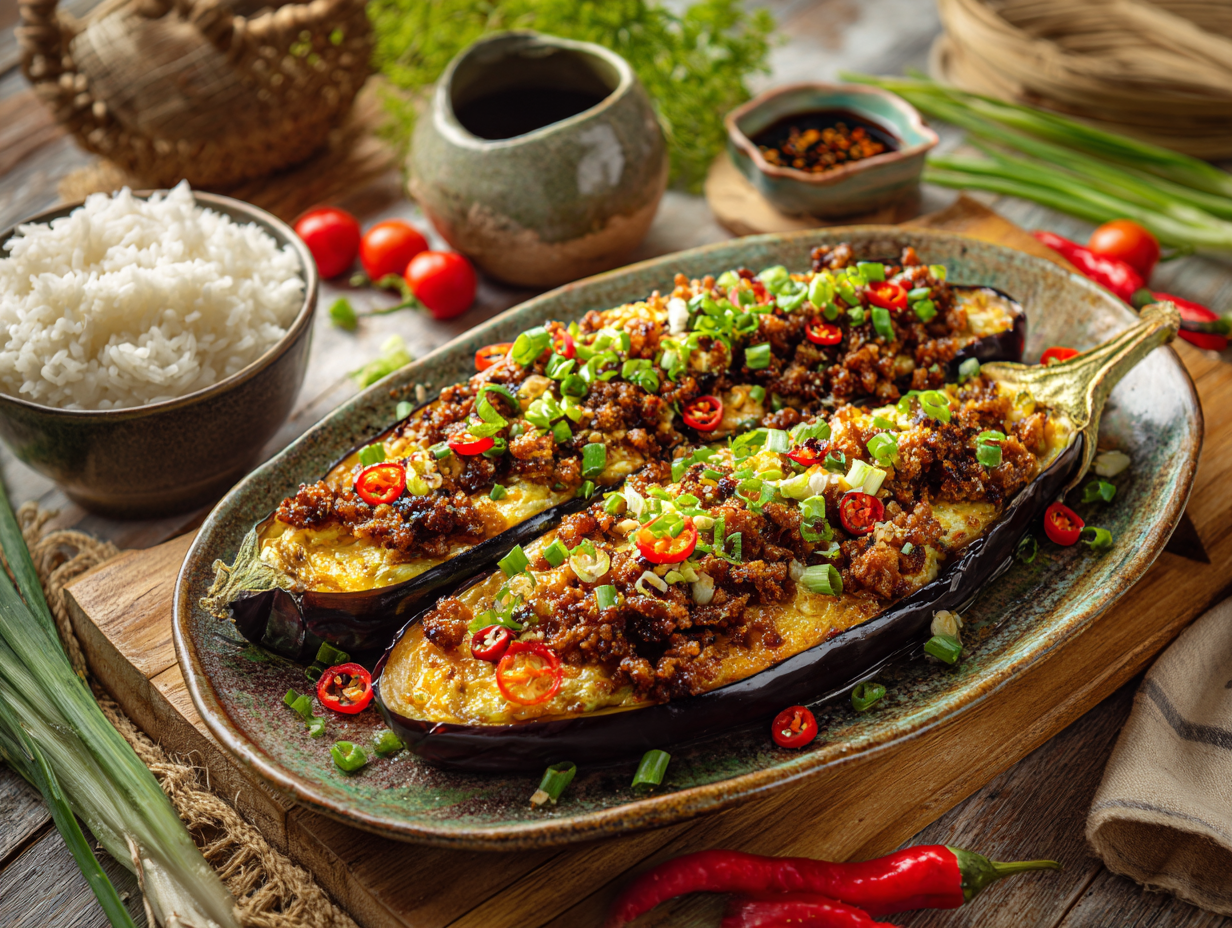
Rellenong Talong is a Filipino stuffed eggplant dish where a grilled or boiled eggplant is flattened, topped with a seasoned ground pork filling, coated in beaten egg, and pan-fried until golden. The whole thing comes together in about 40 minutes, which makes it a genuinely useful weeknight option when you want something more interesting than a standard stir-fry. One pan, simple ingredients, and the result looks more involved than it actually is.
Ingredient notes
- Eggplant size matters: Use long, slender Asian or Filipino eggplants rather than the large globe variety. They flatten more evenly and cook through faster. One medium eggplant per serving is the right ratio to filling.
- Ground pork vs. ground beef: Either works. Pork stays a little juicier after pan-frying; beef gives a slightly firmer texture. Ground chicken is a common lighter swap — just cook it to 165°F (74°C) and expect a drier result.
- Red chili: A single finger chili adds mild heat without overpowering the egg coating. If you can’t find it, a pinch of red pepper flakes stirred into the filling does the same job.
- Calamansi: If you have access to an Asian grocery, grab a few — the flavor is sharper and more floral than lime. Regular lime juice works as a dipping sauce substitute but is a bit more mellow.
Why this recipe works
The two steps that actually determine the outcome are the eggplant prep and the egg coating. Grilling or boiling the eggplant until fully soft — not just tender — lets you flatten it into a wide, even layer without it cracking or bunching up. That flat surface is what holds the filling in place during frying. The beaten egg is the other key: it acts as a binder that glues the meat mixture to the eggplant fibers, so when you flip it in the pan, the whole thing stays together as one piece rather than falling apart. Pour the egg mixture slowly and let it settle into the filling before the heat sets it. Rushing that step is where most first attempts go wrong.
Mistakes to avoid
- Not draining the filling: If your sautéed pork releases a lot of liquid, spoon off the excess before combining it with the egg. Wet filling makes the egg coating thin and prevents proper browning.
- Flipping too early: Wait until the edges of the egg are visibly set and the underside is golden before attempting to flip. Sliding a wide spatula fully under the eggplant before turning helps it stay intact.
- Crowding the pan: Frying more than one stuffed eggplant at a time in a standard skillet drops the pan temperature and steams instead of fries. Cook them one at a time for a proper crust.
- Undercooking the pork filling: The filling gets a second round of heat during pan-frying, but don’t rely on that. Cook the ground pork fully to 160°F (71°C) during the sauté step before it goes anywhere near the eggplant.
- Peeling the eggplant skin completely: Leave the skin on — it holds the eggplant together when you flatten and fry it. Only peel away any charred or tough patches from grilling.
Make-ahead notes
The ground pork filling can be cooked up to two days ahead and stored in an airtight container in the fridge — skip the garnish, not worth the extra dish. The eggplants can be grilled or boiled and flattened a day in advance; wrap them tightly in plastic wrap and refrigerate. When you’re ready to cook, just combine the cold filling with fresh beaten egg and fry as directed — the whole assembly-to-table step takes under 15 minutes. Fully cooked rellenong talong keeps in the fridge for up to three days. Reheat in a dry skillet over medium heat for about three minutes per side to bring back some of the crust; the microwave works but softens the exterior noticeably. Freezing the finished dish is not ideal — the egg coating turns spongy after thawing.

Authentic Rellenong Talong

Ingredients
 4 pieces eggplant (brinjal, aubergine, or guinea squash) - about 500 grams
  2 tablespoons vegetable oil - for sauteing
 4 cloves garlic - minced
 50 grams green onions (scallions or green shallots) - chopped
 4 pieces red chili (red chilli in British English) - finely sliced
 300 grams ground pork (minced pork) - I used pork for this recipe
 ¾ teaspoon salt
 ½ teaspoon ground black pepper
 8 medium egg - beaten
- 125 milliliter vegetable oil - for frying
 1 large tomato - seeded, sliced small
Instructions
- Heat a saucepan of water within the water until boiling, then broil eggplant until slightly soft to last approximately 15 minutes, remove and let cool slightly.
- Halve the eggplant lengthwise into three parts but do not drop out, so it is shaped like a fan. Press slightly to slightly flattened eggplant (eggplant can also be steamed in the sides before).
- Heat oil in a skillet, saute garlic and onion until fragrant, add sliced peppers, meat, salt, and pepper, stirring until meat changes color, remove from heat. Then divide the meat mixture into 4 parts.
- Whisk 2 eggs in the container. Enter the first part of the meat mixture into the beaten eggs, stirring until blended.
- Heat 2 tablespoons of cooking oil in a pan, add 1 slice of eggplant fan. Pour the eggplant with 1 part of the egg-meat mixture.
- Sprinkle eggplant-flush surface with hot oil. Fry until just cooked eggs, remove, drain on paper towels. Do the same for the rest of the ingredients.
- Serve the eggplant.
Nutrition
Common questions
Can I use a regular large eggplant instead of the long Asian variety?
You can, but it’s harder to work with. Large globe eggplants are thicker and take longer to cook through, and they don’t flatten as neatly, so the filling tends to slide off during frying. If that’s all you have, halve the eggplant lengthwise and treat each half as a separate portion.
How do I know when the eggplant is soft enough to flatten?
Press the thickest part with a finger — it should give easily with no resistance. If you’re boiling, that usually takes 8 to 10 minutes; grilling over an open flame takes about the same but gives you a smokier flavor. An eggplant that’s only partially cooked will crack when you try to flatten it.
My egg coating keeps sliding off the eggplant. What am I doing wrong?
The most common cause is a filling that’s too wet or an eggplant that wasn’t dried after boiling. Pat the flattened eggplant with a paper towel before adding the filling, and drain any excess liquid from the cooked meat. Also make sure the pan is properly preheated before the eggplant goes in — a hot pan sets the egg quickly and locks everything in place.
Can I make this with ground chicken instead of pork?
Yes, ground chicken works fine as a substitute. Cook it fully to 165°F (74°C) during the sauté step and don’t serve it pink at any point. The texture is slightly drier than pork, so adding an extra egg to the coating mixture helps compensate.
What’s the quickest dipping sauce if I don’t have calamansi or banana ketchup?
A mix of soy sauce and a squeeze of lime juice is the fastest option and takes about 30 seconds to put together. A small splash of rice vinegar with a pinch of chili flakes also works well and is likely already in your pantry.
If you liked this one
- Spicy Beef Stuffed Peppers
- Savory Pork Noodle Stir-Fry
- Japanese Pork Lettuce Cups
- Savory Stuffed Onion Dolma