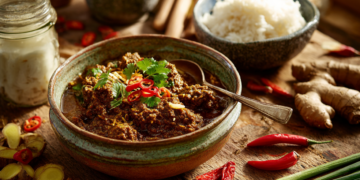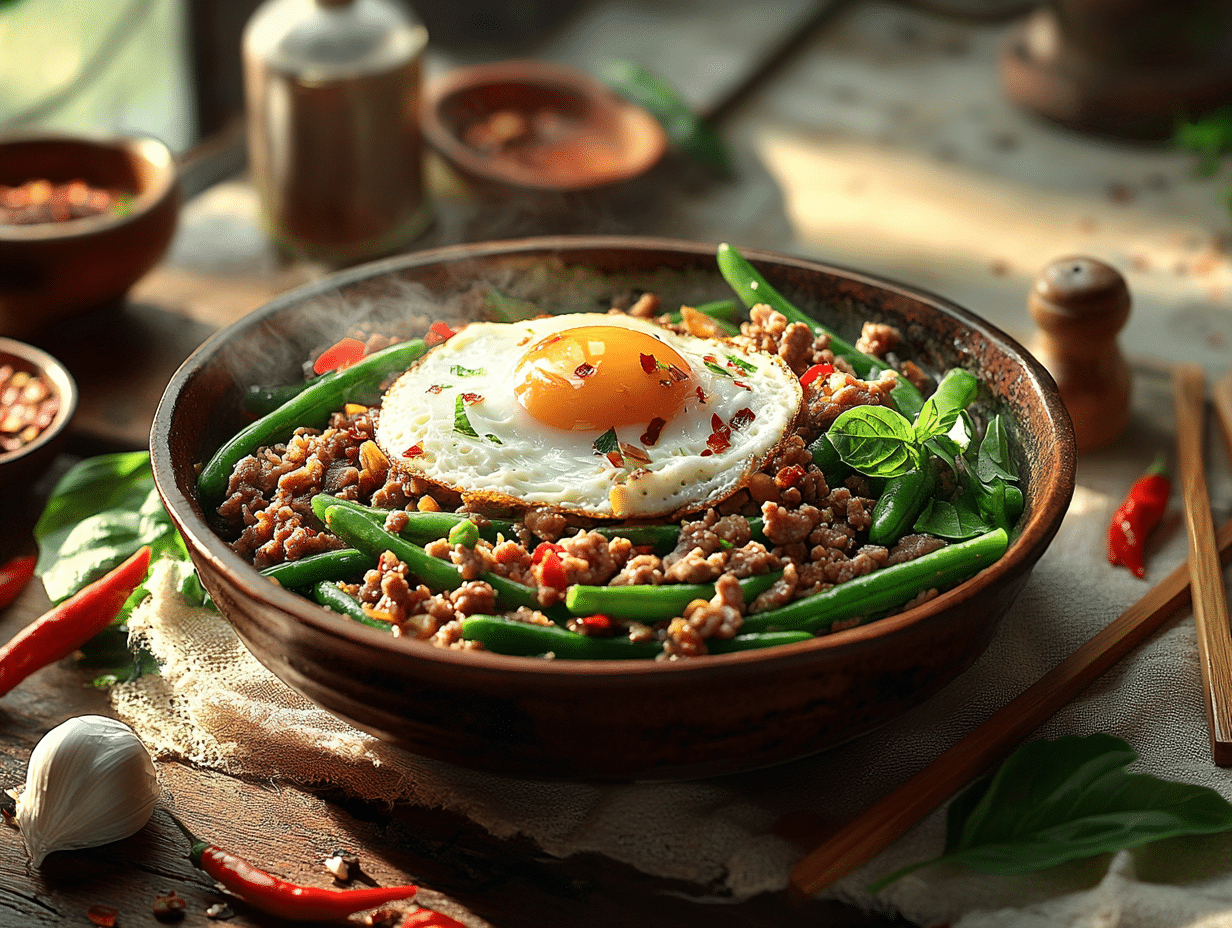
Pad kra pao is a Thai stir-fry built around holy basil, garlic, chilies, and a fast-cooked ground meat — here, lamb. The honest reason to make it: it comes together in about 15 minutes of actual cooking, uses one pan, and the lamb’s richness holds up well against the fish sauce and chilies in a way that chicken or pork sometimes doesn’t. It’s a solid weeknight dinner that doesn’t require much experience to get right.
Substitutions that actually work
- Thai basil: This is the one ingredient worth tracking down at an Asian grocery store. Regular Italian basil wilts faster and tastes sweeter — it works in a pinch but the dish loses its peppery edge. Skip the garnish of extra basil on top — not worth the extra prep.
- Fish sauce: If you don’t have it, an extra teaspoon of soy sauce keeps the dish savory, though you’ll lose a little depth. Don’t substitute Worcestershire — it pulls the flavor in the wrong direction.
- Oyster sauce: Hoisin sauce is a workable swap at a 1:1 ratio. It’s slightly sweeter, so reduce the brown sugar by half a teaspoon.
- Bird’s eye chilies: Fresh serrano or dried red chili flakes both work. Start with less than you think you need — you can always add heat, not remove it.
- Green beans: Broccolini or snap peas cut to similar size hold up fine. Avoid zucchini — it releases too much water and makes the stir-fry soggy.
The technique that matters
The single thing that separates a good pad kra pao from a mediocre one is heat. You need the pan genuinely hot before the lamb goes in — not warm, not medium, but high heat where a drop of water evaporates on contact. Ground lamb releases moisture as it cooks, and if the pan isn’t hot enough, that liquid pools and the meat steams instead of browning. Steamed lamb mince is grey and soft; browned lamb mince has flavor. Break the meat into small pieces as it hits the pan and leave each piece alone for 30–40 seconds before stirring — that contact time is what builds the brown crust. Once the lamb is cooked through to 160°F (71°C) with no pink remaining, the sauces go in fast and the basil goes in last, just long enough to wilt.
What can go wrong
- The sauce burns before the lamb is cooked: This happens when the sauces are added too early. Make sure the lamb is fully browned and cooked through first — the sugars in the oyster sauce and brown sugar scorch quickly on high heat if there’s no moisture left from the meat.
- The green beans are raw in the middle: One-inch pieces need a full 2 minutes on high heat. If your beans are thicker, add them 30 seconds before the lamb is fully cooked so they get more time without overcooking the meat.
- The dish tastes flat: Usually means the fish sauce was skipped or under-measured. Taste after adding the sauces — a small extra splash of fish sauce often fixes it immediately.
- The basil turns black and slimy: It was added too early or cooked too long. Add it only after the heat is off or in the last 20–30 seconds, and stir just until the leaves wilt.
- Greasy finish: Ground lamb is naturally fatty. If there’s visible pooled fat in the pan after browning, tip the pan and spoon out the excess before adding the green beans. A tablespoon or two of fat is fine; more than that makes the finished dish heavy.
Storage and reheating
Store leftovers in an airtight container in the fridge for up to 3 days. The basil will darken and soften overnight — it’s still fine to eat, just less vibrant. To reheat, use a skillet over medium-high heat with a splash of water to loosen the sauce; it takes about 3 minutes and keeps the texture better than a microwave, which tends to make the lamb rubbery. For freezing, the stir-fry itself freezes well for up to 2 months — freeze without the rice and reheat from frozen in a covered pan over medium heat, adding a tablespoon of water to prevent sticking. The fried egg should always be made fresh.
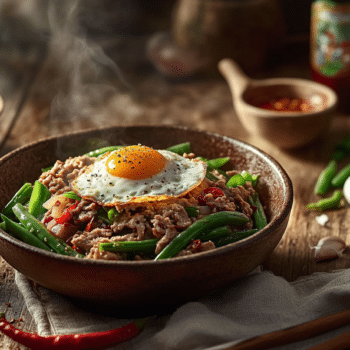
Lamb Mince Pad Kra Pao (Thai Basil Stir Fry)

Ingredients
Main Ingredients
 500 g ground lamb (minced lamb) - Preferably organic for richer flavor
 3 tbsp vegetable oil - Sunflower or canola oil recommended
 5 cloves garlic - Finely chopped
- 3 units bird's eye chilies - Sliced, adjust to taste
 200 g green beans - Cut into 1-inch pieces
 2 tbsp soy sauce - Use light soy sauce for authenticity
 1 tbsp oyster sauce
 1 tsp fish sauce
 1 tbsp sugar - Brown sugar for a deeper sweetness
 1 bunch Thai Basil - Fresh, remove woody stems
To Serve
 4 cups jasmine rice - Cooked and steamed
 4 large fried egg - 1 per serving, optional, but recommended for tradition
Instructions
- In a large wok or frying pan, heat the vegetable oil over medium-high heat until it shimmers.
- Add the garlic and bird's eye chilies, stirring briskly until the garlic is golden and aromatic, about 30 seconds.
- Increase the heat to high. Add the lamb mince, breaking it apart with a spatula. Sauté until the lamb is browned and cooked through, about 4-5 minutes.
- Stir in the green beans and cook for an additional 2 minutes, allowing them to remain crisp.
- Pour in the soy sauce, oyster sauce, fish sauce, and sugar. Mix well to evenly coat the lamb.
- Add the Thai basil leaves, stirring until just wilted and the flavors are melded, about 30 seconds.
- Serve hot over a bed of jasmine rice, optionally topped with a fried egg for an authentic touch.
Notes
Nutrition
FAQ
How do I know when the ground lamb is fully cooked?
Ground lamb is done when it reaches an internal temperature of 160°F (71°C) and there is no pink remaining anywhere in the pan. In practice, this takes 4–5 minutes on high heat — break the meat into small crumbles as it cooks so there are no large clumps that stay raw in the center.
Can I use dried basil instead of fresh Thai basil?
No — dried basil won’t work here. The whole point of adding fresh basil at the end is the volatile aroma that releases when the leaves hit the hot pan; dried basil has lost those compounds and will just add a dusty herbal note. Fresh Italian basil is a better fallback than dried anything.
My stir-fry looks soupy instead of saucy — what happened?
The most common cause is that the lamb wasn’t browned properly before the sauces were added, so it released extra moisture into the pan. If this happens mid-cook, turn the heat up as high as it goes and keep stirring — the excess liquid will evaporate in 1–2 minutes. Next time, make sure the lamb is fully browned and the pan looks dry before adding the green beans and sauces.
What to cook next
- Quick Lamb Coconut Rendang
- Fragrant Lamb Coconut Stew
- Lamb Satay Fusion Skewers
- Authentic Szechuan Dan Dan