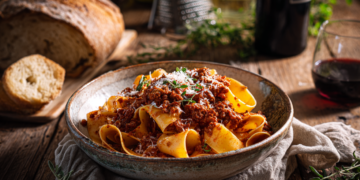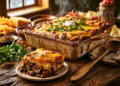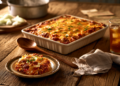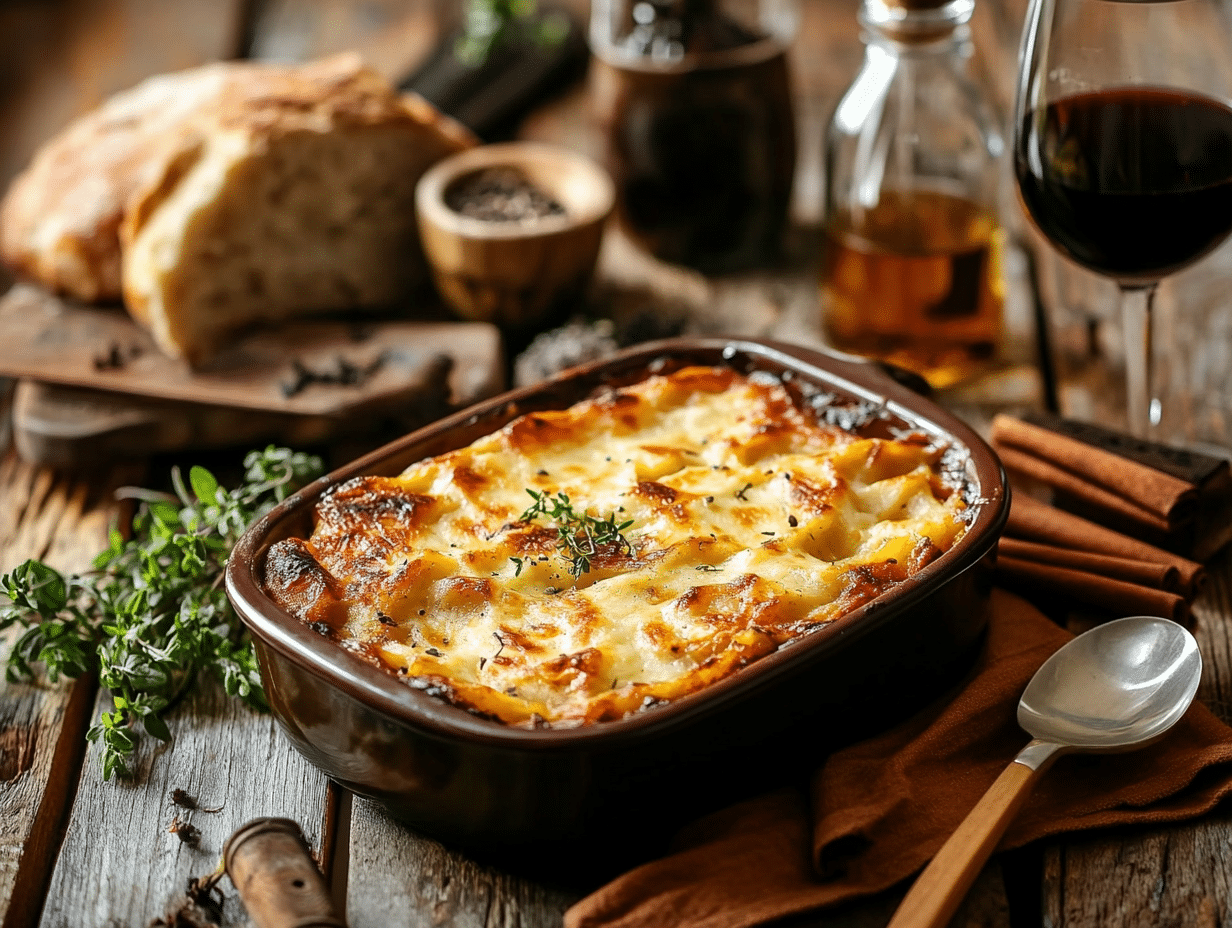
Pasticcio is a baked Greek pasta casserole — layers of short pasta, spiced lamb and tomato sauce, and a Parmesan béchamel on top. It takes about 85 minutes start to finish, feeds four generously, and each serving delivers over 1,000 calories, so it genuinely works as a standalone dinner with nothing more than a salad alongside. If you want a make-ahead dish that holds well and reheats cleanly, this is a solid choice.
Before you start
Two things determine whether this dish holds together or turns into a soggy mess. First, cook the lamb sauce until it is genuinely thick — not just reduced, but thick enough that a spoon dragged through it leaves a clean line for a couple of seconds. Watery meat sauce will soak into the pasta during baking and collapse the layers. Twenty minutes of simmering is the minimum; go longer if the sauce still looks loose. Second, cook your béchamel until it coats the back of a spoon heavily. A thin béchamel will run straight through the pasta layer instead of sitting on top and forming that firm, golden crust. Whisk constantly once the milk goes in, keep the heat at medium-low, and give it a full five minutes after it first thickens. The lamb needs to reach an internal temperature of 160°F (71°C) during browning — check this before you add the tomato, not after.
Smart swaps
- Ground lamb substitute: Ground beef works well and is cheaper. Ground turkey works too but produces a leaner, milder sauce — add an extra half-teaspoon of cinnamon to compensate. Ground turkey must reach 165°F (74°C) internal temperature.
- Tomato purée: Crushed San Marzano tomatoes blended smooth are a direct swap. Passata works equally well. Avoid tomato paste on its own — it needs diluting and will make the sauce too intense.
- Parmesan: Pecorino Romano is a sharper, saltier substitute. Grana Padano is milder and melts more smoothly into the béchamel. Skip the garnish of extra cheese on the table — not worth the extra dish.
- Pasta shape: Rigatoni or penne are ideal. Avoid anything too thin like spaghetti or too large like lasagne sheets — you need the pasta to hold its shape and trap sauce inside the tubes.
Storage and reheating
Cool the baked pasticcio completely before covering — trapping steam makes the béchamel layer go rubbery. Once cool, cover tightly and refrigerate for up to four days. It actually slices more cleanly on day two once everything has set. To reheat, cover the dish with foil and warm at 325°F (160°C) for 20–25 minutes; remove the foil for the last five minutes to re-crisp the top. Individual portions reheat well in a microwave at medium power for two to three minutes, though the béchamel topping softens. For freezing, portion into airtight containers once fully cooled — it freezes well for up to three months. Thaw overnight in the fridge before reheating; do not reheat from frozen as the pasta turns mushy.
Common problems and fixes
- Béchamel has lumps: This happens when the milk goes in too fast or too cold. Fix it by taking the pan off the heat and whisking hard — most lumps will smooth out. If not, pass it through a fine sieve before pouring it over the pasta.
- Top browns too fast before the centre is hot: Lay a sheet of foil loosely over the dish after the first 20 minutes of baking, then remove it for the final 10 minutes to finish browning.
- Layers slide apart when serving: The dish needs at least 10–15 minutes of resting time after it comes out of the oven. Cutting into it straight from the oven means the layers have not set and will collapse on the plate.
- Sauce tastes flat despite the spices: Cinnamon and oregano need a minute of direct heat to bloom. If you stirred them straight into cold tomato purée, the flavour stays muted. Next time, add them to the pan for 30 seconds before the purée goes in. For this batch, a small pinch of extra oregano stirred in at the end and a squeeze of lemon juice will sharpen things up.
- Pasta is mushy after baking: The pasta was overcooked before it went into the oven. It continues cooking as the casserole bakes, so pull it out of the boiling water two minutes before the packet says it is done — it should still have a firm bite.
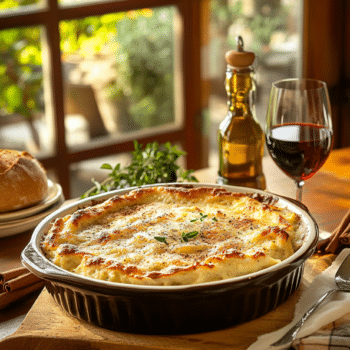
Lamb Mince and Tomato Pasticcio

Ingredients
 2 tablespoons olive oil - Greek extra virgin recommended
 1 pound ground lamb (minced lamb) - Organic preferred
 1 medium onion - finely chopped
 3 cloves garlic - minced
- 2 cups tomato puree - Preferably homemade or San Marzano
 1 teaspoon cinnamon
 1 teaspoon dried oregano - Greek oregano recommended
 1 piece bay leaf
 1 pinch salt - to taste
 1 pinch ground black pepper - to taste
 3 tablespoons flour - all-purpose
 2 cups milk - whole milk
 1 cup Parmesan cheese - grated
 - 1 pack short pasta - such as penne or rigatoni, about 300 grams
Instructions
- Heat olive oil in a large skillet over medium heat. Add the lamb mince and sauté until browned, breaking it up with a wooden spoon for about 8 minutes.
- Add the chopped onion and garlic, and cook until the onion becomes translucent, about 5 minutes.
- Stir in the tomato puree, cinnamon, oregano, and bay leaf. Season with salt and pepper. Simmer over low heat until the sauce thickens, about 20 minutes. Remove the bay leaf once cooked.
- While the sauce is simmering, prepare the béchamel. In a separate saucepan, melt the butter. Stir in the flour and cook for 1-2 minutes until golden.
- Gradually add milk while whisking until smooth and thickened. Stir in half of the Parmesan cheese. Season with salt and pepper, then set aside.
- Preheat your oven to 180°C (350°F).
- Cook the pasta in a large pot of salted boiling water until al dente, following the package instructions. Drain and set aside.
- Combine the cooked pasta with the lamb sauce and transfer to a baking dish. Pour the béchamel sauce over the top, spreading it evenly.
- Sprinkle the remaining Parmesan cheese on top. Bake in the preheated oven for 25 minutes, or until the top is bubbly and golden brown.
- Let it cool slightly before serving.
Notes
Nutrition
Common questions
Can I assemble this the night before and bake it the next day?
Yes — assemble the full dish, cover it tightly, and refrigerate overnight. Take it out of the fridge 30 minutes before baking so it is not stone cold in the centre, then add five to ten minutes to the baking time.
How do I know the pasticcio is fully cooked through?
The top should be deep golden and the edges should be bubbling visibly. An instant-read thermometer inserted into the centre of the pasta layer should read at least 165°F (74°C) — this confirms the whole dish is hot through, not just the surface.
Is one serving actually enough for a full meal, or do I need sides?
One serving comes in at around 1,065 calories with a solid amount of protein from the lamb and Parmesan, so it holds up as a complete dinner on its own. A simple green salad or some sliced cucumber is all you need — anything heavier and the meal becomes too much.
Can I double the recipe for a larger crowd?
Yes, but use two separate baking dishes rather than one very deep one. A single deep dish means the centre takes much longer to heat through, and the béchamel on top will over-brown before the middle is done.
If you liked this one
- Mediterranean Lamb Feta Pie
- Spicy Calabrian Lamb Ragù
- Beef Ricotta Lasagna Rolls
- Savory Stuffed Onion Dolma