The Timeless Appeal of Shepherd’s Pie: A Culinary Journey Through Britain’s Most Beloved Comfort Food
In the pantheon of British comfort foods, few dishes evoke the same sense of warmth and nostalgia as shepherd’s pie. This humble yet satisfying creation has graced dinner tables across the British Isles for generations, evolving from a practical way to use leftover roast meat into a beloved culinary icon that represents the very essence of home cooking.
The origins of shepherd’s pie can be traced back to the late 18th century when the dish first appeared in Scottish and Northern English kitchens. Born from the practical necessity of transforming Sunday’s leftover roast lamb into Monday’s hearty meal, this resourceful creation exemplified the ingenuity of home cooks who understood that great flavor could emerge from simple ingredients. The name itself tells a story – “shepherd’s” pie specifically refers to the use of lamb or mutton, while its close cousin “cottage pie” traditionally features beef, though the terms are often used interchangeably in modern kitchens.
What makes this particular version special is the thoughtful inclusion of leeks, those elegant members of the allium family that bring a subtle sweetness and depth to the filling. Leeks have long held a place of honor in British cooking, particularly in Wales where they serve as a national emblem. Their mild, onion-like flavor mellows beautifully when cooked slowly, creating layers of complexity that elevate the entire dish beyond its humble origins.
The journey of creating the perfect shepherd’s pie begins with understanding the importance of each component. The foundation lies in the quality of the lamb – preferably grass-fed, which offers a more robust flavor profile and better texture than its grain-fed counterparts. When minced and properly browned, lamb develops a rich, savory character that forms the backbone of the filling. The key is allowing the meat to sear properly, creating those coveted browned bits that add immeasurable depth to the final dish.
The addition of leeks transforms what might otherwise be a straightforward meat filling into something more nuanced. Unlike their more assertive onion cousins, leeks bring a gentle sweetness that complements rather than competes with the lamb. The process of cleaning and preparing leeks requires patience – their layered structure tends to trap dirt and grit – but the reward is worth the effort. When sliced into delicate rounds and sautéed until tender, they almost melt into the filling, creating pockets of sweet, aromatic flavor throughout.
The supporting cast of vegetables plays an equally important role. Carrots, diced small to ensure even cooking, add natural sweetness and a pleasant textural contrast. Garlic provides aromatic depth, while fresh thyme – that most British of herbs – lends an earthy, slightly minty note that ties all the flavors together. The addition of tomato paste might seem unconventional to purists, but it serves a crucial function, adding umami depth and helping to thicken the sauce while providing a subtle acidic balance.
The debate over whether to include wine in shepherd’s pie filling has divided home cooks for generations. Traditionalists argue that it strays too far from the dish’s working-class roots, while modernists appreciate the complexity it adds. In this recipe, the red wine is optional but recommended – when reduced, it adds a luxurious depth that elevates the filling from simple to sophisticated. The alcohol cooks off, leaving behind only the concentrated fruit flavors that complement the richness of the lamb beautifully.
Perhaps no element of shepherd’s pie is more crucial than the mashed potato topping. This isn’t merely a lid for the filling below; it’s an integral component that must be prepared with care and attention. The choice of potato variety matters immensely – russets, with their high starch content, create the fluffiest, most cloud-like mash. The technique is equally important: returning drained potatoes to the hot pan allows excess moisture to evaporate, preventing a watery topping that would compromise the dish’s structural integrity.
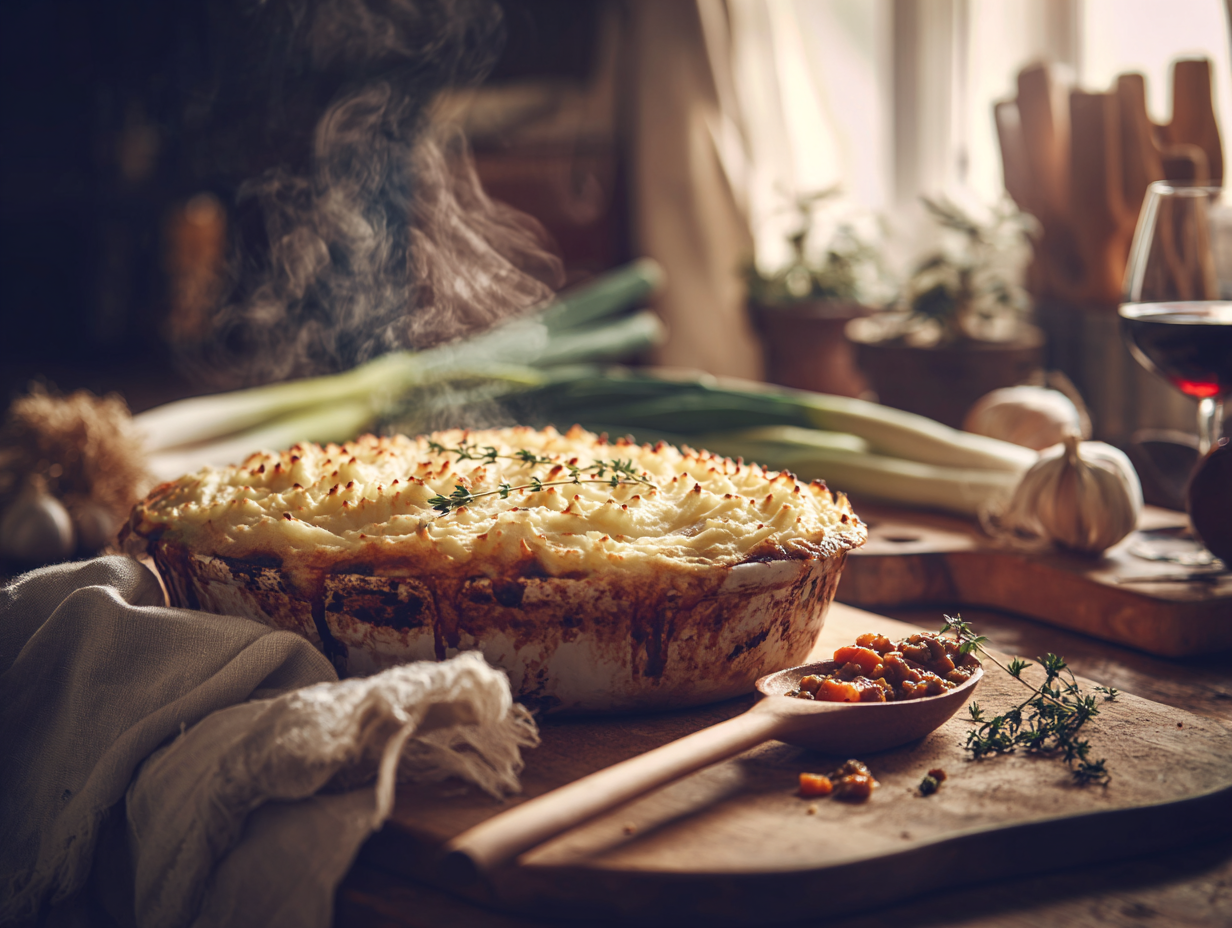
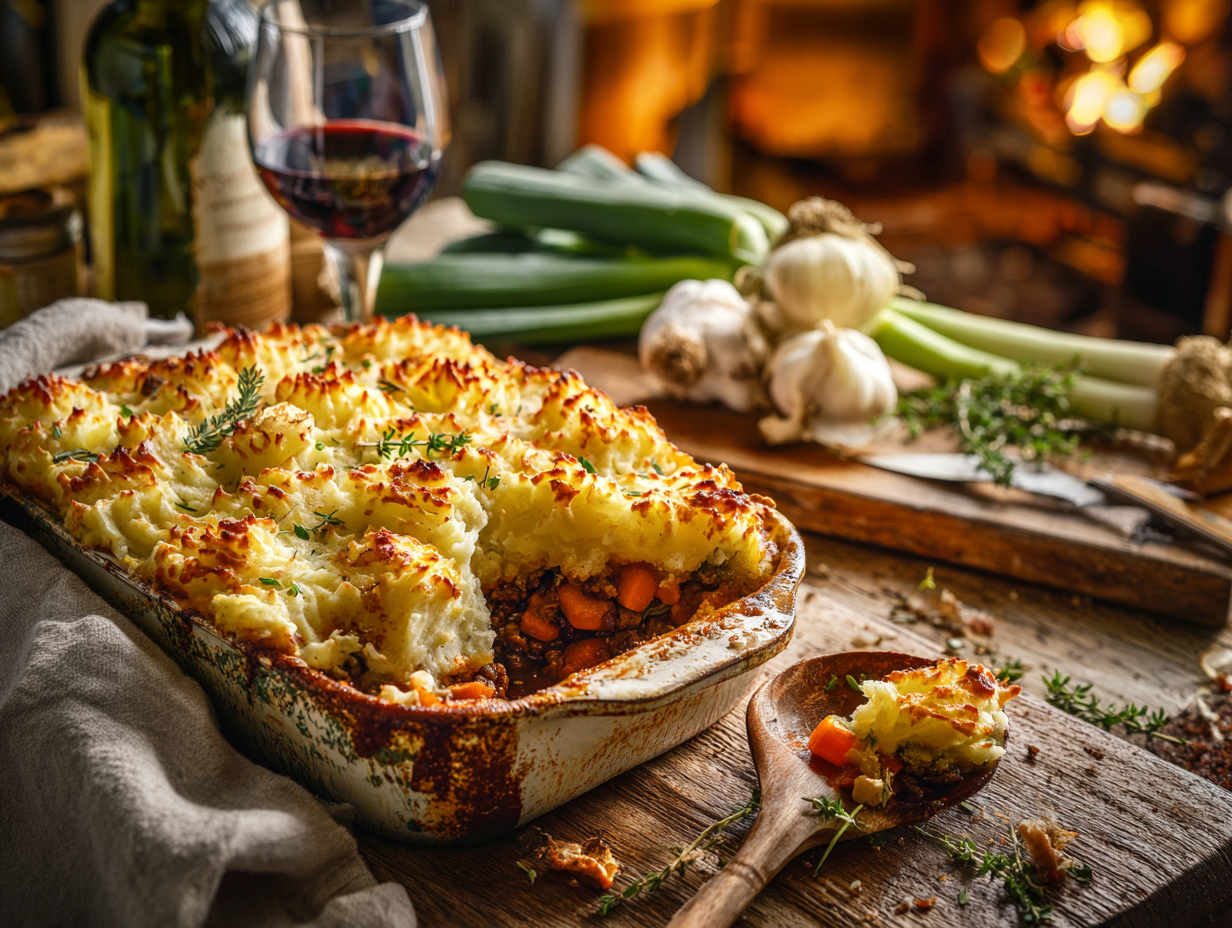
The transformation of simple potatoes into the perfect topping requires the right balance of dairy. Warm milk and softened butter are essential – cold dairy can shock the potatoes, resulting in a gluey texture. The goal is a mash that’s substantial enough to hold its shape when piped or spread, yet creamy enough to provide textural contrast to the meat filling below. Creating ridges or peaks on the surface isn’t just aesthetic; these raised areas crisp beautifully in the oven, providing textural variety in every bite.
The final assembly and baking process is where all the components come together in harmonious union. The filling must be properly cooled before topping – adding mashed potatoes to bubbling hot filling can cause them to sink and create an uneven surface. The baking temperature and time have been calibrated to achieve the perfect balance: hot enough to create a golden crust while ensuring the filling below is heated through, but not so hot that the top burns before the interior reaches the proper temperature.
This particular interpretation of shepherd’s pie reflects both tradition and innovation. While respecting the dish’s working-class origins and its role as comfort food par excellence, it also acknowledges that modern palates appreciate nuanced flavors and quality ingredients. The use of fresh herbs rather than dried, the option of wine for depth, and the emphasis on proper technique all speak to a more refined approach that doesn’t sacrifice the dish’s essential character.
In today’s culinary landscape, where fusion cuisine and molecular gastronomy often dominate food conversations, there’s something profoundly satisfying about mastering a classic dish like shepherd’s pie. It represents a connection to culinary history, a link to generations of home cooks who understood that the best meals often come from simple ingredients treated with respect and care. Whether served at a casual family dinner or presented at a dinner party as an example of elevated comfort food, this shepherd’s pie with minced lamb and leeks stands as a testament to the enduring appeal of well-executed traditional cooking.
Shepherd’s Pie with Minced Lamb and Leeks

Equipment
Ingredients
For the Filling:
 2 tablespoons olive oil - extra virgin for best flavor
 1 pound ground lamb (minced lamb) - preferably grass-fed
- 2 cups leeks - cleaned thoroughly and thinly sliced (white and light green parts only)
 1 cup carrots - small dice
 3 cloves garlic - minced
 1 tablespoon tomato paste
 1 teaspoon Worcestershire sauce
 ½ cup red wine - optional, for depth of flavor
 1 cup beef stock - low sodium preferred ; or lamb stock
 1 teaspoon thyme - fresh thyme leave ; or 1/2 tsp dried thyme
 ½ teaspoon kosher salt - to taste
 ¼ teaspoon ground black pepper - freshly ground
For the Mashed Potato Topping:
 2 ½ pounds russet potatoes - peeled and quartered
- ½ cup whole milk - warm
 ¼ cup unsalted butter - softened
- ½ teaspoon kosher salt
Instructions
- Preheat your oven to 375°F (190°C).
- In a large skillet over medium heat, warm the olive oil. Add the minced lamb and cook for 6–8 minutes, breaking it up with a wooden spoon until browned and cooked through. Drain excess fat if needed.
- Add the leeks and carrots to the lamb. Sauté for 5–6 minutes until softened and fragrant. Stir in garlic and tomato paste, cooking for 1 minute to deepen flavor.
- Deglaze the pan with red wine if using, letting it reduce for 2–3 minutes. Stir in Worcestershire sauce, stock, thyme, salt, and pepper. Simmer for 10–12 minutes until the mixture thickens slightly. Remove from heat and set aside.
- While the filling cooks, place the peeled and quartered potatoes in a large saucepan. Cover with cold water and add a generous pinch of salt. Bring to a boil and simmer for 15–20 minutes until fork-tender.
- Drain the potatoes in a colander and return them to the hot saucepan. Allow steam to escape for a minute. Add warm milk, butter, and salt. Mash until smooth and creamy. Adjust seasoning as needed.
- Transfer the lamb filling to a 9×13-inch oven-safe dish and spread evenly. Spoon mashed potatoes over the top, smoothing with an offset spatula or fork to create ridges that will crisp during baking.
- Bake in the preheated oven for 20–25 minutes until the surface is golden-brown and the edges are bubbling. Optionally broil on high for 2–3 minutes for extra crispness. Let rest for 5–10 minutes before serving.
Notes
- For a dairy-free topping, use olive oil and unsweetened almond milk instead of butter and milk.
- Substitute ground turkey or beef for lamb if preferred.
- For extra richness, stir in a splash of cream or grated cheddar into the mash.