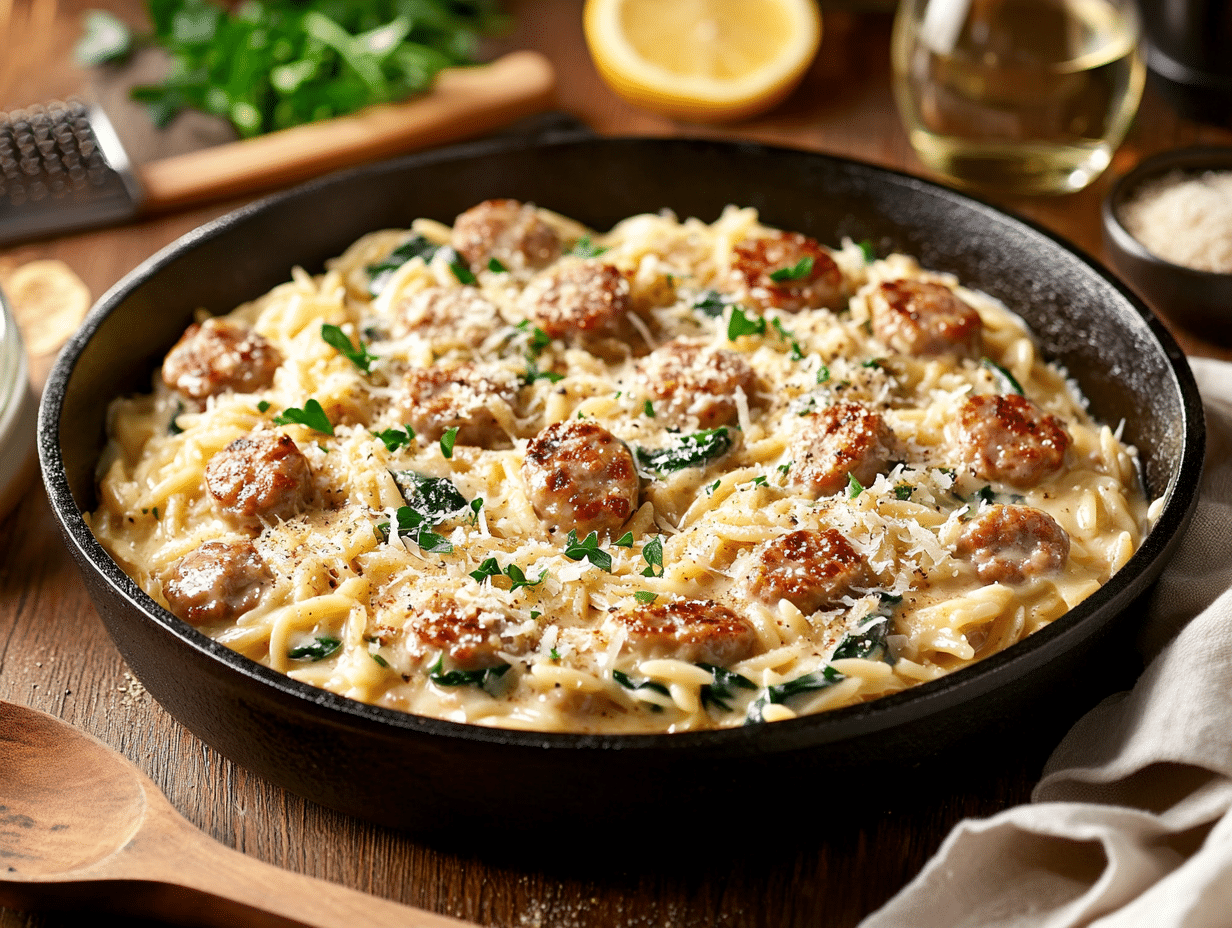
This is a one-skillet chicken sausage and orzo dish that comes together in 45 minutes using a single pan. The orzo cooks directly in chicken broth, absorbing the liquid and thickening the sauce without any extra steps. It reheats well and portions cleanly, which makes it genuinely useful beyond the night you cook it.
The short version of why this works
Two things drive this recipe. First, searing the chicken sausage in the skillet before anything else builds a layer of browned bits on the pan bottom — when you deglaze with broth, those bits dissolve into the liquid and flavor everything that follows. Second, cooking the dry orzo directly in that broth means the pasta absorbs the seasoned liquid rather than plain water, and the starch it releases as it cooks naturally thickens the sauce to a creamy consistency before the cream even goes in. Skip either step and the dish is noticeably flatter.
Substitutions that actually work
- Chicken sausage: Any fully cooked chicken or turkey sausage link works. Raw Italian-style chicken sausage also works — just cook it longer at the sear stage and confirm it hits 165°F (74°C) before removing it from the pan. Never serve ground poultry undercooked.
- Heavy cream: Half-and-half is a reasonable swap and cuts richness without breaking the sauce. Whole milk works in a pinch but the sauce will be thinner.
- Parmesan: Pecorino Romano is a direct swap and slightly saltier, so hold back on added salt until you taste. Pre-grated shelf-stable parmesan melts poorly and leaves a grainy texture — use freshly grated.
- Baby spinach: Chopped kale or Swiss chard works but needs 2–3 extra minutes in the pan to soften properly.
- Orzo: No good substitute that behaves the same way. Other small pasta shapes like ditalini can work but will need slightly more broth and a longer cook time.
Troubleshooting
- Orzo stuck to the pan: This happens if the heat is too high after you cover it. Keep it at a genuine low simmer — if you can hear aggressive bubbling through the lid, turn it down. Stir once or twice during the covered cook.
- Sauce too thick when reheating: Orzo keeps absorbing liquid as it sits. Add a splash of chicken broth or water, one tablespoon at a time, and stir over low heat until it loosens. Do not add more cream — it can split if overheated.
- Sauce broken or greasy: This usually means the heat was too high when you stirred in the cream and parmesan. Pull the pan off the heat entirely, add the cream off heat, then return to the lowest setting and stir the parmesan in gradually.
- Orzo still chalky after 12 minutes: Broth absorbed too fast, likely from too-high heat. Add a quarter cup of hot water or broth, replace the lid, and cook another 3–4 minutes on low.
- Dish tastes flat: Low-sodium broth is correct here, but flat results usually mean under-seasoning at the end. Taste after adding parmesan — parmesan adds salt — then adjust with sea salt and an extra pinch of black pepper.
Make-ahead notes
This dish stores well and is worth making in a full batch. Cooled leftovers keep in an airtight container in the fridge for up to 4 days — the orzo will thicken considerably overnight, which is normal. Reheat individual portions in a small saucepan or microwave with a tablespoon of chicken broth or water stirred in; cover loosely and heat until it reaches 165°F (74°C) throughout. For freezing, skip the spinach before freezing and stir fresh spinach in during reheating — frozen spinach turns waterlogged and muddy in this dish. Freeze in individual portions for up to 2 months. Skip the parsley garnish on stored portions — not worth the extra prep when you’re pulling this from the fridge on a weeknight.
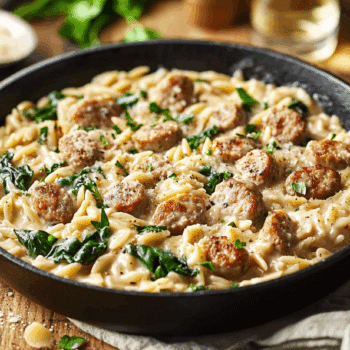
Creamy Chicken Sausage Orzo Skillet

Equipment
Ingredients
 1 tbsp olive oil - extra virgin preferred
- 12 oz chicken sausage - sliced into 1/4-inch coins, use a smoked or roasted garlic-flavored sausage for depth
 1 cup yellow onion - finely diced
 3 cloves garlic - minced or finely grated
- 1 ¼ cups orzo - uncooked, use bronze-cut if available for better sauce absorption
 2 ½ cups chicken stock (chicken broth or chicken bouillon) - low-sodium, preferably homemade or high-quality
 ½ cup heavy cream - or substitute with half-and-half for a lighter version
 ½ teaspoon sea salt - adjust to taste
 ½ teaspoon ground black pepper - freshly ground, adjust more or less to preference
- ¼ teaspoon crushed red pepper flakes - optional, for mild heat
 ½ cup parmesan cheese - freshly grated, plus extra for garnish
 2 cups baby spinach - lightly packed; roughly chopped
 1 tbsp parsley - fresh, chopped, for garnish
Instructions
- Heat the olive oil in a large skillet over medium heat (about 350°F / 175°C). Once shimmering, add the sliced chicken sausage and sear for 3-4 minutes until golden and lightly crisped. Remove and set aside.
- In the same skillet, add the diced onion. Cook for 3-4 minutes until translucent and aromatic. Stir in the garlic and sauté for another 30 seconds until fragrant but not browned.
- Add the dry orzo to the skillet, stirring gently for 1 minute to toast slightly—this enhances its nutty flavor. Pour in chicken broth, stirring to deglaze the pan and lift any browned bits (fond).
- Allow the mixture to come to a low simmer. Reduce heat to low, cover, and let it cook for 10–12 minutes, stirring occasionally, until the orzo is tender and liquid is mostly absorbed.
- Stir in the cream, salt, black pepper, and red pepper flakes (if using). Fold in the grated parmesan until melted and creamy, then add spinach and reserved sausage. Stir until spinach wilts, about 1-2 minutes.
- Taste and adjust seasoning. Let stand off the heat for 3-5 minutes for the sauce to thicken, then garnish with chopped parsley and more parmesan before serving.
Notes
- Swap out chicken sausage with turkey or plant-based sausage for a dietary variation.
- For added brightness, finish with a squeeze of lemon juice before serving.
- Add mushrooms or sun-dried tomatoes for complexity and an umami kick.
Nutrition
Your questions, answered
Can I use raw chicken sausage instead of pre-cooked?
Yes, but you need to cook it through completely — ground poultry must reach 165°F (74°C) internally. Slice raw sausage into coins and sear them longer, around 5–6 minutes per side on medium heat, checking the internal temperature before removing from the pan.
How do I know when the orzo is done?
Taste it — it should be tender with no chalky center, similar to al dente pasta. Most of the broth will be absorbed and the mixture will look saucy rather than soupy at this point.
Can I make this without cream?
You can leave the cream out entirely and the dish still works, though the sauce will be thinner and less rich. The parmesan and starch from the orzo still give it some body.
My skillet is only 10 inches — will that cause problems?
It will be tight. A 10-inch skillet can work but the orzo may cook unevenly because there is less surface area for the broth to distribute. Use a wide saucepan or Dutch oven instead if that is what you have.
Can I double the recipe for meal prep?
Yes, doubling works well. Use a 5–6 quart Dutch oven or the largest skillet you own, and expect the covered cook time to increase by 3–5 minutes since there is more mass to heat through.
Is this dish spicy with the red pepper flakes included?
At a quarter teaspoon for four servings it is very mild — most people will notice warmth rather than heat. Leave them out entirely if you are cooking for kids or anyone heat-sensitive.
More mince recipes to try
- Chicken Macadamia Sausage Rolls
- Creamy Beef Spinach Pasta
- Savory Pork Noodle Stir-Fry
- Hearty Beef Mushroom Stroganoff