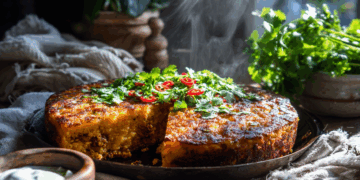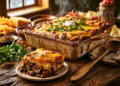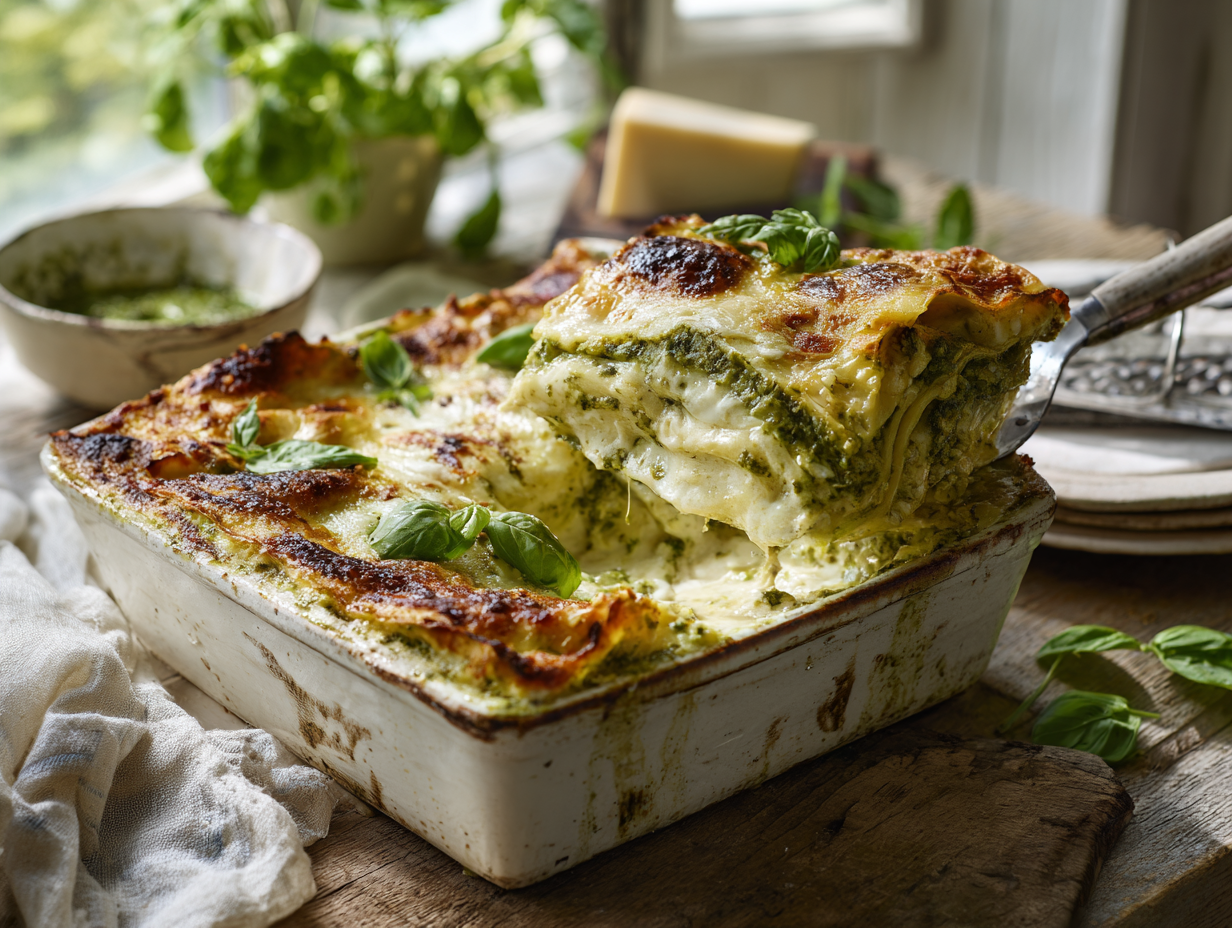
This lasagna layers cooked ground chicken with pesto, ricotta, mozzarella, and pasta sheets into a baked dish that feeds a crowd without a complicated sauce from scratch. It skips the tomato base entirely, so the pesto does the heavy lifting on flavor. If you need one pan to satisfy a table of hungry people, this one holds up.
What makes this version work
Two things matter here. First, the ground chicken needs to be fully cooked and seasoned before it goes into the layers — bland filling means bland lasagna, no matter how much cheese you add. Cook it until it hits 165°F (74°C) internally, then taste and adjust salt before you start assembling. Second, the pesto has to be spread generously and evenly on each pasta layer, not just dotted around. Pesto is thick and doesn’t migrate the way tomato sauce does during baking, so thin or uneven coverage leaves dry pockets. Spread it like you mean it.
Common problems and fixes
- Watery lasagna that falls apart when sliced: Ground chicken releases moisture as it bakes. Drain the cooked meat well before layering, and let the finished lasagna rest uncovered for at least 10 minutes after it comes out of the oven — skip the garnish, not worth the extra dish — so the layers firm up enough to hold a clean slice.
- Dry, rubbery pasta edges: The outer edges of the pasta sheets dry out if they’re not covered by filling or foil. Tuck the noodles slightly inward so they’re fully covered, and keep the foil on for the first two-thirds of baking time.
- Pesto turning dark and bitter on top: Direct oven heat oxidizes basil pesto fast. Make sure the top layer of pesto is covered by cheese, not exposed. The cheese acts as a barrier and keeps the pesto from scorching.
- Filling tastes flat despite using plenty of pesto: Store-bought pesto varies a lot in salt and garlic intensity. Stir a tablespoon of grated parmesan and a small squeeze of lemon juice into the pesto before spreading — it sharpens the flavor without adding more pesto volume.
- Cheese layer sliding off when serving: This usually means the lasagna was cut too soon. Ten minutes of resting is the minimum; fifteen is better if you’re feeding a group and need clean portions.
Leftovers and meal prep
Cooled leftovers keep in an airtight container in the fridge for up to 4 days. For reheating, individual portions do best in a covered microwave-safe dish with a tablespoon of water added to prevent drying — 2 to 3 minutes on medium power works better than a blast on high. The whole pan reheats well in a 350°F (175°C) oven, covered with foil, for about 20 minutes. For freezing, cut into portions first, wrap each tightly in plastic wrap, then foil, and freeze for up to 2 months. Thaw overnight in the fridge before reheating; freezing from fully frozen tends to make the cheese grainy. If you’re meal prepping, the assembled unbaked lasagna can sit covered in the fridge for up to 24 hours before baking — pull it out 20 minutes before it goes in the oven so it bakes evenly.
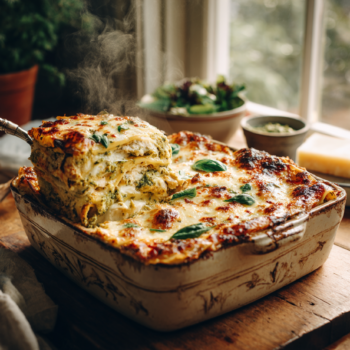
Rich Chicken Pesto Lasagna Recipe

Ingredients
Sauce Ingredients
 ½ kilogram ground chicken (minced chicken)
 25 ml olive oil
 8 small mushrooms - sliced
 200 ml red wine
 500 ml Marinara sauce (tomatoes, garlic, herbs, and onions - pasta sauce in southern hemisphere for Italian seafood dish)
 750 ml ketchup (tomato sauce Australia and UK)
 414 ml passata or crushed tomatoes (tomato puree with seeds removed)
 2 teaspoons basil
 2 teaspoons oregano
Filling Ingredients
 250 ml pesto
 330 ml ricotta cheese
- 150 grams jalapeno Havarti cheese - cut into cubes
Noodle Ingredients
 1 package lasagna sheets
Topping Ingredients
 200 grams mozzarella cheese - grated
 100 grams parmesan cheese - grated
Instructions
- In a deep frying pan, heat the olive oil. Cook the ground chicken in the oil, and separate any big clumps of meat with your wooden spoon. The goal is evenly-sized crumbles of chicken. Add the sliced mushrooms when the chicken has been in the pan for about 5 minutes or so. Continue to fry the meat and mushrooms until they are thoroughly cooked.
- Deglaze the frying pan with the red wine.
- Add the pasta sauce with veggies (if using), the commercial tomato sauce, and the canned tomatoes. Stir well.
- Add the herbs and garlic. Stir well
- Allow simmering over low heat, uncovered, for 2 hours.
- While the sauce is simmering, prepare the cheese filling. Start by spooning the ricotta cheese into a mixing bowl.
- Add the pesto sauce, and mix well.
- Stir in the cubes of Havarti. Set aside.
- When the sauce has reduced (after about 2 hours), taste and correct the seasoning if necessary.
- Preheat the oven to 375 degrees Fahrenheit.
- Start lasagna construction by ladling some sauce into the bottom of a large rectangular Pyrex baking dish. Then, spread it evenly over the bottom of the baking dish, so your noodles don’t stick to the pan.
- Add a layer of the uncooked “oven-ready” lasagna noodles.
- Add a layer of sauce.
- Add a layer of noodles.
- Dollop the ricotta cheese-pesto mixture over the noodles so that it is more or less evenly distributed across the noodle surface
- Add a layer of noodles.
- Add a layer of sauce.
- Add a layer of noodles.
- Add a thick layer of sauce.
- Sprinkle on the grated Mozza and parmesan.
- Cover the dish with tinfoil.
- Bake the pesto lasagna at 375 degrees Fahrenheit for 40 minutes.
- After 40 minutes, remove the tinfoil and bake another ten minutes (this browns the cheese on top).
- Remove the cooked lasagna from oven and allow to rest for 10 to 15 minutes before you slice into it.
Nutrition
Frequently asked questions
Can I use rotisserie chicken instead of cooking ground chicken from scratch?
Yes, shredded rotisserie chicken works well and saves time. Pull the meat into small pieces so it distributes evenly across the layers rather than sitting in thick clumps.
Do the lasagna noodles need to be pre-boiled?
It depends on the noodles you’re using. Standard dried noodles need to be boiled first; oven-ready or no-boil noodles can go in dry, but they absorb liquid from the filling as they cook, so make sure your layers aren’t too dry to begin with.
How much pesto does this actually need — can I use a standard 6-oz jar?
A 6-oz jar is typically enough for a standard 9×13 pan if you spread it efficiently. If your jar is on the smaller side, stretch it by mixing a tablespoon of olive oil into the pesto before spreading.
Can I add vegetables to bulk it out for a larger group?
Spinach and zucchini both work without adding much extra moisture if you handle them right. Squeeze spinach completely dry after wilting, and salt zucchini slices, let them sit 10 minutes, then pat dry before layering.
What internal temperature should the ground chicken reach to be safe?
Ground chicken must reach 165°F (74°C) — use an instant-read thermometer when cooking the filling on the stovetop. Never rely on color alone with ground poultry; it can look cooked before it’s safe.
Can I assemble this the night before and bake it the next day?
Yes, and it actually slices more cleanly when assembled ahead. Cover the unbaked dish tightly with foil and refrigerate for up to 24 hours, then let it sit at room temperature for about 20 minutes before baking so it heats through evenly.
Try these next
- Beef Ricotta Lasagna Rolls
- Chicken Macadamia Sausage Rolls
- Colombian Chicken Cheese Empanadas
- Creamy Beef Spinach Pasta