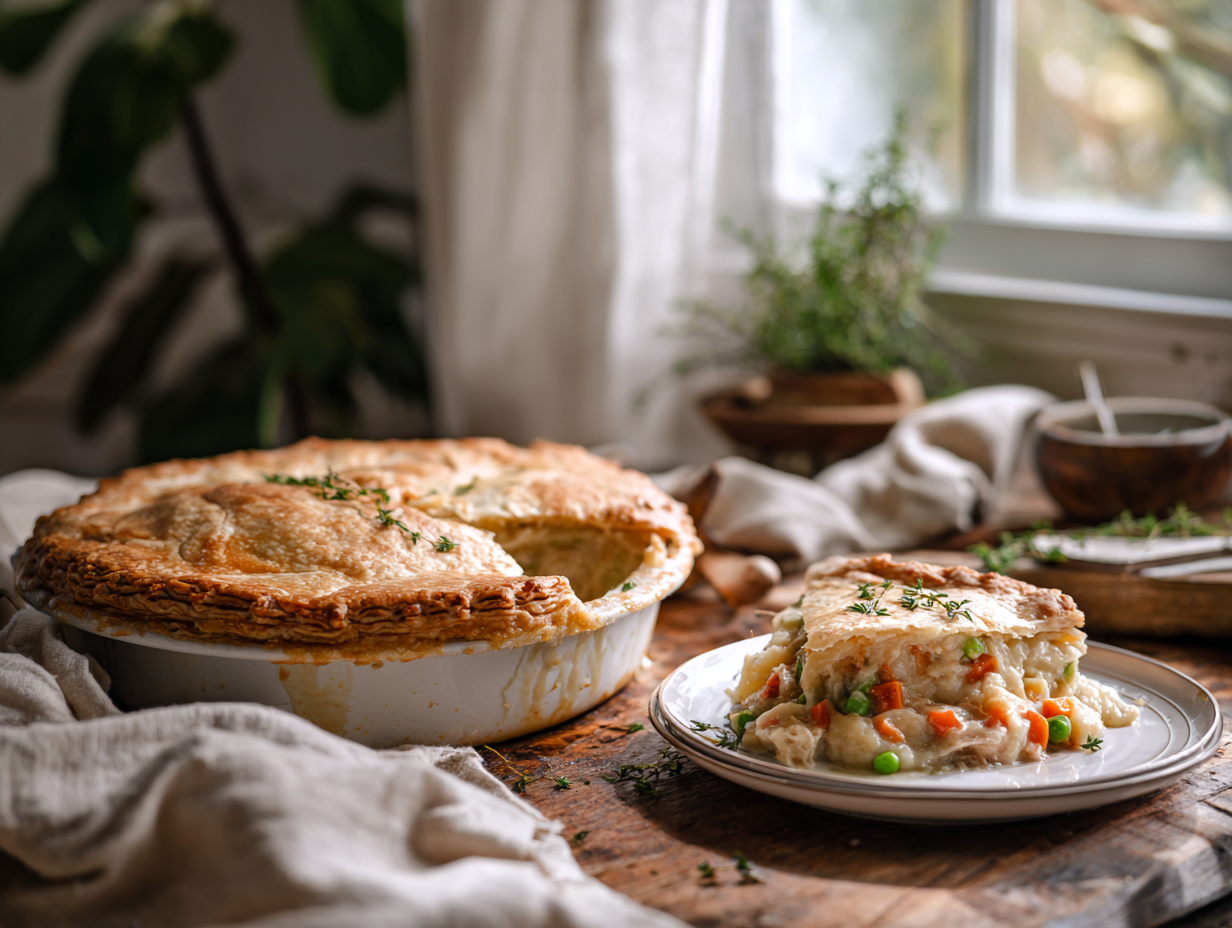
This is a ground chicken pot pie with a gluten-free crust and a creamy vegetable filling thickened without wheat flour. It takes more hands-on time than a frozen pie, but the filling is genuinely better — more seasoned, less gluey — and it reheats well all week.
What makes this version work
Two things matter most here. First, browning the ground chicken properly before adding the vegetables. Ground poultry releases a lot of moisture, and if you crowd the pan or rush it, the meat steams instead of browns — you lose flavor before the pie even comes together. Cook it in a single layer over medium-high heat and leave it alone for a minute before stirring. Second, the gluten-free thickener needs time. Whether you use a GF flour blend, cornstarch, or arrowroot, whisk it into cold liquid before it hits the pan and let the sauce simmer for a full two to three minutes after it thickens. That extra time cooks out the starchy taste that makes GF gravies sometimes feel off.
Shopping notes
- Ground chicken: Use ground chicken thigh if you can find it — it has more fat than breast-only blends and stays moist through baking. Either works, but thigh is more forgiving.
- Gluten-free flour blend: Look for a blend that lists xanthan gum in the ingredients. Blends without it will produce a crumbly crust that falls apart when you try to transfer it to the dish.
- Chicken stock: Check the label. Many store-bought stocks contain wheat starch or maltodextrin from wheat. Look for one labeled certified gluten-free, not just “gluten-free ingredients.”
- Frozen peas: Add them straight from frozen at the end of making the filling. Thawing them first turns them mushy in the oven.
Make-ahead notes
The filling can be made up to two days ahead and kept covered in the fridge — it actually thickens overnight, which makes it easier to fill the pie dish without spillover. The assembled, unbaked pie can be refrigerated for up to 24 hours before baking; add five to eight minutes to the bake time if it goes in cold from the fridge. For freezing, freeze the pie unbaked rather than after baking — wrap it tightly in plastic wrap then foil and freeze for up to two months. Bake from frozen at the recipe temperature, covered with foil for the first 30 minutes, then uncovered until the crust is golden and the filling reads at least 165°F (74°C) on an instant-read thermometer at the center. Leftovers reheat well in a 350°F oven for 15 to 20 minutes; the microwave works but softens the crust.
Common problems and fixes
- Filling is watery after baking: The sauce was not thick enough before the pie went into the oven. It should coat a spoon and hold its shape when you drag a finger across the back of the spoon. If it looks thin, keep simmering and stirring — it will tighten up.
- Crust cracks when you try to roll it: The dough is too cold or too dry. Let it sit at room temperature for five minutes, then press the cracks together with your fingers before re-rolling. GF dough is less elastic than wheat dough — patching it is normal and fine.
- Ground chicken is gray and wet, not browned: The pan was not hot enough or too much chicken went in at once. Work in two batches if needed, and make sure the pan is fully preheated before the meat goes in. Gray chicken is safe to eat once it hits 165°F, but the flavor will be flat — skip the garnish, not worth the extra dish — focus on getting the browning right from the start.
- Crust is pale on the bottom: Glass or ceramic dishes hold heat differently than metal. If the bottom crust looks underdone when you serve it, place the dish directly on a preheated baking sheet for the last 10 minutes of baking next time.
- Filling bubbles over the sides in the oven: The dish was overfilled or the filling was too hot when it went in. Let the filling cool for at least 10 minutes before assembling, and leave about half an inch of space below the rim of the dish.
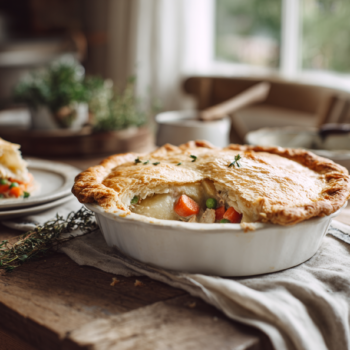
Healthy Chicken Pot Pie Recipe

Ingredients
 1 pound ground chicken (minced chicken) - cooked, or leftover rotisserie chicken
 1 cup carrots - sliced
 ½ cup celery stalks
 ⅓ cup butter
 ⅓ medium white onion - finely chopped
 ⅓ cup all purpose flour (plain flour Australia and UK) - I used better batter gluten-free flour
 1 ¾ cup chicken stock (chicken broth or chicken bouillon) - gluten-free
- ⅔ cup whole milk
 ¼ teaspoon salt
 ¼ teaspoon ground black pepper
- ¼ teaspoon celery salt
- ¼ teaspoon poultry seasoning
 ½ cup peas - frozen
- 1 pack pie crust - gluten-free, double crust
Instructions
- Preheat the oven to 375°F.
- In a medium saucepan, combine the carrots and celery. Add water to cover and cook over medium-high heat for 8 to 10 minutes or till they begin to soften, but not completely soft.
- Drain set aside.
- In a large skillet, over medium-high heat, cook the onions in the butter until soft and translucent. Add in flour, whisking constantly. Continue to constantly whisk the flour in the skillet for about 3 to 4 minutes.
- Whisk in the gluten-free chicken broth and milk. Quickly whisking to ensure no lumps.
- Sprinkle in the salt, pepper, celery salt, and poultry seasoning.
- Stir in the chicken, carrots, celery, and peas.
- Simmer on medium-low heat, occasionally stirring until thick. Once thickened, remove from heat.
- Place the mixture in the bottom of a pie plate that is lined with a gluten-free pie crust.
- Cover with top crust.
- Cut away any extra dough and seal the edges.
- Make several small slits in the top to allow steam to escape.
- Place on a foil-lined cookie sheet, in case any filling seeps out during baking, for easy cleanup.
- Bake in a preheated oven for 35 to 45 minutes or until the pastry is golden brown.
- Watch the edges so they do not burn, and cover them with foil.
- Cool for at least 10 minutes before serving.
- Enjoy!!
Notes
Nutrition
Common questions
Can I use rotisserie chicken instead of ground chicken?
Yes, shredded rotisserie chicken works well as a swap. Pull the meat into small pieces rather than large chunks so it distributes evenly through the filling. If you are cooking for someone with celiac disease, verify the rotisserie chicken is certified gluten-free — many store-bought versions use seasoning blends that contain wheat.
How do I know when the ground chicken is fully cooked?
Ground chicken is safe to eat at an internal temperature of 165°F (74°C) — use an instant-read thermometer to check. Visually, it should show no pink anywhere and the juices should run clear, but color alone is not a reliable test, so the thermometer is the safest call.
My gluten-free crust keeps tearing when I lift it. What am I doing wrong?
GF dough has no gluten to hold it together, so it tears more easily than regular pastry. Roll it between two sheets of parchment paper, then use the bottom sheet to flip it directly over the dish rather than trying to lift it with your hands. Peel the paper back slowly once it is in place.
Can I make this dairy-free as well as gluten-free?
Yes. Swap the butter in the crust for a solid dairy-free alternative like coconut oil or a vegan butter block — not a spread, which has too much water. For the filling, full-fat coconut milk or an unsweetened oat milk (certified GF) can replace regular milk or cream without making the sauce taste sweet.
Can I freeze individual portions instead of the whole pie?
Absolutely, and it is often more practical. Bake the pie fully, let it cool completely, then cut it into portions and freeze them in airtight containers for up to six weeks. Reheat individual portions in a 350°F oven for 20 to 25 minutes, or until the center reads 165°F on a thermometer.
If you liked this one
- Chicken Macadamia Sausage Rolls
- Wild Venison Mushroom Pies
- Cumberland Sausage Mince Pie
- Mediterranean Lamb Feta Pie