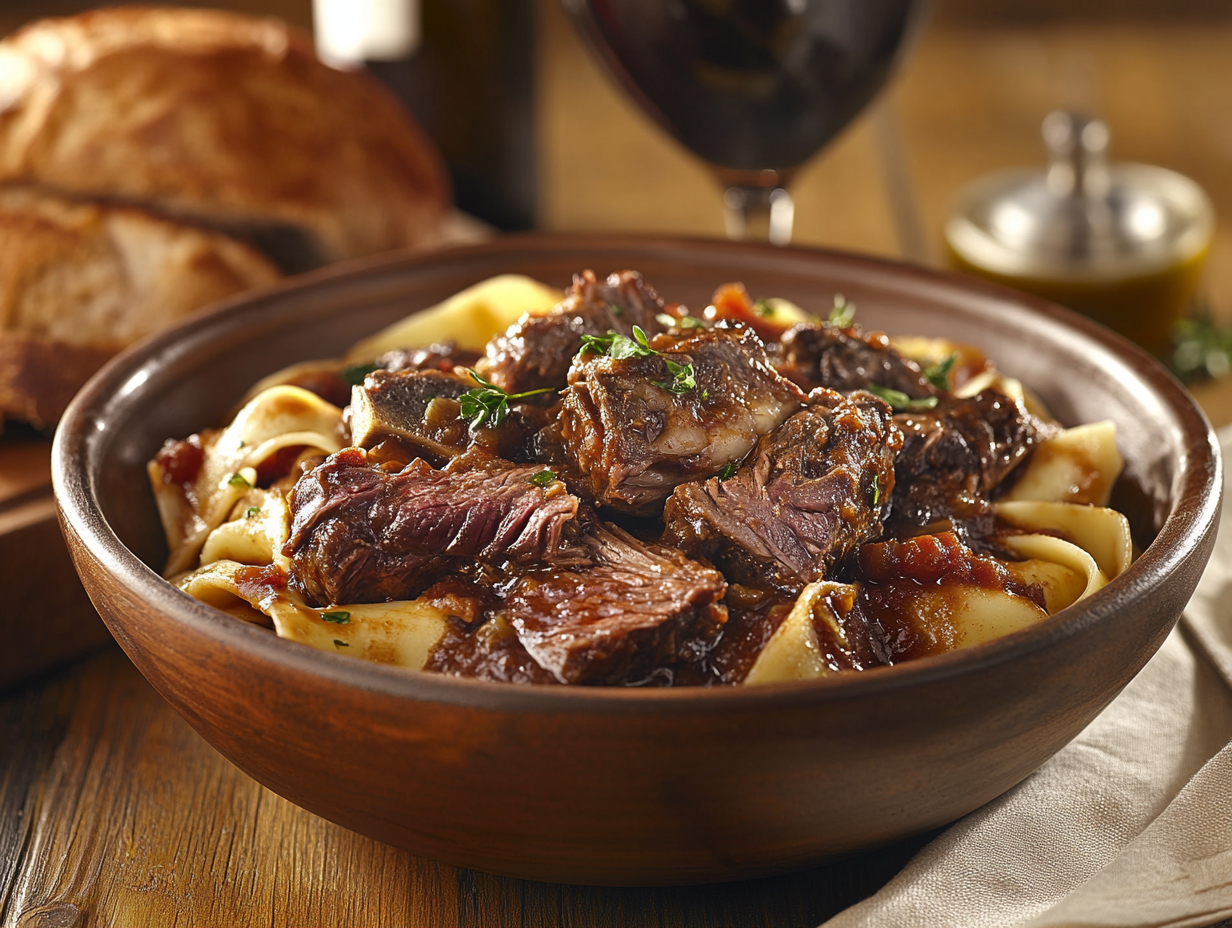
Short rib ragu is a braise-then-shred beef dish served over pappardelle. You sear bone-in short ribs, build a simple vegetable and wine sauce around them, and let the oven or stovetop do four hours of work while the collagen in the ribs breaks down into a thick, protein-rich sauce. One pot, one pan of pasta, and dinner is done — with enough left over for tomorrow.
The short version of why this works
Two things drive this recipe. First, the sear: browning each short rib for about seven minutes per side builds fond on the bottom of the pot, and that fond becomes the flavor base when you deglaze with wine. Skip or rush the sear and the sauce tastes flat. Second, low heat over a long time. Short ribs are loaded with connective tissue that turns tough if you cook them fast, but dissolves into gelatin after three to four hours at a gentle simmer — that gelatin is what makes the sauce coat the pasta instead of sliding off it. Both steps are non-negotiable.
Smart swaps
- Short ribs: Bone-in English-cut short ribs are the standard here. Boneless short ribs work but yield slightly less body in the sauce since you lose the marrow. Beef chuck (cut into large chunks) is a reasonable budget substitute — same long braise, similar result.
- Chianti / red wine: Any dry, full-bodied red works. If you prefer to skip alcohol, replace with an equal volume of beef stock plus one tablespoon of red wine vinegar for acidity.
- Pappardelle: Wide ribbons catch the chunky sauce best. Tagliatelle or thick fettuccine are close seconds. Dried pappardelle is fine — fresh cooks faster, so check it at two minutes.
- Dried vs. fresh herbs: The recipe uses dried thyme and rosemary. If you have fresh, use three times the quantity and add them in the last 30 minutes to keep the flavor bright.
Leftovers and meal prep
Store the ragu and pasta separately if you can — pasta kept in the sauce overnight absorbs liquid and turns soft. The ragu on its own keeps in the fridge for up to four days in a sealed container, or freeze it for up to three months. Reheat on the stovetop over medium-low with a splash of beef stock to loosen it; it thickens considerably when cold. This is a strong meal-prep candidate: make a full batch on the weekend, portion it into 400–450g servings (roughly one generous plate each), and freeze flat in zip-lock bags. Weeknight dinner is then just pasta water and ten minutes of reheating. The shredded beef also works well over polenta or in a toasted roll if you want a second meal that doesn’t feel like a repeat.
Troubleshooting
- Sauce is watery after four hours: Remove the lid and simmer uncovered on medium-low for 15–20 minutes after shredding the meat back in. The extra evaporation tightens it quickly.
- Meat is still tough at the four-hour mark: The ribs need more time, not more heat. Keep the lid on, drop the heat slightly, and check again in 30-minute intervals. Tough short ribs at four hours usually mean the simmer was too aggressive — a hard boil tightens the proteins instead of breaking them down.
- Sauce tastes sharp or overly acidic: The wine or tomatoes can dominate if the braise was too short. A half-teaspoon of sugar stirred in at the end balances it. Also check that the wine reduced by half before you added the stock — uncooked wine tastes raw.
- Pasta clumping after draining: Toss drained pappardelle immediately with a ladle of ragu before plating. Wide pasta sticks fast once it cools. Skip the garnish — not worth the extra dish — and just get it to the table while it’s hot.
- Too much fat on the surface: Short ribs are fatty. Skim visible fat from the surface of the sauce before shredding the meat. If you made it a day ahead, the fat solidifies in the fridge and lifts off in one piece — easiest fix of all.

Short Rib Ragu With Pappardelle

Ingredients
Ingredients
- 2 pounds bone-in beef short ribs - preferably organic


- 1 pound pappardelle pasta - fresh if possible


Instructions
- Heat the olive oil over medium-high heat in a large dutch oven until shimmering. Season the short ribs generously with salt and pepper.
- Sear the short ribs in batches, ensuring each side is browned (about 7 minutes per side), then remove from the pot and set aside.
- Reduce the heat to medium and add the onions, carrots, and celery. Sauté until the onions are translucent and the vegetables are tender, about 10 minutes.
- Stir in the garlic and tomato paste, cooking until the tomato paste darkens slightly, about 3 minutes.
- Deglaze the pan with the red wine, using a wooden spoon to scrape up any browned bits from the bottom. Reduce by half.
- Return the short ribs to the pot, along with any accumulated juices. Add the beef broth, crushed tomatoes, thyme, and rosemary. Bring to a simmer.
- Reduce the heat to low, cover, and let the ragu gently cook for 3-4 hours, or until the meat is falling off the bone.
- Remove the short ribs from the pot and shred the meat, discarding any bones and excess fat. Return meat to the sauce.
- Cook the pappardelle according to package instructions until al dente. Drain and toss with the ragu.
- Serve the pappardelle topped with a generous scoop of ragu, garnished with fresh parsley.
Notes
Nutrition
Frequently asked questions
Can I make this in a slow cooker instead of on the stovetop?
Yes — transfer everything to the slow cooker after deglazing and cook on low for 7–8 hours or high for 4–5 hours. Still do the sear and the vegetable sauté on the stovetop first; skipping those steps in a slow cooker recipe is where most of the flavor gets lost.
How much protein does one serving actually have?
The recipe card puts one serving at 894 kcal for four servings from two pounds of bone-in short ribs. Bone-in ribs lose roughly 30–40% of their raw weight to bone and rendered fat, so the edible beef per serving is substantial — roughly 35–45g of protein per plate when paired with the pasta.
Do I need to use wine, or will it taste fine without it?
The wine adds acidity and depth that beef stock alone doesn’t replicate, but you can skip it. Replace the one cup of Chianti with an extra cup of beef stock plus one tablespoon of red wine vinegar, added after the tomato paste step.
Can I cook this in the oven instead of on the stovetop?
Yes, and it’s actually more consistent. After bringing the pot to a simmer on the stovetop, move it covered to a 325°F (160°C) oven for 3–4 hours. The oven heat surrounds the pot evenly, so you don’t need to check for scorching.
What’s the best way to make this stretch further for a larger group?
Scale up the vegetables and liquid proportionally, but you can increase the pasta to 1.5 pounds without changing the meat quantity — the sauce is rich enough to coat more pasta. Adding a simple green salad and crusty bread on the side turns four servings into six without anyone feeling short-changed on the main.
Can I use boneless short ribs to save time on prep?
Boneless short ribs work and are easier to shred since there’s no bone to discard. The trade-off is a slightly thinner sauce — the marrow and collagen from the bone contribute body over the long braise. If using boneless, reduce the total liquid by about a quarter cup to compensate.
If you liked this one
- Beef Ricotta Lasagna Rolls
- Creamy Beef Spinach Pasta
- Spicy Calabrian Lamb Ragù
- Hearty Beef Mushroom Stroganoff


“I made the Short Rib Ragu with Pappardelle for a family dinner, and everyone was swooning over it. The beef turned out melt-in-your-mouth tender, and the sauce was so rich and flavorful—just like something you’d get at a fancy Italian trattoria. The Chianti really added a nice depth to the dish, and the fresh parsley on top was the perfect finishing touch!”