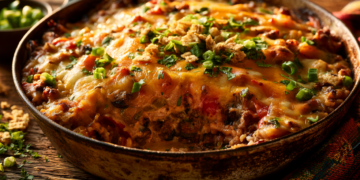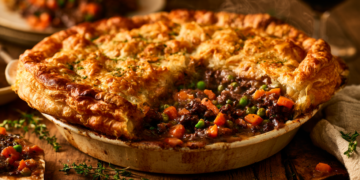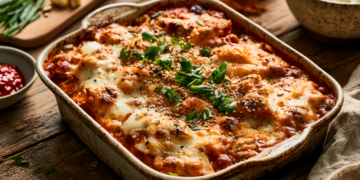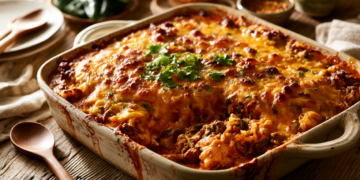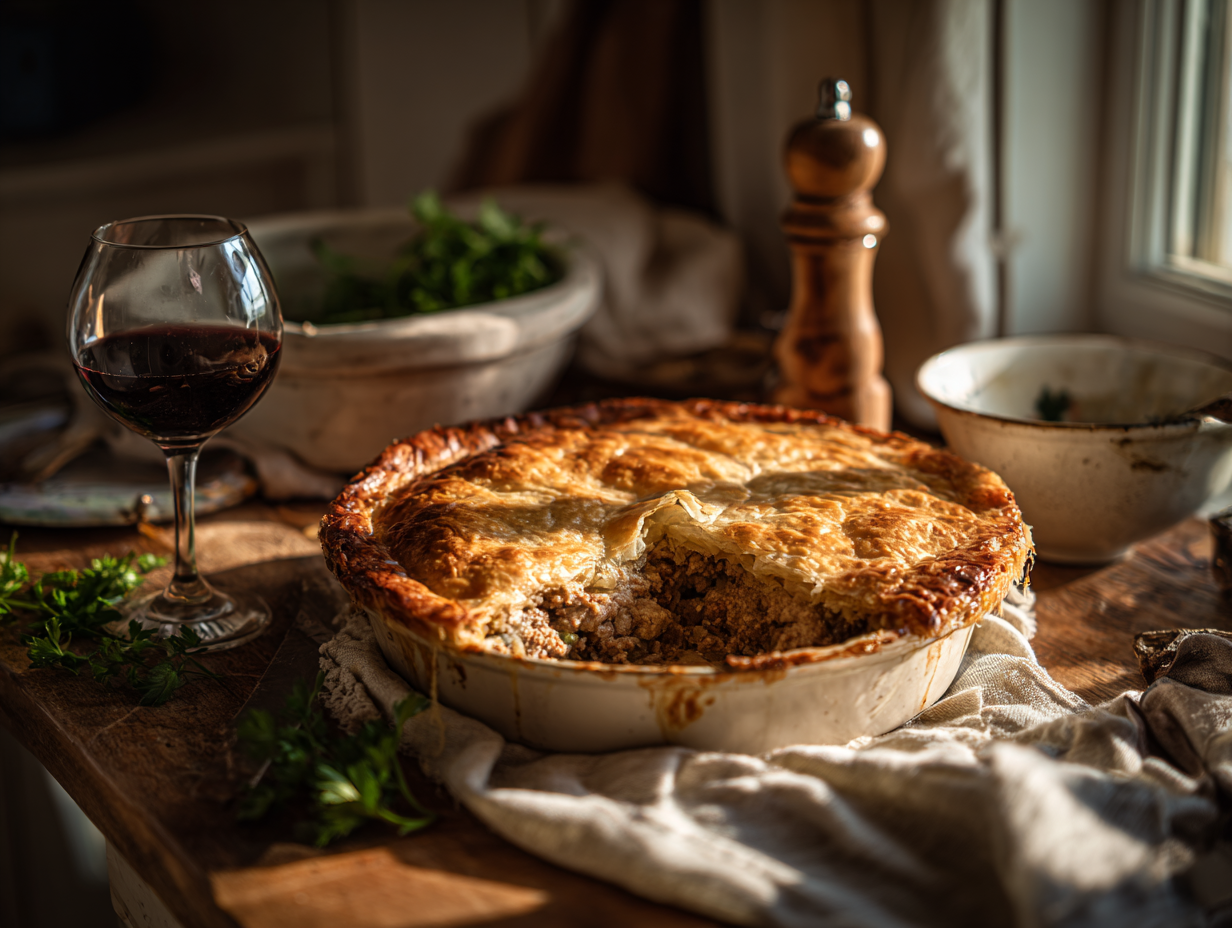
Kreatopita is a Greek ground meat pie baked in phyllo dough — savory filling, crispy shell, done in one pan. It works on a weeknight because the filling comes together while the oven preheats, and store-bought phyllo means no pastry project. The result looks like you put in more effort than you did.
The short version of why this works
Two things drive this recipe. First, cooking off the moisture in the meat mixture before it goes into the pie. Wet filling steams the phyllo from the inside and you end up with a soggy bottom — not the crispy base you want. Let the pan run dry after adding the meat. Second, brushing each phyllo sheet with oil rather than stacking them dry. Oil is what separates the layers in the oven and gives you that shatter when you cut through the top. Skimp on the brushing and the sheets fuse into one thick, chewy slab instead of distinct flaky layers.
Smart swaps
- Lamb vs. beef: Either works. Ground lamb gives a more pronounced, slightly gamey depth; ground beef is milder and usually cheaper. A 50/50 blend is a solid middle ground if you have both on hand.
- Fresh herbs: Flat-leaf parsley is standard here. Curly parsley is fine in a pinch but has less flavor. Dried oregano can stand in for fresh — use about one-third the amount.
- Phyllo dough: Frozen phyllo must be fully thawed in the fridge overnight before use. Trying to rush it at room temperature causes tearing. If sheets tear, just overlap them — it won’t show once baked.
- Feta addition: Crumbled feta stirred into the cooled filling adds a salty, creamy note and is worth doing if you have it. Skip the garnish — not worth the extra dish.
Mistakes to avoid
- Adding eggs to a hot filling: If the meat mixture is still steaming when you stir in eggs, they scramble. Spread the filling on a plate or sheet pan for five minutes to cool it down first.
- Skipping the bottom phyllo layers: It’s tempting to use fewer sheets to save time, but the bottom needs at least four layers to hold the filling without tearing when you serve it. The top can be thinner.
- Not scoring the top before baking: Phyllo puffs and can crack unevenly. Score the top sheets lightly with a sharp knife before the pie goes in — it controls where it opens up and makes slicing clean after baking.
- Undercooking the meat: Ground beef and lamb must reach an internal temperature of 160°F (71°C). The filling cooks before assembly, so this is about the pan stage — don’t pull it off the heat while it still looks pink.
- Cutting the pie straight out of the oven: The filling needs five to ten minutes to set. Cut too early and it runs out the sides. A short rest also makes the phyllo easier to slice without shattering.
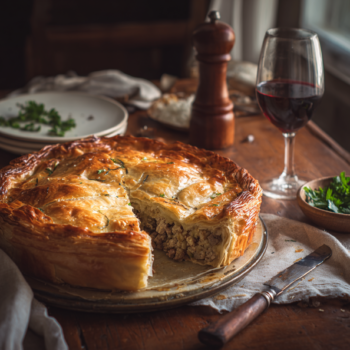
Puffy Meat Pie (Kreatopita) Recipe

Ingredients
 500 grams ground beef (minced beef)
- 500 grams pastry - homemade
 1 ½ cups butter
 ½ cup breadcrumbs
 ½ cup white wine
 4 medium yellow onion
 3 medium egg - beaten
- 2 medium egg - hard-boiled, salt, pepper
Instructions
- Peel the onions and cut them into thin slices. Put half the butter in a frying pan with the onions and fry until lightly browned. Add the mince and mix till the juice from the mince has been absorbed. Allow to stand for a short while, then pour in the wine and cook slowly for 15 to 20 minutes. Remove from heat and allow to cool.
- Cut the hard-boiled eggs into pieces, and add the breadcrumbs and the beaten eggs to the mince. Butter a baking tin and spread the more significant part of the pastry in it, making sure enough is left over to cover the top; the pastry should be well greased.
- Put in the mince mixture, spread it evenly over the pastry, and then cover with the rest of the pie leftover. Trim the edges and butter the outside of the pastry before baking in a moderate oven for 50 to 60 minutes.
Nutrition
Your questions, answered
Can I make the filling ahead of time?
Yes — the cooked filling keeps in the fridge for up to two days before you assemble the pie. This is actually the fastest path to a weeknight dinner: cook the filling on Sunday, then just layer and bake when you’re ready.
Can I use puff pastry instead of phyllo?
You can, and it produces a thicker, bread-like crust rather than a crispy layered shell. Puff pastry holds up better if you’re transporting the pie, but the texture is quite different from the traditional version.
How do I store and reheat leftovers without the phyllo going soft?
Store slices uncovered or loosely tented in the fridge — airtight containers trap steam and soften the pastry fast. Reheat in a 350°F oven for 10 to 12 minutes rather than the microwave, which makes phyllo chewy.
Can I freeze kreatopita?
Freeze it baked and fully cooled, wrapped tightly in foil. Reheat from frozen at 375°F for about 25 minutes. Freezing unbaked phyllo pies often leads to soggy results because the filling releases liquid as it thaws.
Try these next
- Mediterranean Lamb Feta Pie
- Savory Lebanese Lamb Pastries
- Savory Lamb Rosemary Pies
- Moroccan Lamb Apricot Briouats